
Coffee Prices Have Plunged 17% This Year – Here’s Why
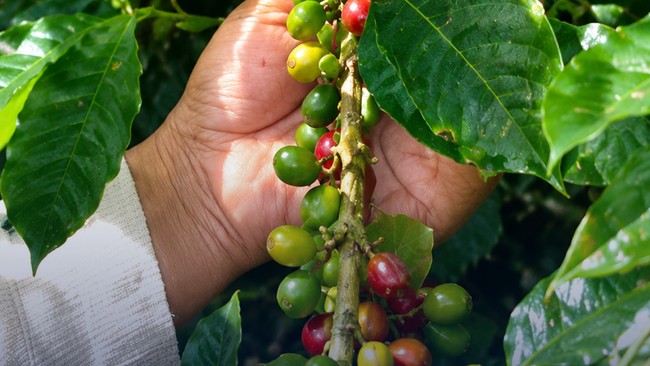
Jakarta, CNBC Indonesia — World coffee prices have come under pressure throughout 2026, making coffee one of the agricultural commodities to record the steepest price falls since the start of the year.
Trading Economics data showed that, in trading on Thursday (8 October 2026), arabica coffee stood at 289.05 US cents per pound, or about US$2.89 per pound, down 1.25% on the day.
Year to date, coffee prices have fallen 17.12% from the end of 2025. This was the second-largest decline among the agricultural commodities listed by Trading Economics, after orange juice, which plunged 26.93%. Cocoa prices fell 6.60%, while lumber weakened by 3.71%.
Prices have also fallen year on year. Coffee was down 23.38% compared with the same period a year earlier, reflecting sustained pressure on the commodity.
The decline has been driven mainly by an improved supply outlook in Brazil, the world’s largest coffee producer. Higher production and exports have eased concerns about tight global supplies.
Brazil’s abundant harvest weighs on prices
According to a 24 September 2026 report by Companhia Nacional de Abastecimento (Conab), Brazil’s food supply agency, the country’s coffee production is expected to reach a record 67.6 million 60-kilogramme bags in 2026, up 19.6% on the previous year.
The increase in supply is also reflected in export activity. Reuters reported that Brazilian green coffee shipments in September reached their highest volume in 20 months.
Meanwhile, Hedgepoint Global Markets estimates that the global coffee market will have a surplus of around 8.9 million bags in the current crop year. This means global coffee supply is expected to exceed consumption needs.
Abundant Brazilian production, strong exports and the projected global surplus have combined to put pressure on international coffee prices.
In Thursday’s trading (8 October 2026), arabica coffee futures on the ICE exchange fell 1.7% to US$2.876 per pound, after dropping 3.9% in the previous session.
El Niño remains a threat
Despite the current price weakness, the risk of production disruption from El Niño continues to hang over the market.
Drought associated with El Niño has affected several coffee-growing areas in Central America, particularly Honduras, Guatemala, El Salvador and Nicaragua.
Reuters reported that arabica coffee premiums from the region had risen to near their highest level in three years. A premium is the amount added to the benchmark futures price, reflecting quality as well as supply and demand conditions.
Coffee production in Honduras is expected to fall by 7% in the 2026/2027 season, while Guatemala could see a 10% decline. The two countries account for around two-thirds of Central America’s coffee production.
Central America supplies about 15% of the world’s arabica coffee. Production disruption in the region could therefore limit any further price declines.
The market is consequently facing two opposing forces. Brazil’s abundant supply is weighing on prices in the short term, while the risk of El Niño-related drought threatens production in the next season.
What does this mean for Indonesia?
Falling global coffee prices are also a concern for Indonesia, one of the world’s coffee producers and exporters, particularly of robusta. Although arabica and robusta prices do not always move in tandem, weakness in international markets could affect selling prices and national exporters’ revenues.
Price pressure is also evident in Vietnam, one of the world’s largest robusta producers. Reuters reported that domestic coffee prices there fell to 92,200–93,000 dong per kilogramme in the second week of October, from 94,000–94,800 dong the previous week.
Sumatran robusta coffee, meanwhile, was offered at a premium of US$180 per tonne over the October futures contract, unchanged from the previous week. For November shipments, the offer premium fell to US$220 per tonne from US$250 the week before.
A premium is the difference between the offer price for physical coffee and the benchmark futures price. The lower premium indicates a weaker relative offer price for November shipments, but does not necessarily mean that coffee prices at Indonesian farm level have fallen.
For exporters, weaker international prices could reduce sales revenues even if export volumes rise. This is apparent in Vietnam: coffee exports in January–September 2026 increased 16.2% to 1.45 million tonnes, but their value fell 7% to US$6.6 billion.
In Indonesia, Statistics Indonesia (BPS) data show that coffee exports reached US$1.01 billion, with a volume of about 208,100 tonnes, in January–July 2026. Global price movements will need to be monitored, as they could affect export values in the following period.
For coffee farmers, lower international prices could reduce incomes if producer prices also weaken. By contrast, coffee processors may benefit from lower raw-material costs, although this does not necessarily translate immediately into lower prices for consumers.