
Coffee from Mount Ciremai, once subject to propaganda, now holds high value
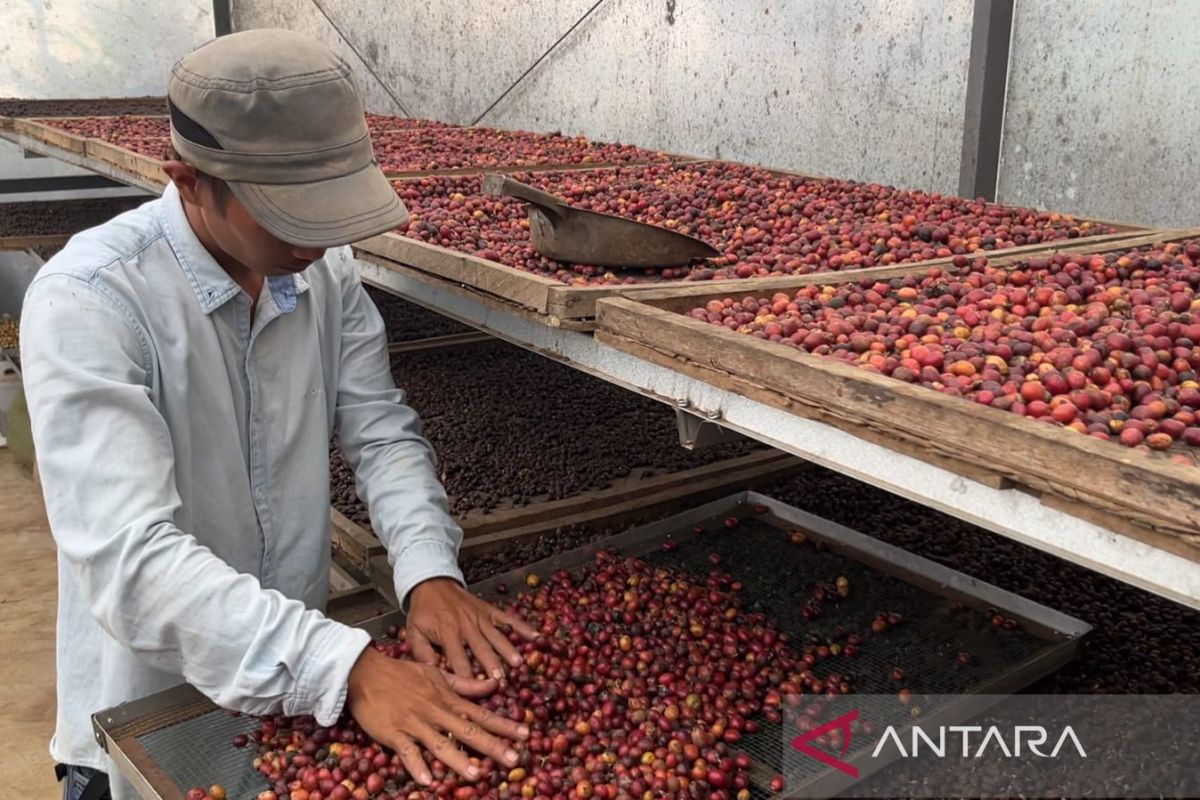
Coffee products today do not merely sell a commodity; they sell quality, story, and the experience attached to the product.
Kuningan (ANTARA) - Coffee commodities at the foot of Mount Ciremai, Kuningan Regency, West Java, are currently being pushed to achieve higher selling values. The quality of the coffee beans determines the flavour, while market acceptance has the potential to drive up prices and expand distribution reach.
This effort to increase added value is being implemented by the Kuningan Regency Government alongside the Bank Indonesia Cirebon Representative Office through the strengthening of quality from upstream to downstream, ranging from plantation management to processed products.
However, before examining the current roles of the local government and Bank Indonesia, there is an interesting historical narrative to explore.
In the past, coffee consumption was not deeply integrated into the daily lives of the community, particularly in the Cirebon Residency, which includes Kuningan Regency.
Documents from the Delpher website collected by ANTARA note that in 1938, coffee was even promoted via mobile campaigns from village to village to ensure the public became familiar with and accustomed to consuming it.
The Dutch East Indies Coffee Propaganda Committee in 1936, as reported in De Avondpost, drove this campaign by delivering messages regarding coffee consumption and health.
The public received information regarding the benefits of drinking coffee compared to unboiled water. The campaign also aimed to reduce the use of substitutes for the commodity.
Behind these health messages lay market calculations. Coffee production in the Dutch East Indies at that time reached approximately 3 million pikuls, with about 1 million pikuls originating from European plantations. The remainder was harvested from local community plantations.
Based on historical archives, it is mentioned that approximately two-thirds of coffee production was directed for export, while one-third was consumed domestically.
Domestic consumption subsequently became a target. The domestic market was deemed capable of absorbing more coffee from the total production.
Looking even further back, records of coffee plants in the Cirebon Residency, specifically in Kuningan, were documented decades before that propaganda campaign took place.
In 1893, De Locomotief noted that the Liberica variety of coffee had begun to be planted by the people of Kuningan in gardens and cultivated lands.
Within three to four years, hundreds of thousands of trees were reported to have been planted by the community across various regions.
In 1899, the Soerabaijasch Handelsblad recorded the replanting of 181,250 coffee trees in the Cirebon Residency plantations, including 30,300 Liberica trees. Approximately 11,922 households were involved in coffee cultivation.
By 1901, cultivation policies began to shift. The colonial authorities encouraged voluntary planting after the compulsory cultivation system (cultuurstelsel) was discontinued.
Source: jawawa.id (https://jawawa.id/newsitem/coffee-from-mount-ciremai-once-subject-to-propaganda-now-holds-high-value-1789315063)
Originally published by Antara (Indonesian) (https://www.antaranews.com/berita/5739063/kopi-dari-gunung-ciremai-dulu-dipropagandakan-kini-bernilai-tinggi), translated from Indonesian