
Cocoa Prices Plummet to Two-Year Low Due to Candy Sales
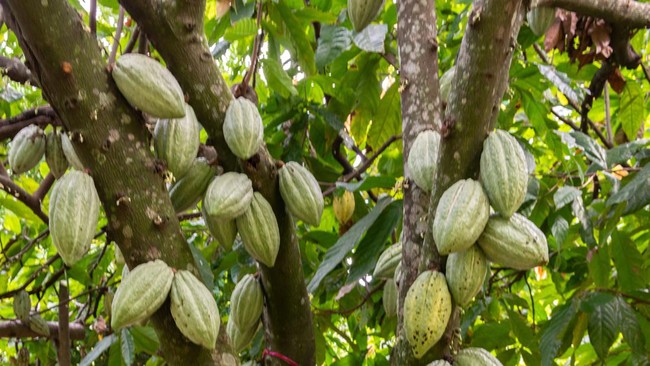
West African plantations are promising better harvests, while chocolate sales in major consumption centres are weakening. When supply arrives faster than buying interest, price rallies often lose momentum before progressing far.
Prices have begun to creep upwards, but levels remain far from the glory days when the market was scorched by supply shortages in 2024.
According to Refinitiv, cocoa contracts closed at US$2,472 per tonne on Monday (20/4/2026).
Nevertheless, looking deeper, the current price position is still in the lowest area since August 2023, or 2.5 years ago.
This means the small rally this week is not enough to change the broader narrative that the cocoa market is undergoing a sharp normalisation phase after last year’s historic price explosion. As a reminder, cocoa once reached a record US$12,906 per tonne in December 2024. Now, prices are about 61% below last year’s level.
On one side, global demand is slowing. Cocoa grinding in Europe fell nearly 8%, while North America weakened by almost 4%. Grinding figures are important to read because they mirror real chocolate industry consumption. When factories grind fewer cocoa beans, the market picks up signals that producers are holding back production or consumer demand is weakening.
The pressure is even more felt as chocolate confectionery sales during the Easter season—a typically busy consumption period—dropped around 5% year-on-year according to Bloomberg Intelligence.
This is important news. If even the peak season is sluggish, the market starts calculating that global households are being more selective with their spending. The cocoa price explosion in 2024 also led chocolate producers to raise selling prices, and ultimately consumers have curbed purchases.
On the other side, supply is starting to give more friendly signals. Adequate rainfall in West Africa, the world’s main cocoa-producing region, opens up opportunities for a global surplus in the 2026/2027 season. Côte d’Ivoire and Ghana have long been the heart of world supply. When rain comes in the right rhythm, cocoa trees have a chance to produce better fruit and more optimal bean sizes.
A Reuters report from Côte d’Ivoire shows farmers are still hoping for additional rain to improve mid-year harvest quality. In some areas, last week’s rain was below the five-year average. However, farmers say the trees remain in healthy condition with a mix of small, medium, and large fruits. Harvests are expected to increase between May and July. For the market, this simple statement means one thing: supply is not problematic.
Stocks are sending a similar message. Certified cocoa inventories monitored by ICE at US ports did fall by 5,511 bags to 2,618,981 bags. However, that level is still considered high historically. When warehouses remain full, buyers do not feel the need to chase goods aggressively. As a result, the room for price increases becomes narrower.
Nevertheless, the market is not entirely calm. New disruptions in the Strait of Hormuz are raising concerns about logistics and transportation costs. This route is the artery of global energy trade. If shipping costs rise or supply chains are disrupted, commodity prices could be lifted even if the fundamental supply is actually loose. In market terms, geopolitics often works faster than harvests.
Makassar cocoa prices have also fluctuated sharply. The CCUP-N1 ICE contract was recorded at 2,443.1 on 20 April, down from 2,758.45 on 15 April. This shows the domestic market remains dragged by global currents. For exporters and processing industry players, such volatility complicates margin planning. For farmers, prices that rise and fall too quickly make selling decisions even more complicated.
If demand has not recovered while West Africa harvests well, prices could remain capped. However, if the weather turns bad or global logistics routes are disrupted, the market could become nervous again in a short time.