
Coal Set to Become a Hot Commodity Again, Bringing Cheer to Indonesian Producers
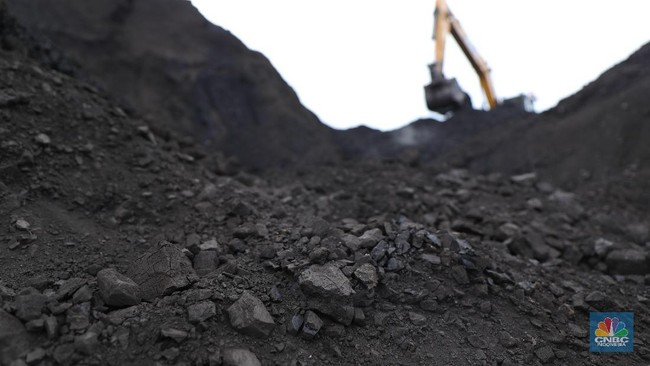
Jakarta, CNBC Indonesia — Coal prices surged last week.
According to Refinitiv, coal closed at US$150.50 per tonne on Friday (9 October 2026), up 0.03%. The increase ended a two-day decline.
Overall, coal prices gained 0.64% last week, extending their positive run to three consecutive weeks. They briefly reached US$152.95 per tonne on Tuesday, their highest level in a month.
The price rise was driven by several factors, including persistently high oil prices, supply problems in Indonesia and the prospect of stronger demand ahead of winter.
Statistics Indonesia (BPS) recorded a 9.33% fall in Indonesian coal export volumes between January and August 2026, to 227.7 million tonnes. Kpler data showed that exports in August 2026 totalled just 36.1 million tonnes, down 25.3% from August a year earlier.
A key cause was drought and river silting, particularly on the Barito River in Central Kalimantan, alongside uncertainty over Indonesia’s coal production policy, including cuts to the national production target and adjustments to mining quotas. Indonesia is the world’s largest thermal coal exporter, making developments there highly influential.
Far cheaper than LNG, exports could surge at year-end
Global thermal coal exports are expected to contract year on year for a second consecutive year. However, that trend could reverse towards the end of 2026 as coal becomes increasingly inexpensive compared with liquefied natural gas (LNG).
Thermal coal has its widest price discount to LNG in four years, making it the most economical fuel for power generation in Asia. Australian thermal coal for export is currently around 80% cheaper than LNG delivered to Asia.
Newcastle Australian thermal coal is priced at about US$143 per tonne, equivalent to US$5.40 per million British thermal units (MMBtu), according to LSEG data. By comparison, LNG delivered to Asia is around US$25 per MMBtu.
This means high-quality thermal coal is about US$20 per MMBtu cheaper than LNG in Asia’s key energy markets. The price advantage is even greater for Indonesian coal, which is generally at least US$1 per MMBtu cheaper than Australian coal. This gives power stations an economic incentive to choose coal over LNG ahead of winter.
Asian coal imports could surge
Seasonal energy demand in Asia could also support higher exports. The fourth quarter is traditionally the peak period for coal demand, as utilities replenish stocks ahead of winter.
China, Japan and South Korea are the three main coal-consuming markets in East Asia. Kpler data show that they imported about 122 million tonnes of coal between July and September 2026, when electricity demand for cooling was at its peak.
By contrast, their average thermal coal imports in the fourth quarters of 2024 and 2025 reached 143 million tonnes per quarter, as heating needs increased. If the previous seasonal pattern recurs, combined imports by China, Japan and South Korea could rise by about 20 million tonnes in the fourth quarter compared with the third quarter of 2026.
The combination of competitive prices and rising winter energy needs could drive a surge in coal shipments during the final months of the year.
Indonesia and Australia stand to benefit
Stronger demand in East Asia could benefit major coal exporters, particularly Indonesia and Australia.
Indonesian export data show average coal shipments of about 137 million tonnes a year in October-December between 2023 and 2025. In the third quarter of 2026, however, Indonesia’s coal shipments came in slightly below 107 million tonnes—the lowest third-quarter figure since 2021.
Australia also typically records its highest export volumes in the fourth quarter. Its average shipments reached about 55 million tonnes between October and December in 2023-2025. Australian coal exports stood at around 52 million tonnes in the third quarter of 2026.
Kpler data show that combined Indonesian and Australian coal exports averaged 192.5 million tonnes in the fourth quarter between 2023 and 2025. By contrast, the two countries shipped only about 159 million tonnes combined between July and September 2026.
If the previous seasonal pattern returns, combined exports from Indonesia and Australia could rise by nearly 30 million tonnes in the fourth quarter of 2026. That would mark a significant reversal for a commodity widely seen as facing a long-term decline in demand.
For Indonesia and Australia, the outlook creates an opportunity to increase exports towards year-end. The scale of any increase will nevertheless depend on actual energy needs, fuel prices and purchasing decisions by major importing countries.
Ultimately, winter energy trade trends show that price remains an important factor in fuel choices, even as the transition to cleaner energy continues.
Source: jawawa.id (https://jawawa.id/newsitem/coal-set-to-become-a-hot-commodity-again-bringing-cheer-to-indonesian-producers-1791690646)
Originally published by CNBC Indonesia (https://www.cnbcindonesia.com/research/20261011072846-128-775038/batu-bara-bakal-jadi-rebutan-lagi-pengusaha-ri-tertawa-bahagia), translated from Indonesian