
Coal Prices Surge as China’s Supplies Tighten and India Faces Power Cuts
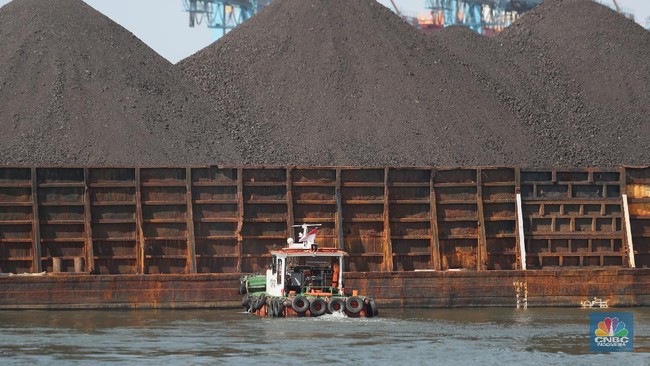
Coal prices surged again after China and India reported supply shortages.
According to Refinitiv, coal rose 0.7% to US$151.55 per tonne on Monday (12 October 2026), marking a second consecutive daily gain.
Coal prices soar in China
Chinese thermal coal prices have climbed to a three-year high.
The increase has been driven by slow growth in domestic production and supply disruptions from Indonesia, China’s main supplier, amid an energy-price rally linked to the US-Iran war.
The China Coal Transportation and Distribution Association said the benchmark price for coal used in power generation reached CNY1,004, or about US$150 per tonne, on Monday (12 October 2026).
This was the first time the price had exceeded CNY1,000 in two years. It has risen by about 25% since mid-July.
Coal remains China’s main source of electricity generation, accounting for about half of the country’s power mix, although renewable energy capacity has expanded rapidly in recent years.
China’s domestic coal production fell by more than 3% between January and August 2026 compared with the same period a year earlier.
The decline followed tighter government safety oversight after a fatal mine accident in Shanxi province in May.
The market had expected Shanxi’s output to recover, with about 31 million tonnes of annual production capacity due to be added by the end of the year.
However, approvals to reopen suspended mines have proceeded more slowly than expected.
The government is expected to remain cautious ahead of a major Communist Party meeting in late October, limiting the likelihood of a near-term relaxation of safety rules.
A three-week maintenance programme on China’s main coal railway, running until 26 October, is also expected to keep upward pressure on prices.
As domestic production faces constraints, shipments from Indonesia, China’s main supplier of imported thermal coal, have also fallen sharply this year.
The decline followed efforts by the Indonesian government to curb production in order to support coal prices and increase state revenue.
More recently, drought linked to the El Niño phenomenon has lowered river levels in several Indonesian coal-mining areas. This has forced barge operators to reduce cargo loads, further disrupting shipments.
Price pressures are expected to continue as China’s coal consumption typically rises during winter.
Meanwhile, liquefied natural gas (LNG), an alternative fuel for power generation, has also become much more expensive this year. Conflict in the Middle East has disrupted Qatari supplies by affecting shipping routes through the Strait of Hormuz.
In Europe, coal futures have reached their highest level in more than two years. The November API2 contract rose to US$146.80 per tonne. South African coal prices have also strengthened, supported by strong Asian demand and limited near-term supply availability.
Chinese buyers have returned to the market seeking supplies after the Golden Week holiday, submitting new purchase requests. However, high prices continue to constrain demand.
India cuts power
India is also grappling with supply problems.
Power cuts have begun affecting households, small factories and steel plants in the country.
The outages come as coal stocks at many power stations dwindle, while electricity demand surges because of hotter weather and a sharp decline in hydropower generation.
Demand exceeding supply in recent weeks has triggered outages in several areas, affecting households, small factories and metal-smelting facilities, Bloomberg reported on Monday.
A strong El Niño has made India’s monsoon season the weakest in a decade and pushed temperatures above the average for this time of year. The resulting conditions have strained electricity supplies: low rainfall has reduced hydropower output, while coal stocks at dozens of thermal power stations have reached critical levels.
Government data at the end of September showed that the share of thermal power stations with very low coal inventories had risen in recent weeks to more than 40% of all operating coal-fired plants.
As of 1 October, 85 power stations had coal stocks below 25% of their usual requirements.
This points to mounting pressure on the coal supply chain, according to a quarterly analysis of India’s electricity sector for July to September 2026 by the Finland-based Centre for Research on Energy and Clean Air (CREA).
Strong El Niño conditions and hotter weather are adding to the strain on India’s coal supplies. Power stations are burning coal faster amid low hydropower generation and surging electricity demand.
Pressure on coal stocks and power generation is beginning to affect economic activity, industry representatives told Bloomberg.
Small steel plants in Chhattisgarh, central India, are facing power cuts lasting 10 to 12 hours a day. This has forced them to reduce production, Manish Dhuppad, secretary-general of the Chhattisgarh Mini Steel Plant Association, told Bloomberg.
The outages are also raising energy costs for factories and steel producers, which have had to switch to expensive fuel-powered generators.
Households have also been affected. In Uttar Pradesh, India’s most populous state, home to more than 240 million people, some villages have experienced power cuts of up to seven hours a day.
Source: jawawa.id (https://jawawa.id/newsitem/coal-prices-surge-as-chinas-supplies-tighten-and-india-faces-power-cuts-1791852666)
Originally published by CNBC Indonesia (https://www.cnbcindonesia.com/research/20261013064722-128-775538/harga-batu-bara-membara-pasokan-china-menipis-listrik-padam-di-india), translated from Indonesian