
Coal Prices Surge 24% in March, Highest in 4 Years
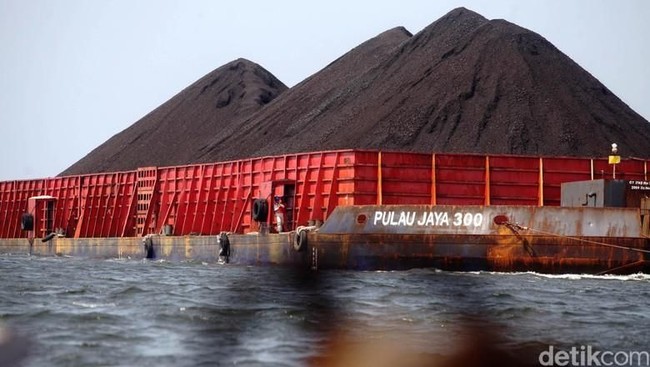
Coal prices eased after a three-day rally. According to Refinitiv, coal prices closed at US$146.5 on Tuesday (31 March 2026) trading, down 2.02%. This decline broke a three-day winning streak with gains of up to 8%. Throughout March, coal prices soared 24.55%, the strongest increase since May 2022, or nearly four years ago, when prices jumped 37.2%. For context, coal prices surged in May 2022 due to the Russia-Ukraine war, while in March 2026, it was due to the Iran war. The March surge in coal prices was caused by the skyrocketing global crude oil prices above US$100 per barrel, triggered by the closure of the Strait of Hormuz. This situation led the world to turn back to coal. China, India, South Korea, Japan, as well as the entire Southeast Asia and South Asia regions, are now utilising the coal reserves they have built up in recent years. The United States is also holding off on retiring several coal-fired power plants. Japan is currently facing a dramatic surge in electricity prices, triggered by the sharp rise in global fuel costs. Since the end of February 2026, crude oil prices have nearly doubled, while liquefied natural gas (LNG) has surged to around 1.8 times previous levels. This increase is closely linked to the ongoing conflict in the Middle East, which disrupts major trade routes and damages key energy infrastructure, driving up prices for all fossil fuels sharply. As a country heavily reliant on imported fossil fuels for power generation, Japan is highly vulnerable to these global price shocks. In line with Asia, Italy’s parliament on Tuesday approved a delay in closing coal-fired power plants for more than a decade, a move criticised by experts as concerning political propaganda. In a new challenge to the European Union’s green transition, the right-wing coalition government led by Giorgia Meloni is pushing back the shutdown target from 2026 to 2038 on grounds of energy security. Italy is heavily dependent on imported gas, and the government in Rome faces pressure from industry and consumers due to already high energy cost surges, exacerbated by the war in the Middle East. While Brussels insists that coal phase-out is essential to meet EU climate targets, Rome states it may be forced to reactivate coal plants if gas prices continue to rise. The government’s bill on this delay has been approved by the lower house of parliament and will now be discussed in the Senate, where the ruling coalition holds a majority. Prices Begin to Fall Optimism over the end of the war is bringing energy prices down again, including coal. Oil, natural gas, and coal prices all fell together on Tuesday (31 March 2026). News from China could also pressure coal prices further. China’s thermal coal market is likely to face downward pressure this week, after rebounding for a week due to gradual restocking by the non-power generation sector ahead of railway line maintenance. In the week of 23-27 March, thermal coal prices at northern transfer ports rose significantly. By last Friday, the benchmark 5,500 kcal/kg NAR price according to Mysteel reached CNY 761/ton (US$110/ton) FOB including VAT, up CNY 24/ton from the previous week. This price increase was mainly driven by rising purchases from cement and chemical producers entering the traditional peak season of March-April. Additionally, some coastal users shifted purchases from imported coal to domestic supplies, providing support to domestic market prices. However, this spot buying is potentially unsustainable. Purchases by the non-electricity sector are seen as an anticipatory measure ahead of the 30-day maintenance of the Daqin railway line scheduled to start on 1 April, so demand may pause temporarily afterwards. On the other hand, coal-fired power plants are also tending to stay away from the spot market because current consumption is at moderate levels due to relatively low operational activity. In the period of 20-26 March, the average daily coal consumption at 493 power plants surveyed by Mysteel was recorded at 4.01 million tons, down 1% from the previous week. Their total coal inventory fell 2.1% to 90.49 million tons as of 26 March, equivalent to 22.5 days of supply—still indicating ample supply conditions. On the supply side, production in major regions remains high. Mysteel data shows that capacity utilisation at 462 thermal coal mines reached 92.9% in 20-26 March, up 1.8 percentage points from the previous week, with average daily output up 2% to 5.61 million tons. Dozens of mines cut prices at the end of last week due to slowing transactions after the previous price rise. Some miners even predict further price declines this week to maintain sales stability. At northern ports, market activity appeared stagnant in the second half of last week, with only a few transactions for high-quality and low-sulphur coal. Meanwhile, port stocks continue to rise and sentiment weakens towards the weekend, so the pace of price increases is narrowing.