
Coal Prices Soar to US$150 as India Delivers Key News for Indonesia
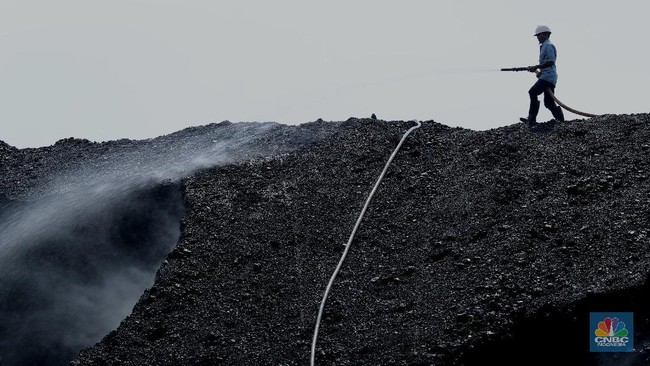
Jakarta, CNBC Indonesia — Coal prices have heated up, breaking through US$150 per tonne.
According to Refinitiv, coal closed at US$150.50 per tonne on Tuesday (24 November 2026), up 1.05%.
The increase extended the positive trend, with prices rising 6% over four consecutive days.
Thermal coal prices at Chinese ports have begun to strengthen. However, gains remain constrained by buyers’ cautious stance and their reluctance to trade aggressively.
According to a report by Sxcoal, the increase was driven by more enquiries and higher mine-mouth coal prices. This has prompted sellers to test the market by offering coal at higher prices.
Rising mine-mouth coal prices have also helped support market sentiment. Increased buying interest has given sellers room to hold their prices after the market came under pressure.
Buyers, however, continue to hold back and are not yet willing to accept higher prices aggressively. Their stance has limited the scope for further gains in coal prices at Chinese ports.
Meanwhile, seaborne coal import prices are also attracting market attention. Movements in domestic and imported coal prices will determine the direction of China’s coal trade in the near term.
India’s coal imports surge, with Indonesia as its main supplier
India recorded substantial imports of coal and industrial fuels during November 2026.
With industrial production increasing, India imported 13.68 million tonnes of solid fuels from 1 to 19 November 2026. Thermal coal accounted for about 70% of total arrivals.
The data highlight India’s substantial coal needs to support power generation and industrial activity.
Indonesia was the leading supplier of thermal coal to India, while Australia remained the dominant supplier of metallurgical coal for the steel industry.
India’s major infrastructure industries also accelerated. Output across eight core infrastructure industries grew 10.9% year on year in October 2026, up from 8.2% in September.
The combination of rising output and high import activity points to strong Indian demand for energy and industrial raw materials.
Indonesia controls nearly half of thermal coal supply
According to BigMint data, India imported 9.52 million tonnes of non-coking coal from 1 to 19 November. Indonesia was the largest supplier, with a share of about 49%, followed by South Africa, the United States and Russia.
Indonesian coal mainly arrived through ports on India’s west coast. Mundra was one of the main receiving hubs, handling about 1.47 million tonnes.
Krishnapatnam ranked next, with 850,000 tonnes. Kandla and Visakhapatnam each received about 800,000 tonnes.
Indonesia was also the largest supplier of met coke, with Indian imports reaching 230,000 tonnes. Poland ranked second.
India imported 3.36 million tonnes of metallurgical coal. Australia was the largest supplier, followed by Russia, the US and Mozambique.
India also imported 570,000 tonnes of petroleum coke (petcoke), mainly from the US and the United Arab Emirates (UAE).
The strong import activity coincided with increased domestic industrial output in India.
Preliminary data from India’s Ministry of Commerce and Industry showed that coal production surged 23.1% year on year in October 2026.
Iron ore output recorded even stronger growth, at 26.4%. Power generation rose 21.6%, while cement production increased 15.4%.
Steel production grew 7.3%, while refinery products rose 3.4%.
Overall, the Core Industries Index (ICI) reached 123.1 in October 2026, up from 111.0 in October 2025.
Growth in the core industries index during April–October 2026 was 6%, well above the 2.3% recorded in the same period a year earlier.
From April to October 2026, iron ore production recorded the highest cumulative growth, at 22.1%.
Power generation grew 11.8%, while cement output increased 10.9%. Steel production rose 4.8% and coal production 2.5%.
Not all sectors, however, recorded positive growth. Fertiliser production contracted 8.3%, natural gas output fell 4.8% and crude oil production declined 3.7%.
The large weighting of electricity in the Core Industries Index also demonstrates the importance of energy to India’s economic activity. Electricity accounts for 30.932% of the index, followed by refinery products at 22.572% and steel at 17.584%.
High imports do not necessarily mean supplies are running low
Although India’s coal imports are substantial, a high volume of arrivals does not automatically indicate a supply shortage.
BigMint says the market must be assessed alongside port stock data, the smoothness of distribution, and the availability of coal in the required grades and specifications.
Additional supplies arriving through the rest of November and into December 2026 could bolster stocks at consumption hubs. However, if collection activity weakens, increased imports could instead lead to stockpiling.
Industrial production, energy consumption and coal inventories will therefore be important factors in gauging the direction of India’s future coal demand.
Source: jawawa.id (https://jawawa.id/newsitem/coal-prices-soar-to-us-150-as-india-delivers-key-news-for-indonesia-1795575068)
Originally published by CNBC Indonesia (https://www.cnbcindonesia.com/research/20261125082758-128-788154/harga-batu-bara-terbang-ke-us--150-india-beri-kabar-penting-buat-ri), translated from Indonesian