
Coal Prices Slump for Third Straight Day, Worst Performance in More Than a Month
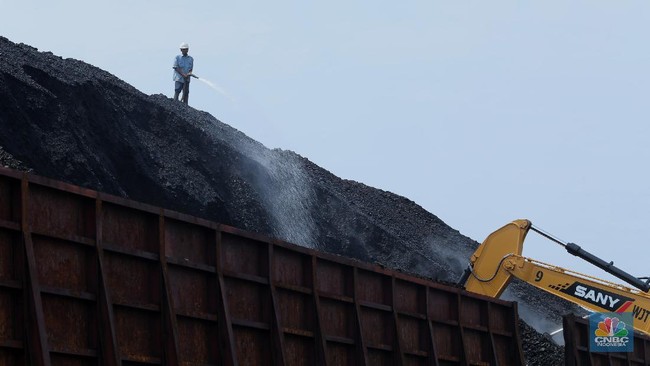
Coal prices slumped amid falling oil prices and weakening demand.
On Wednesday (4 November 2026), coal closed at US$145.15 a tonne, down 1.6%. The decline extended its losing run to three consecutive sessions, with prices falling 4.8% over that period.
The previous day’s closing price was the lowest since 25 September 2026, more than a month earlier. The slump was driven by falling oil prices and demand.
Global crude oil prices plunged by more than 8% on Wednesday (4 November 2026), reaching their lowest level in more than two months. Oil and coal are substitute commodities, and their prices influence one another.
In China, the coking coal market has yet to show signs of recovery. Prices for this key steelmaking raw material remain under pressure amid weak seasonal demand and cautious buyers.
According to a Sxcoal report on Wednesday (4 November 2026), weaker coking coal auction prices have added to market pressure. At the same time, expectations of cuts to metallurgical coke prices have increased.
Slowing steel demand is one of the main factors. Lower hot-metal production and reduced activity at coke plants have curbed demand for raw materials. This has prompted buyers to hold back from transactions and avoid building up inventories.
Pressure was also evident in futures. On Wednesday, China’s most actively traded coking coal contract for January 2027 delivery closed at CNY1,370 a tonne, down CNY13.5 from the previous day.
Nevertheless, the scope for further price declines is expected to be limited. Some coke plants are still operating at a loss and have relatively low inventories, potentially discouraging producers from making deeper price cuts.
China’s thermal coal market, meanwhile, has shown differing trends by calorific value. Supply of high-calorific-value coal remains relatively tight, supporting prices. Low-calorific-value coal, by contrast, remains under pressure and is trading at a discount because of weak demand.
There was also negative news from India. Coal shipments to the country fell 7% year on year between January and October, as import costs rose.
Demand for thermal coal remains strong, particularly from the power sector. However, domestic mine production has not kept pace with requirements, forcing power plants to draw down their coal inventories.
Import costs have risen because of the rupee’s depreciation and higher coal prices.
The commodity’s prices had strengthened following a surge in demand after disruption in the Strait of Hormuz. Tightening LNG supplies prompted the European Union, Japan and South Korea to increase coal-fired electricity generation.
As the world’s second-largest coal importer, accounting for about 17% of global shipments, weaker Indian import demand has also put pressure on the international coal market.
The biggest impact has been on the supramax segment, where coal shipments to India fell 16% year on year. Panamax shipments declined by only 4%, as this vessel segment faced increasing competition from others for coal cargoes.
Australian coal exports rise 2% through October 2026
Australia’s thermal coal exports (non-coking coal) reached 19.20 million tonnes in October 2026, up 17.6% from September and 1.4% year on year. As a result, total exports from January to October rose by about 2% to 170.35 million tonnes, from 167.07 million tonnes in the same period a year earlier.
The recovery in exports was primarily supported by a 28.7% monthly surge in shipments through the port of Newcastle, to 14.30 million tonnes. By destination, purchases by South Korea rose 40.8% to 2.69 million tonnes, while shipments to Taiwan more than doubled to 2.32 million tonnes. By contrast, shipments to China fell 4.1% to 6.13 million tonnes.
Cumulatively, South Korea recorded the largest increase in purchases, up 58% to 20.19 million tonnes. Exports to China fell by about 5% to 49.24 million tonnes, while shipments to Vietnam dropped 26% to 7.89 million tonnes.
The shift in export destinations shows that Australia’s export growth continues to be supported by strong demand from several Asian countries, particularly South Korea and Taiwan.
Unlike thermal coal, Australia’s coking coal exports fell 10.8% month on month to 12.49 million tonnes in October 2026. However, the volume was still 1.8% higher than in October 2025. Cumulatively, exports from January to October rose 4.3% to 126.52 million tonnes.
The year-on-year increase was driven mainly by a surge in Chinese demand. From January to October, shipments to China reached 18.65 million tonnes, an 89% increase on the same period last year. By contrast, exports to India fell 14.6% to 27.94 million tonnes, while shipments to South Korea declined 7.9% to 14.89 million tonnes.
Source: jawawa.id (https://jawawa.id/newsitem/coal-prices-slump-for-third-straight-day-worst-performance-in-more-than-a-month-1793847036)
Originally published by CNBC Indonesia (https://www.cnbcindonesia.com/research/20261105075226-128-782460/harga-batu-bara-ambruk-3-hari-beruntun-terburuk-sebulan-lebih), translated from Indonesian