
Coal Prices Slump Amid China-India Tug of War
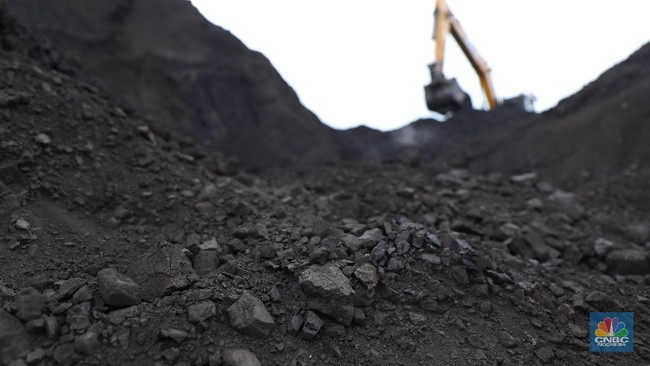
Jakarta, CNBC Indonesia - Coal prices continue to slump amid a tug of war of sentiments in Asia. Referring to Refinitiv, coal prices in trading on Thursday (15/6/2026) closed at US$128.5 per ton, weakening 0.43%. The price has now fallen 2.3% over the last two days, with yesterday’s closing price being the lowest since 22 April 2026, or more than two months. Coal prices are weakening amid conflicting market sentiments. Seaborne thermal coal imports in Asia are rising again as China increases purchases to offset weakening domestic production, while Japan and South Korea strengthen energy resilience amid the impact of the United States (US)-Israel war against Iran. Asia’s thermal coal imports are estimated to reach 77.37 million metric tons in June 2026, the highest in six months. This figure is up from 68.39 million tons in May, based on data from commodity analysis firm Kpler. Compared to the same period last year, which reached 63.24 million tons, June imports surged by approximately 22.3%. The increase was primarily driven by Japan and South Korea, two developed nations that can relatively easily switch between coal and liquefied natural gas (LNG) as energy sources. Spot LNG prices soared sharply after the US and Israel attacked Iran on 28 February. Following the attack, Tehran effectively closed the Strait of Hormuz, a route through which about 20% of the global LNG supply produced by Qatar passes. Spot LNG prices for delivery to North Asia surged 143%, from US$10.40 per million British thermal units (mmBtu) in the week ending 27 February to US$25.30/mmBtu on 20 March. Although it subsequently fell to US$15.30/mmBtu in the week ending 19 June, the price is still 47% higher than before the war. Thermal coal prices also rose. The price of high-quality Australian coal at the Port of Newcastle surged about 30%, from US$115.96 per ton when the conflict began to US$150.25 per ton in mid-June. On Wednesday, the Newcastle coal price was at US$134.09 per ton, or about 15.7% higher than before the war. However, coal remains relatively cheaper than LNG since the Iran war broke out. This price difference is encouraging power utilities in Japan and South Korea to increase coal consumption. Japan, the world’s third-largest coal importer, is estimated to import 7.82 million tons of thermal coal in June. This marks the third consecutive monthly increase and a 33% surge compared to 5.89 million tons in June last year. Meanwhile, South Korea’s imports are estimated to reach 7.30 million tons, the highest since January and up 41% compared to 5.16 million tons in June 2025. China, the world’s largest coal importer, is also increasing purchases. Kpler estimates China’s seaborne thermal coal imports will reach 27.65 million tons in June, the highest in six months and a 48% surge compared to 18.62 million tons in June 2025. Unlike Japan and South Korea, the surge in China’s imports was not triggered by the Iran conflict, but by domestic market dynamics. Demand for electricity from thermal power generation increased, while domestic coal production weakened. Official data shows China’s thermal power generation rose 2.1% in May, bringing the January-May increase to 3.4%. On the other hand, coal production fell 1.7% year-on-year to 397.22 million tons in May. During the first five months of this year, China’s coal production also fell 0.3% to 1.98 billion tons. One of the causes is a mining accident that killed 82 workers, prompting the government to tighten safety inspections across all mining areas. This policy caused production to fall and domestic coal prices to rise. The price of thermal coal in Qinhuangdao, according to consultant SteelHome, rose to 860 yuan (approximately US$126.28) per ton, the highest since October 2024. At this price level, low-quality Indonesian coal and medium-quality Australian coal become more competitive than domestic Chinese coal, encouraging Chinese power companies to increase seaborne imports. In contrast to other Asian countries, India has not increased coal imports. Seaborne thermal coal imports are estimated to reach 12.32 million tons in June, relatively stable compared to 12.27 million tons in May, but down from 14.14 million tons in June last year. The rise in coal prices is thought to be causing Indian power generation companies to hold back on purchases, even though domestic production has not shown a significant increase. Instead, India is utilising existing coal stockpiles while accelerating the use of renewable energy. India’s electricity production from renewable energy surged 29.3% in May compared to the same period last year, contributing a record 17.9% of the total national electricity generation.