
Coal Prices Slide, News from India Could Be a Saviour?
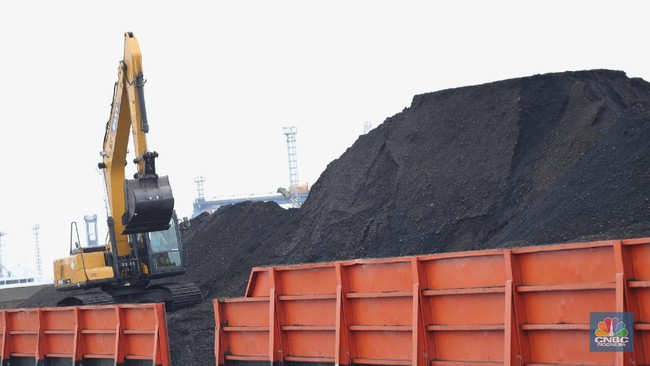
Jakarta - Coal prices have weakened again, continuing a correction for the second consecutive day. According to Refinitiv data, the June coal contract closed at US$133.9 per tonne on Wednesday’s trading (13/5/2026).
The price fell 1.4% compared to the previous close at US$135.8 per tonne. This decline was deeper than Tuesday’s correction of 0.44%.
With this drop, coal prices have now weakened for two days in a row. The price is also moving further away from the US$136.4 per tonne recorded on Monday’s trading (11/5/2026).
Pressure on coal prices is still coming from China. Sentiment in the domestic thermal coal market at mine-mouth areas is cooling, in line with increasing caution among market players.
The previous upward momentum is starting to stall in several production centres.
This situation indicates that buyers are becoming less aggressive in chasing prices. Market players tend to wait for clearer demand direction before resuming large-scale purchases.
On the other hand, sellers have not yet made significant price cuts. Offer prices are still moving within a limited range as some sellers try to maintain margins amid supply costs that are not yet low.
However, room for price increases is becoming limited. Transaction activity in the physical market is not very brisk, while demand from end consumers is not yet strong enough to push prices higher.
Buyers’ cautious stance also arises because coal stocks at several end users remain relatively adequate. This condition means the need for additional purchases is not yet urgent.
In addition, the market is still awaiting a rise in electricity consumption. Coal demand usually increases when electricity needs rise, especially when temperatures are hotter and air conditioning usage increases.
India Brings Good News
Amid pressure from China, the coal market has received positive news from India. The Indian government has approved a scheme worth 375 billion rupees, or around US$3.92 billion, to promote coal gasification projects.
Indian Information Minister Ashwini Vaishnaw said the policy aims to reduce India’s dependence on imported fuels while directing domestic coal towards cleaner industrial uses.
Coal gasification is the process of converting coal into synthetic gas. This gas can be used for power generation, fertilisers, petrochemicals, and various other industrial needs.
The policy is expected to curb India’s imports of liquefied natural gas (LNG), urea, ammonia, and methanol. This is important as India’s gas imports have been affected by the crisis in the Middle East.
India has one of the world’s largest coal reserves, at around 401 billion tonnes, and 47 billion tonnes of lignite reserves. The Indian government targets gasifying about 75 million metric tonnes of coal per year.
The scheme is also estimated to attract investments of around 3 trillion rupees. Under the plan, the government will provide financial assistance of about 20% of the factory and machinery costs.
This news is a breath of fresh air for the coal market as it can expand India’s demand base.
With gasification, coal is not only absorbed by power plants but also enters industrial needs such as fertilisers, petrochemicals, and synthetic fuels. This means India’s coal consumption has the potential to remain substantial in the medium term.