
Coal Prices Recover as Russian Vessels Dwindle
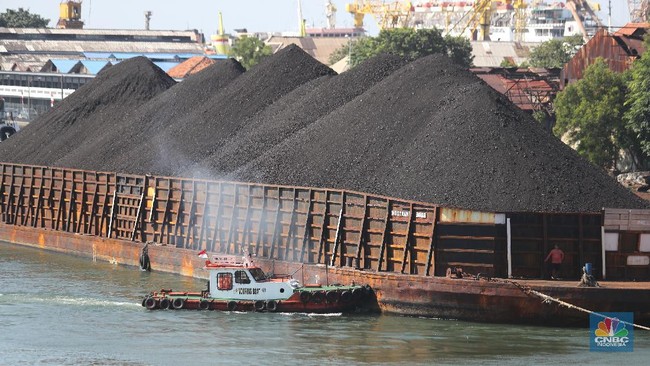
Coal prices continued to climb even as oil prices fell.
According to Refinitiv, coal prices closed at US$134.25 per ton in Monday’s trading (3/8/2026), up 0.19%.
The increase was welcome news after prices fell 1.1% over the previous two days.
The Asian thermal coal market entered August in stronger condition than in July 2026.
However, the price recovery remained uneven across regions and coal types, as import demand stayed sluggish.
China became the main pillar of the regional market. Domestic coal prices in the country continued to strengthen through the end of July.
The rise was driven by increased power plant consumption, declining stocks at northern ports, and tighter mine supply due to safety inspections.
Even so, the rise in China’s domestic prices has not been followed by a surge in imports. Heavy rainfall, typhoons, and increased hydropower generation weighed on coal import needs. Utilities were also still relying on stocks built up during the summer.
Indonesian Coal Prices Divided
In Australia, Newcastle 6,000 NAR premium coal prices held at around US$132 per ton FOB after recovering throughout July.
However, the market began to show signs of consolidation, as buyers remained cautious and assessed that the price increase would be difficult to sustain without stronger demand support.
Meanwhile, Indonesian low-calorie coal remained stable. 4,200 GAR coal traded in the range of US$63–63.5 per ton FOB. However, low-sulphur coal from Sumatra for September shipment managed to fetch a premium of up to US$66.2 per ton.
This situation indicates the Indonesian coal market is becoming segmented.
High-quality coal fetched better prices, while standard products remained stuck at around US$60 per ton. Uncertainty over production quotas, domestic market obligation (DMO) requirements, and logistical constraints also helped support prices.
In India, import demand remained weak due to abundant domestic coal supply.
Power plant coal stocks remained at comfortable levels, while the rainy season suppressed industrial energy consumption. As a result, India has yet to become an additional source of demand capable of lifting international coal prices.
Overall, the Asian coal market began to emerge from the sharp correction that occurred in early July. However, the current price strength has been underpinned more by supply discipline than by a demand recovery.
China served as the anchor of regional price stability, while Australia and Indonesia still faced challenges from weak import demand.
Coal production from India’s captive and commercial mines rose 9.61% year-on-year to 14.78 million tonnes in July 2026, from 13.48 million tonnes in the same period last year. The increase strengthened domestic supply, reduced import dependence, and supported India’s energy resilience.
Coal dispatches from these mines even exceeded monthly production, reaching 17.49 million tonnes. This performance was supported by improved operational efficiency, higher mining productivity, and more optimal capacity utilisation.
Cumulatively, coal production during April–July of fiscal year 2027 (FY27) reached 63.16 million tonnes, up 6.29% from 59.42 million tonnes in the same period of FY26. This figure was also 17.57% higher than the 53.72 million tonnes recorded in the same period of FY25.
Meanwhile, coal dispatches during April–July FY27 reached 70.14 million tonnes, up from 66.02 million tonnes in FY26 and 45.97 million tonnes in FY25. On an annual basis, dispatches rose 6.24% and surged 52.57% compared with FY25.
The Indian government believes the increase in domestic production will help curb coal imports, save foreign exchange, and strengthen the resilience of the energy supply chain. Coal remains the primary raw material for power plants and various energy-intensive industries in the country.
India’s Ministry of Coal stated it would continue to promote growth in the sector through various policies, regulatory oversight, and support for industry players in order to improve supply availability.
The government also hopes that rising production from captive and commercial mines can accelerate the Atmanirbhar Bharat (Self-Reliant India) target by strengthening coal self-sufficiency and guaranteeing energy supply for India’s economic growth.
Ukrainian Attacks Disrupt Russian Coal Exports, Carrying Capacity Shrinks Sharply
Ukrainian attacks in the Black Sea region have caused the number of vessels available to export Russian coal to shrink sharply.
A report by The Moscow Times said the situation has disrupted shipments and tightened sea freight capacity.
As of 26 July, the number of coal-carrying vessels had fallen 21% compared with a month earlier and plunged 28% year-on-year, leaving only 97 bulk carriers still operating to transport cargo.
“Insurance companies had previously stopped providing cover for vessels entering the Sea of Azov and the Black Sea region. As a result, medium- and large-sized bulk carriers are likely to switch to other routes, while smaller vessels unable to operate on alternative routes have been forced to halt operations until the situation stabilises,” the report said.
Under these conditions, Russian exporters were reported to have failed to close a single coal export contract via the Black Sea in the past week.
At the same time, energy cargo shipping capacity in the Sea of Japan also declined. Coupled with rising demand for Russian coal from South Korea, freight rates for Panamax vessels (80,000-tonne capacity) from the Port of Vostochny rose 5%–10% in the past week, depending on the destination.
Oleg Yemelchenkov, Director of Corporate Ratings at Expert RA, said the vessel shortage was unlikely to trigger a coal supply crisis in Asia. However, the situation could disrupt the economics of Russian coal exports and cause delivery delays in a number of regions.
Maksim Shaposhnikov, an adviser at investment fund Industrial Code, estimated the reduced vessel availability could raise Russian coal prices for buyers by as much as US$10–US$15 per ton.
“The surge in shipping costs will erode Russian exporters’ profitability and has the potential to compress coal export volumes,” he said.
According to Kpler data, Russian coal exports by sea reached 11.45 million tonnes in July 2026, up 11.2% compared with July 2025 and 7.9% higher than June 2026.
Previously, Moscow had warned that shipping in the Black Sea region was becoming increasingly dangerous after Ukraine intensified attacks on vessels linked to Russia.
According to data from the General Staff of the Ukrainian Armed Forces, at least 124 Russia-linked vessels, including 89 tankers, were targeted in attacks in the Black Sea and Sea of Azov during the period 8–20 July.
Source: jawawa.id (https://jawawa.id/newsitem/coal-prices-recover-as-russian-vessels-dwindle-1785804660)
Originally published by CNBC Indonesia (https://www.cnbcindonesia.com/research/20260804065900-128-756253/harga-batu-bara-bangkit-kapal-pengangkut-rusia-berguguran), translated from Indonesian