
Coal Prices Rebound, Thanks to China
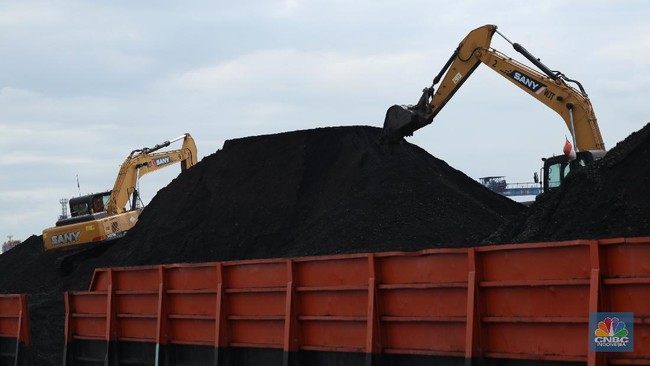
Coal prices climbed after a recent fall.
According to Refinitiv, coal prices in trading on Wednesday (26/8/2026) closed at US$138.7 per troy ounce, strengthening by 0.22%.
This increase was welcome news after prices fell 0.65% on Tuesday.
The rise in coal prices was partly supported by higher imports from China.
More imported coking coal is entering Shanxi Province, China, to address tight domestic supply. New direct rail lines from Jingtang and Caofeidian ports have cut logistics costs and delivery times.
The phenomenon of imported coking coal flowing back into Shanxi is not new.
It has been occurring for around two decades, particularly since the global financial crisis depressed steel production and international coking coal demand.
Australian and Russian producers then offered coal through long-term contracts at competitive prices to Chinese buyers.
After more than 20 years of development, Shanxi has become one of the centres of consumption and blending of imported coking coal.
Imported coal is delivered directly or undergoes washing and blending before being supplied to coking coal companies in Shanxi to cover shortages of primary coking coal and low-quality coal.
Previously, imported coal generally transited through Qinhuangdao and Rizhao ports, then entered Shanxi via the Daqin, Wari, and Taijiao railway lines.
The direct routes from Jingtang and Caofeidian opened this year allow direct delivery from the ports to Shanxi, making them more efficient logistics routes.
The influx of imported coking coal aims to ease local supply pressure after a gas explosion at the Qinyuan coal mine on 22 May. Shanxi subsequently carried out large-scale inspections of the mining industry. Nearly 120 mines were temporarily halted until the end of May, with around 135 million tonnes of capacity affected.
The accident hit several key production areas such as Changzhi, Lüliang, and Jinzhong, which produce much of the high-strength coking coal.
Sxcoal data shows the supply of washed coking coal in Shanxi fell 6.78% year-on-year to 104 million tonnes in the first half of 2026. In June alone, supply plunged 22.54% to 13.41 million tonnes, the lowest monthly level since March 2020.
Although overall production declined, coking coal plants in Shanxi are still struggling to secure local supply. This has made imported coal an important buffer to cover the domestic supply deficit.
China’s thermal coal prices are also continuing to rise, mainly because a number of mines have reduced production after reaching monthly targets.
Of the 117 mines surveyed by Sxcoal, 15 mines raised prices by an average of CNY20.27 per tonne, while only two mines lowered prices.
Spot supply is increasingly limited due to production stoppages, equipment maintenance, longwall moves, and safety inspections.
Earlier rain also disrupted mining activity in Shanxi, causing delivery delays and further tightening supply.
Coal consumption by power plants also remains relatively high. Coal burn at six major coastal power generation groups reached 954,900 tonnes per day on 24 August, up 0.79% week-on-week and 3.66% month-on-month.
However, the potential for further price increases is starting to be limited. Hot weather is expected to ease, while hydropower generation is increasing, so thermal coal demand could potentially decline.
This means the market is currently in a tug-of-war between tight supply and weakening demand.
Coal stocks at Indian power plants that use domestic coal are estimated to be at their lowest level this year. The stock position as of 24 August was even the lowest in four years compared with the same period in previous years.
Coal stocks are now below reserves for 10 days of operations, or only about half of the government’s mandated inventory standard.
This condition adds pressure to India’s electricity sector. Distribution and logistics disruptions caused by the monsoon season have hampered coal deliveries, while thermal power plants must continue operating to meet electricity demand.
The decline in stocks is a concern because coal remains the main energy source in India’s electricity system. If supply disruptions continue, the risk of pressure on plant operations and electricity supply could increase, especially while electricity demand remains high.
Source: jawawa.id (https://jawawa.id/newsitem/coal-prices-rebound-thanks-to-china-1787791845)
Originally published by CNBC Indonesia (https://www.cnbcindonesia.com/research/20260827065232-128-762566/harga-batu-bara-bangkit-terima-kasih-china), translated from Indonesian