
Coal Prices Plunge 5% as US-Iran Peace Deal Eases Supply Fears
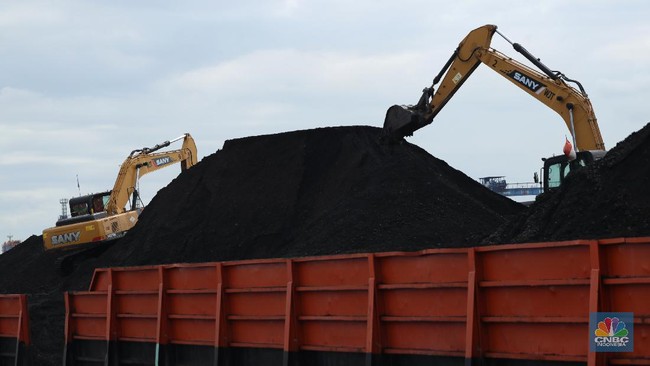
Global coal prices tumbled at the start of the week, pulling back from levels near a two-year high, as energy markets reacted to easing supply risks following news of a peace deal between the United States and Iran. According to Refinitiv data, the Newcastle coal futures contract closed at US$137 per tonne on Monday (15/6/2026), a drop of 5.52% from the previous session’s US$145 per tonne. This decline pushed prices further away from the US$150.35 per tonne level touched on Monday the previous week, which was the highest since September 2023. Compared to that peak, prices have now corrected by approximately 8.88%, halting the strong rally seen in early June.
The downward pressure stemmed from reduced market anxiety over global energy supplies. The US-Iran peace agreement opens the possibility of normalising energy shipping routes through the Strait of Hormuz, a critical chokepoint for global oil and gas trade. During the conflict, supply disruptions from the Gulf region prompted many importing nations to seek alternative fuels. Coal received a boost as some power plants switched back to the commodity to maintain electricity generation, particularly when liquefied natural gas (LNG) supplies were disrupted. With geopolitical risks now subsiding, oil prices have fallen sharply, expectations of LNG disruptions have decreased, and the market is adjusting its demand for alternative energy sources like coal.
Despite the decline, coal prices have not lost all their supporting factors. The northern hemisphere remains in its summer season, which typically drives electricity consumption for air conditioning. This condition can continue to underpin coal demand from the power generation sector, especially in Asian countries. Additionally, the market is still closely monitoring supply developments from Indonesia. As the world’s largest exporter of thermal coal, Indonesia’s export policies and shipment smoothness remain crucial factors for global coal price movements.
Amid the global price pressure, China’s coal market is showing signals that are not entirely weak. The Chinese thermal coal import market is divided, with prompt delivery cargoes still under pressure while shipments for July and beyond are viewed more positively by market participants. The short-term pressure arises because southern Chinese ports are still experiencing congestion. A consecutive arrival of cargoes has created an oversupply in the region, depressing prompt delivery prices. However, some market players expect this condition to be temporary, with congestion at southern Chinese ports anticipated to ease by the end of June, potentially making July a turning point for coal prices.
From Indonesia, coal miners have not yet significantly lowered their prices. Indonesian coal of 3,800 kcal/kg NAR for July-August delivery is still being offered in the range of US$70-73 per tonne FOB. This indicates that sellers remain fairly confident despite the global price correction. The market is also still observing developments regarding Indonesia’s RKAB production quotas. Several market participants expect formal approval of production quotas will not be issued in the near term, prompting caution in reading the direction of Indonesian coal supply.
Weather factors are also drawing attention. El Niño has the potential to bring prolonged dry conditions to Kalimantan, the main production region for Indonesian thermal coal. If river water levels drop sharply, coal transport using barges could be disrupted, reducing load volumes and delaying supply entry into the market. In China, domestic coal prices are also holding firm. Safety inspections at mines in Shanxi remain strict, while inspection teams have also begun entering Inner Mongolia. This situation could restrain production and make sellers reluctant to cut prices too deeply. China’s domestic coal prices remain stable, with the CCI index for 5,500 kcal/kg NAR coal holding at 865 yuan per tonne FOB including VAT for six consecutive trading days, while the 5,000 kcal/kg NAR index has held at 774 yuan per tonne for seven sessions, and the 4,500 kcal/kg NAR index has been stable at 675 yuan per tonne for eight sessions.
Thus, although the US-Iran peace sentiment is pressuring energy prices, the coal market still has several supply-side supports. Developments at Chinese ports, Indonesia’s RKAB quotas, and El Niño risks in Kalimantan will be important factors for the direction of coal prices in the coming weeks. For now, coal prices are in a correction phase after a strong rally in early June. However, as long as seasonal electricity demand remains high and supply from major producing countries is not yet fully loose, the coal price correction has the potential to be contained.
Source: jawawa.id (https://jawawa.id/newsitem/coal-prices-plunge-5-as-us-iran-peace-deal-eases-supply-fears-1781589100)
Originally published by CNBC Indonesia (https://www.cnbcindonesia.com/research/20260616091104-128-743112/harga-batu-bara-ambruk-5-as-iran-damai-jadi-biang-kerok), translated from Indonesian