
Coal Prices Fall for Three Consecutive Days, Bringing Relief to China and India
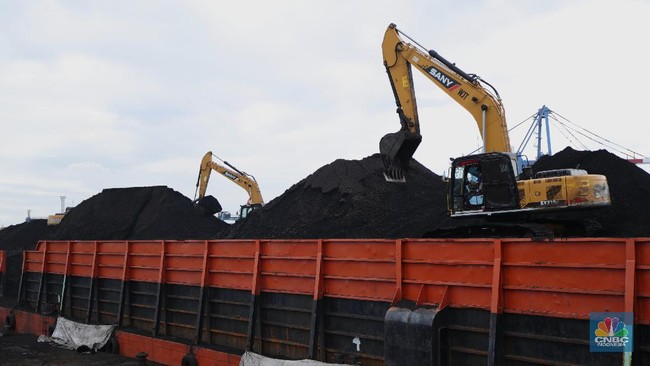
Coal prices continue to ease, albeit marginally. According to Refinitiv, coal prices closed at US$ 151.1 per tonne during Wednesday’s trading (9/9/2026), representing a slight decline of 0.03%.
This weakness extends a negative trend, marking the third consecutive day of declines. Prices have softened as concerns regarding supply have subsided, with even a surge in oil prices failing to lift coal valuations.
Thermal coal price rallies in China are losing momentum. Sentiment at northern Chinese ports has weakened due to rising stockpiles and a slowdown in purchasing activity. Coal supplies at northern Chinese ports rose by 1.12% last Wednesday, indicating an increase in availability. Stocks in Qinhuangdao rose by 1.68%, while Jingtang stocks increased by 2.29%.
Coal shipments from northern Chinese ports fell by 9.72%, signalling a weakening in purchasing and delivery activity. Conversely, coal arrivals via rail in Jingtang surged by 60.13%, further replenishing port supplies.
Sxcoal also noted that China’s coal imports in August remained relatively high despite a slight decrease. Meanwhile, China’s thermal coal imports remain a pillar of the international market. China imported 42.09 million tonnes of coal and lignite in August 2026, a 1.49% monthly decrease from 42.73 million tonnes in July.
Despite the monthly dip, cumulative imports from January to August reached 310.19 million tonnes, up 3.4% year-on-year. This increase was supported by a 2.9% drop in domestic coal production between January and July; however, demand has not yet fully strengthened. Crude steel and cement production fell by 3.1% and 8
8.6% respectively, while power plant growth has slowed.
Entering September, China’s coal imports face potential further pressure. The end of the peak summer electricity demand season could reduce thermal coal demand. If domestic production recovers alongside weakening demand, Chinese coal imports are likely to decline further.
In contrast to thermal coal, coking coal prices in China continue to receive support from tight supply, particularly following production disruptions and a slow recovery in several mines in Shanxi. However, buyers are beginning to exercise restraint as prices have become too high, testing whether the price rally can persist.
Downstream, coking producers and steel companies are facing cost pressures, as rising raw material prices cannot always be passed on to final product prices. Market movements also suggest that the rise in coking coal prices may slow, despite the fundamentals of coking coal supply remaining relatively tight.
In India, supply concerns have also diminished. Coal production at Northern Coalfields Limited (NCL), a subsidiary of Coal India, surged by 67%, while supplies increased by 75% as of 8 September 2026 compared to the average of 1-3 September.
Performance improved after rains subsided and mining activities in Uttar Pradesh and Madhya Pradesh returned to normal. As of 8 September, NCL production reached 51.43 million tonnes, while supplies reached 55 million tonnes.
Approximately 87% of NCL supplies are destined for power plants. With mining conditions improving, coal supplies to power plants are beginning to approach pre-monsoon levels. The Indian government also stated that coal reserves have reached 123 million tonnes, sufficient to meet electricity needs for approximately 51 days.