
Coal Prices Fall for Second Day, but Positive News Emerges for Indonesia
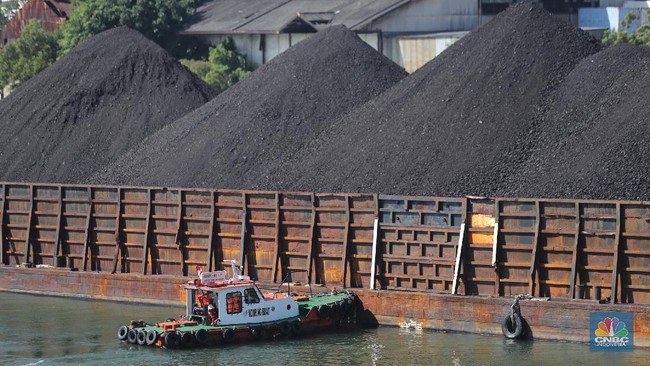
Global coal prices weakened again despite being supported by numerous positive sentiments. According to Refinitiv, coal prices on Tuesday (28/7/2026) closed at US$130.85 per ton, a fall of 1.25%. This price is the lowest in seven days. The decline extended the commodity’s losses to 3.4% over two days. Coal prices fell despite strong demand, with the slump in oil prices acting as the primary drag. Oil and coal are substitute commodities, so their prices influence each other. On Tuesday, West Texas Intermediate (WTI) crude oil prices fell around 4% to US$79.26 per barrel, while Brent fell 4.8% to US$84.09 per barrel.
Asia’s thermal coal imports are expected to rise again in July 2026, marking a third consecutive month of increases. This is driven by demand from major importers such as China, Japan, and South Korea to meet surging electricity needs during the summer. Analysts at DBX Commodities forecast regional thermal coal imports will reach 73.16 million tons in July, up from 70.31 million tons in June 2026 and 71.04 million tons in July 2025. Thermal coal is primarily used for power generation. Demand in Asia is increasing because coal is currently more competitive than liquefied natural gas (LNG). The war with Iran has disrupted LNG supplies from Qatar, one of the world’s major suppliers, pushing up global gas prices.
China, the world’s largest coal importer, is leading the demand surge. The country’s thermal coal imports are expected to reach 28.14 million tons in July 2026, the highest level this year. This is an increase from 25.67 million tons in June and 24.1 million tons in July 2025. The rise in Chinese imports is not driven by competition between gas and coal, but rather by limited domestic production and increased electricity needs. In June 2026, China’s coal production fell 9.7% year-on-year to 380.88 million tons following safety inspections after a mine accident in Shanxi Province on 22 May, the worst mining tragedy in 17 years. Official data shows electricity generation from coal-fired power plants in China rose 0.5% in June and 2.9% in the first half of 2026. Although domestic production is expected to recover, imports are predicted to remain high with electricity demand projected to grow by around 5% throughout 2026.
Japan, the world’s third-largest coal importer, is expected to import around 10.46 million tons in July, up from 7.51 million tons in June. This volume is the highest monthly figure since the start of the year. South Korea, the fourth-largest importer, is expected to import 8.54 million tons in July, up from 6.08 million tons in June, reaching one of its highest levels in recent times. The rising demand has supported prices. The weekly index for Australian thermal coal with a calorific value of 6,000 kcal/kg at the Port of Newcastle rose to a four-week high of around US$132.76 per ton in the week ending 24 July. This type of coal is widely purchased by Japan and South Korea, while China prefers cheaper coal from Indonesia, Russia, and Australia. Meanwhile, the contract for Indonesian coal with a calorific value of 4,200 kcal/kg on the Singapore Exchange closed at US$61.97 per ton on Monday. However, the price remains higher than at the start of the year thanks to strong regional demand.
India, the world’s second-largest coal importer, is expected to import 10.88 million tons of thermal coal in July, down from 12.3 million tons in June. This is the lowest level since August last year. India is expected to increase imports if coal prices fall, especially as electricity demand rises during a weaker-than-usual monsoon season. Since mid-July, coal reserves at Indian power plants have dwindled to cover only about 14 days of operations, increasing pressure on the domestic market. A decline in Indonesian coal prices could boost short-term demand, but a significant import increase is only expected if prices continue to weaken over a longer period. Overall, the trend in Asia shows thermal coal demand is beginning to recover after a period of weakness. China, Japan, and South Korea are increasing purchases, while India recorded a decline in July imports due to domestic factors and high prices. However, the pace of regional imports remains heavily influenced by coal price movements and monsoon conditions.
Operators of coal-fired power plants in Germany have confirmed that coal supply remains secure despite water levels on the River Rhine falling to near record lows due to a heatwave and drought. Operators stated they have prepared adequate coal stocks and alternative supply routes via rail and truck to anticipate distribution disruptions. This preparation means the risk of operational disruption to power plants is considered limited. The receding Rhine, a major transport route for coal from the Amsterdam-Rotterdam-Antwerp (ARA) ports to Germany, means barges cannot sail fully loaded. This condition increases logistics costs and causes some delays in spot market coal deliveries. Nevertheless, the current situation is deemed more manageable than in previous years because operators have enlarged coal reserves and strengthened distribution options. As a result, Germany’s electricity supply is expected to remain stable.