
Coal Mine Bankruptcy Case Highlights Legal Certainty for Foreign Investment
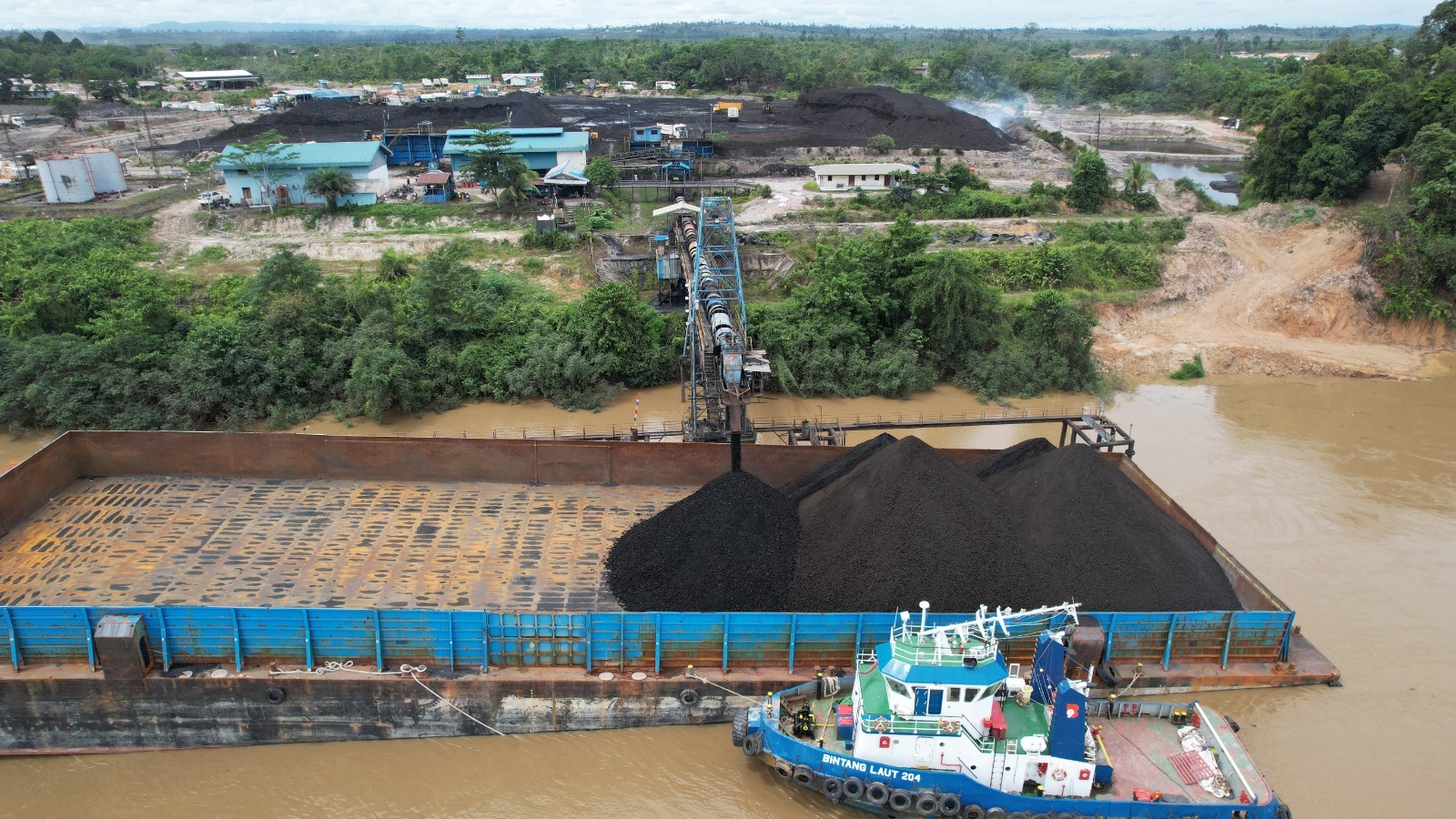
The case of the forced takeover of coal mining company PT Kedap Sayaaq has drawn significant attention since it first erupted into the public sphere in 2025. It is not merely a dispute over a coal mine, but rather concerns a legal process that is considered to have irregularities. PT Kedap Sayaaq is a foreign investment company (PMA) that is currently struggling through various legal efforts to maintain its legal status and ownership of a coal mine in East Kalimantan, which it has held since 2011.
“Although several parties have already been legally processed and are behind bars, many legal efforts are still being pursued by PT Kedap Sayaaq,” said Prayogha Rizky Laminullah, legal counsel for PT Kedap Sayaaq, in Jakarta on Sunday (23/8). These legal efforts include sending a letter to the Judicial Commission to report a number of judges who had issued the company’s bankruptcy ruling in a careless manner. Prayogha explained that the state commission overseeing judges’ conduct forwarded this complaint to the Supreme Court via a letter dated 9 January 2026 regarding alleged violations of the code of ethics and judicial conduct guidelines by the panel of judges.
At the same time, the owner of Kedap Sayaaq has reportedly reported several parties to the police, from the East Kalimantan Regional Police with No. STPL/377/X/2025/SPKT dated 30 October 2025, to a police report at the Criminal Investigation Agency of the National Police Headquarters with No. LP/B/392/XI/2024, dated 5 November 2024.
“The resolution of this protracted case will be a test of legal certainty and protection for foreign investment. We will knock on every door of law enforcement to seek justice,” said Prayogha. He hopes the Supreme Court or the Judicial Commission can examine a number of judges involved in deciding the bankruptcy case of PT Kedap Sayaaq at the Commercial Court of the Surabaya District Court. “From this bankruptcy ruling, our client has faced many difficulties. We have already processed the curator who acted fraudulently, and let us wait for the ending,” said Prayogha.
He explained that the case began when one of the directors of PT Kedap Sayaaq, named Shin Sung Min, borrowed funds amounting to US$1.5 million from PT HJS without the approval of the board of commissioners as required by PT Kedap Sayaaq’s articles of association. The loan’s interest was considered exorbitant, reaching 6% per month or 72% per annum. “From the start, they had malicious intent towards PT Kedap Sayaaq. They used this loan as a gateway to forcibly take control of or seize PT Kedap Sayaaq,” said Prayogha.
The company disputed the loan and deemed it illegal. However, the creditor instead filed for bankruptcy at the Surabaya District Court in 2020. Prayogha argued that the creditor should have brought the matter to the Indonesian National Arbitration Board (BANI) or the South Jakarta District Court, according to the credit agreement. “There were several options that should have been processed first, not immediately going to a bankruptcy petition,” said Prayogha.
After going through the Suspension of Debt Payment Obligations (PKPU) process, on 28 May 2020 the Surabaya Commercial Court declared PT Kedap Sayaaq bankrupt. The court then appointed two curators, Agung Dwijo Sujono and Salahudin Serbabagus, to handle the settlement. After the bankruptcy, new problems emerged. Curator Agung was accused of wanting the company to continue operating under a going concern scheme, while the other curator, Salahudin Serbabagus, disagreed with this scheme.
“We later learned that Agung forged the signature of curator Salahudin Serbabagus,” he alleged. This forgery was crucial to avoid a creditor vote. Armed with the forged signature, curator Agung requested a ruling from the supervisory judge at the Surabaya Commercial Court to run Kedap Sayaaq’s operations in the context of continuing the debtor’s business (going concern). “We have reported a number of irregularities in the bankruptcy ruling and the going concern determination to the Judicial Commission,” said Prayogha.
Agung then allegedly appointed PT Long Coal Indonesia (LCI) as the operator. Prayogha stated that the mining operator appointed by the curator had only been established two weeks before the going concern ruling. “It appears the company was affiliated with the creditors from the start, namely PT HJS and PT Doosan,” Prayogha alleged. He claimed that under the control of PT LCI, PT Kedap Sayaaq was plundered. A number of valuable assets such as the coal hauling road, jetty port, and ships were sold far below fair value. “And the buyer was LCI itself. This is strange; they were running the company under a going concern scheme, but they were also the ones receiving the assets. This is what we call formal legal mafia. Everything was done formally but was illegal,” Prayogha alleged.
Prayogha disclosed that the investment value of the hauling road and jetty reached approximately Rp200 billion. These assets were sold for only around Rp16 billion to PT LCI (as the mining operator), a company that had only been established two weeks prior, did not yet have permits or experience, and was allegedly affiliated with the creditors. Prayogha explained that in a bankruptcy regime, two principles are known. First, the liquidation principle: selling assets and settling debts for creditors. Second, continuing the business (going concern). If the second option is chosen, the company should not sell assets. Moreover, the company could even pay its debts from the operating revenue generated by the operator. “In this case, the curator chose the second option, namely continuing the business (going concern), but at the same time they sold assets. This cannot be justified,” he said.
Currently, the legal process is still ongoing. Curator Agung Dwijo Sujono is in prison as a convict in a case of embezzlement of receivables (cessie) reported by one of the creditors.
Source: jawawa.id (https://jawawa.id/newsitem/coal-mine-bankruptcy-case-highlights-legal-certainty-for-foreign-investment-1787493033)
Originally published by Media Indonesia (https://mediaindonesia.com/ekonomi/925081/kasus-kepailitan-tambang-batu-bara-soroti-kepastian-hukum-investasi-asing), translated from Indonesian