
Coal Converted into Petrol: Will Developers Receive Incentives?
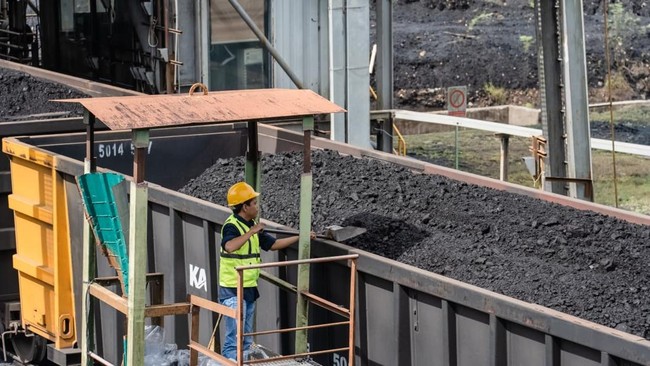
The Ministry of Energy and Mineral Resources (ESDM) has addressed the incentive schemes for coal downstreaming projects through gasification into methanol. This methanol can serve as a raw material for producing fuel oil or be converted into dimethyl ether (DME).
Deputy Minister of Energy and Mineral Resources, Yuliot Tanjung, stated that the government is currently preparing a new incentive scheme to attract investment for such projects. This follows the end of tax holiday incentives due to the introduction of the global minimum tax regulations.
“We are developing a new incentive mechanism because the tax holiday is ending. With the global minimum tax, a new mechanism is required. Even if we provide a tax holiday, under the global minimum tax agreement, the investor’s home country will still collect 15%,” he said when met at the Ministry of Energy and Mineral Resources office in Jakarta on Friday (2/10/2026).
Yuliot explained that the government is formulating a new incentive mechanism to replace conventional tax holidays. The goal is to ensure Indonesia’s fiscal facilities remain competitive without being subject to tax clawbacks by investors’ home countries due to the 15% global minimum tax rule.
Based on government calculations, from the standard corporate income tax rate of 22% in Indonesia, the government can still provide a tax reduction facility of 7% for businesses. This scheme is considered ideal as it remains attractive to potential investors while maintaining state revenue at approximately 15%.
“Since our income tax rate is around 22%, if we adjust it to the global minimum tax, we can still provide a facility of about 7%. Consequently, the government still receives 15%. This incentive will serve as an attraction while ensuring the government maintains fiscal space for state revenue,” he said.
Yuliot revealed that investment for coal gasification projects into methanol has already entered the East Kutai region in East Kalimantan. The government is encouraging the development of methanol products into various downstream fuel derivatives.
“Investment for coal gasification into methanol has already entered East Kutai, East Kalimantan. We hope that from methanol, further processing can be conducted, whether as a raw material for biodiesel, or further processed via chemical processes into dimethyl ether (DME) or even petrol,” he concluded.
Groundbreaking of Coal-to-Methanol Project
Previously, Yuliot inaugurated the groundbreaking of the National Strategic Project (PSN) for coal gasification into methanol in East Kutai, East Kalimantan. The project, developed by PT Bumi Etam Chemical (BEC), aims to produce 2 million tonnes of methanol per year.
Yuliot emphasised that building a methanol industry based on low-calorific coal is an effort to increase the added value of domestic natural resources. He noted that the project is a development priority under the ‘Asta Cita’ programme to reduce dependence on petrochemical imports that burden the nation’s foreign exchange reserves.
“This groundbreaking marks the start of a concrete step in building a methanol industry based on coal downstreaming. This project is part of our effort to increase the added value of natural resources, strengthen domestic industry, reduce import dependency, and support national energy security and independence,” he stated in an official release.
Yuliot hopes that BEC’s downstreaming can serve as a model for other coal companies, given the vast potential of low-calorific coal in Kalimantan and Sumatra.
“We will continue to push this downstreaming, which has been set by President Prabowo Subianto as a development priority during his leadership under the Asta Cita programme,” Yuliot asserted.
The project will process approximately 7.70–7.78 million tonnes of 3,400 kcal/kg low-calorific coal per year into international-standard methanol (IMPCA Grade).
Production is targeted at around 2 million tonnes of methanol per year to meet domestic needs and reduce import dependency, considering that in 2025, Indonesia still imported 1.3 million tonnes of methanol worth Rp 7.1 trillion.
“We hope this project provides a real multiplier effect for all stakeholders, including job creation, the growth of supporting industries, and increased economic activity,” Yuliot explained.
At the same time, the President Director of BEC, Rio Supin, stated that the company has entered the engineering stage through the preparation of the Front-End Engineering Design (FEED) and the Engineering, Procurement, Construction, and Commissioning (EPCC) Framework Agreement with PT Istana Karang Laut (IKL) and China National Chemical Engineering Co., Ltd. (CNCEC) since 29 July 2026.
“Indonesia’s first coal gasification project is ready to enter the implementation phase, with a target commissioning year of 2029 following the Minister’s direction. BEC is ready to support national energy independence and security,” said Rio.
To support operational activities, the project will be equipped with gasification facilities, synthesis reactors, power plants, water treatment, and port terminals. The technology is also being prepared to control emissions and integrate with Carbon Capture and Storage (CCS).
The resulting methanol will supply industrial needs, particularly for petrochemicals and formaldehyde, and support the development of FAME and the B50 programme.