
Coachbuilding Industry Targets 2027 Market, Focusing on Electric Buses and ODOL Enforcement
GEM Indonesia and the Indonesian Coachbuilding Association (ASKARINDO) have launched KAROSERI INDONESIA 2027, an international trade fair for the coachbuilding, bus, truck, commercial and special vehicle industries, as well as components, materials, machinery and supporting technologies. The fair will be held from 26 to 28 May 2027 at JIExpo Kemayoran, Jakarta.
Organisers are targeting around 350 exhibitors for KAROSERI INDONESIA 2027, with almost 20,000 square metres of exhibition space across three halls. The event will run alongside BusTruck Southeast Asia 2027 and INAPA 2027.
Together, the three events are expected to attract around 1,500 exhibitors and 50,000 trade visitors and professionals from various countries over three days.
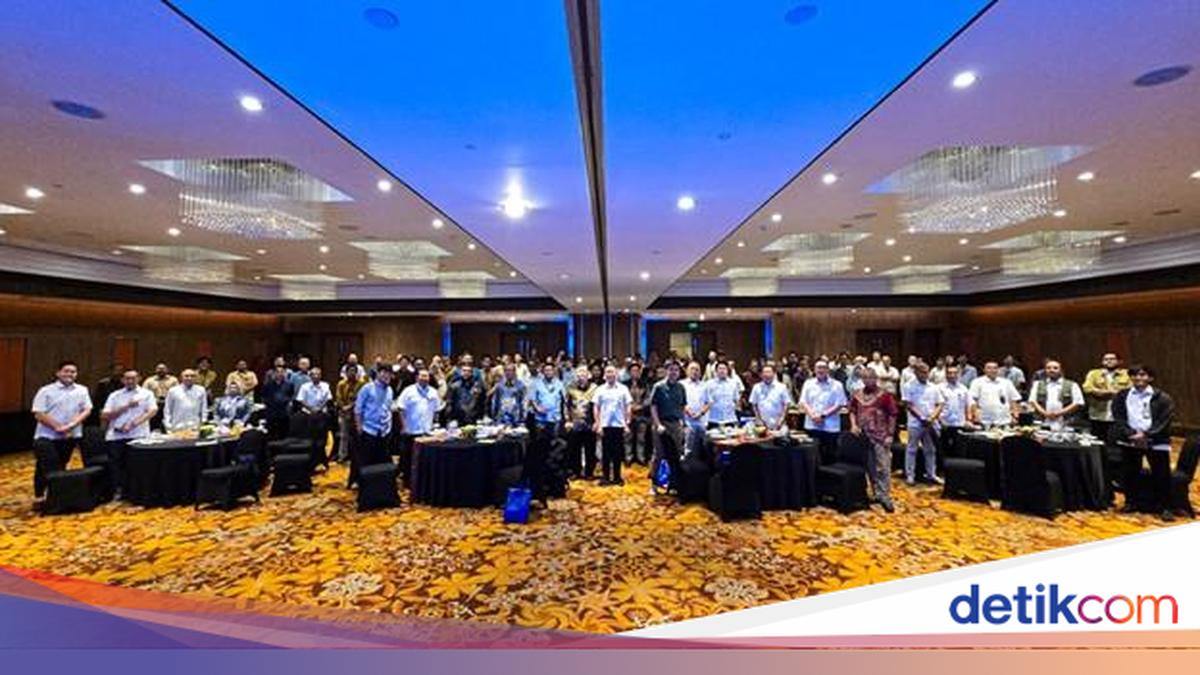
The launch took place during the National Coachbuilding Industry Seminar, themed “Transforming the National Coachbuilding Industry for Global Competitiveness”, at Hotel Borobudur Jakarta. The seminar brought together the government, associations and industry players to discuss business prospects, safety, regulation, technological innovation and strategies to strengthen competitiveness.
2027 prospects: domestic market and export opportunities
Demand for commercial and specialist vehicles across multiple sectors is expected to drive the coachbuilding industry’s prospects in 2027. Logistics and distribution require vehicles with a range of specifications; public transport and tourism need buses that meet increasingly high comfort and safety standards; while mining, plantations and construction require specialist operational vehicles.
This demand creates opportunities for coachbuilders, vehicle manufacturers, component and material suppliers, technology providers and supporting manufacturing industries.
ASKARINDO chairman Jimmy Tenacious said Indonesia’s coachbuilding industry had considerable potential to expand, particularly in commercial vehicles such as buses and trucks. He said the country’s engineering capabilities, manufacturing experience and skilled workforce were important assets.
Jimmy cited domestically produced hydraulic components that have entered the Malaysian market. They were developed by adapting international technology to Indonesia’s operational requirements.
“Quality must be embedded as a work ethic within companies. For component manufacturers and coachbuilders seeking to export their products, the first thing they must protect is quality. Consistency is also very important,” Jimmy said in a written statement on Tuesday (24 November 2026).
ODOL 2027: a challenge and an opportunity to improve
Addressing vehicles that exceed permitted dimensions and weight (ODOL) is a concern for industry players, particularly truck and logistics vehicle manufacturers. During the seminar discussion, Jimmy urged the industry to start preparing for stronger enforcement against ODOL vehicles in 2027.
He said coachbuilders must not focus solely on orders and profits, but must ensure that the vehicles they produce comply with technical requirements and regulations.
Jimmy also highlighted the importance of aligning vehicle regulations with logistics operating needs and the readiness of road infrastructure. Dialogue and joint assessments involving the government, associations, transport operators, logistics companies and industry players are therefore needed to ensure policies support both safety and the industry’s sustainability.
For coachbuilders, stronger ODOL regulations represent an opportunity to raise professionalism, improve design and build quality, and ensure compliance in production.
Jimmy added that the industry needed to prepare for technological change, including by taking vehicle weight and battery placement into account to ensure they meet technical requirements.
These developments create opportunities for coachbuilders, component manufacturers and technology providers to develop new products and manufacturing solutions.
ASKARINDO deputy chairman Budi Setiadi highlighted the experience of several Indonesian companies that have entered markets such as Fiji and Bangladesh. He said government policy support was needed to help Indonesian commercial vehicles compete with products from other countries on price and quality.
The seminar programme also included the signing of a memorandum of understanding between Baki Lee and Jimmy Tenacious, witnessed by ASKARINDO deputy chairman Budi Setiadi.
Budi said developing the coachbuilding industry was a matter of national interest requiring collaboration among stakeholders, including the government, associations, manufacturers, transport operators and the logistics sector, to align industry needs with national policy.
Safety and certification underpin competitiveness
Yusuf Nugroho, director of road transport facilities and safety at the Ministry of Transportation, said transforming the coachbuilding industry was not only about design and production processes, but also about meeting technical and roadworthiness requirements.
“Safety has become a primary requirement for competing in both domestic and global markets. Coachbuilders able to produce safe, certified products will naturally be more competitive,” Yusuf said.
The regulatory framework for motor vehicles is established by Law No. 22 of 2009 on Road Traffic and Transportation and Government Regulation No. 55 of 2012 on Vehicles.
In practice, vehicle designs must first obtain a Design and Build Approval (SKRB) before mass production. Vehicles coming off the production line then undergo physical inspections before receiving a Type Test Registration Certificate (SRUT). The application of Indonesian National Standards (SNI) also helps maintain consistent quality for components, including glass, tyres, rims, seatbelts and braking systems.
The Ministry of Transportation is also developing testing infrastructure, including the Proving Ground facility in Cibitung, Bekasi, which features a dynamic test track, a passive safety laboratory and electric vehicle testing. It is also digitising certification services to make them more transparent and traceable.
In the future, internationally recognised domestic laboratories are expected to make testing more efficient in terms of cost and time, alongside the harmonisation of standards with relevant UN Regulations to expand access to global markets.
Electric vehicles create room for innovation
The growth of electric buses for public transport and company operations requires design and engineering tailored to the characteristics of battery-powered vehicles. Yusuf said electric vehicles differ from conventional vehicles particularly in battery weight, electrical system integration and high-voltage safety.
The coachbuilding industry therefore needs expertise in lightweight design, electrical integration and battery protection within vehicle structures.
KAROSERI INDONESIA 2027 brings the entire industry value chain together
GEM Indonesia president director Baki Lee said the name KAROSERI INDONESIA was chosen to highlight an industry identity that is widely recognised in the country. In Indonesia, the term “karoseri” is closely associated with the bus and truck industries, and coachbuilders’ company names are familiar to the public.
Internationally, the exhibition is being developed through the BusTruck Southeast Asia platform, which covers commercial vehicles, components, technology and engineering across the entire value chain.
Products on display will include buses, logistics vehicles, mining vehicles, defence vehicles, safety equipment, fire engines, ambulances, industrial vehicles, luxury vehicles and coachbuilt conversions.
The organisers are planning business-to-business (B2B), business-to-government (B2G) and business-to-consumer (B2C) engagement, targeting coachbuilders, bus operators, logistics companies, mining and plantation operators, the oil and gas sector, government agencies, state-owned enterprises, regional governments and buyers of specialist vehicles.
Lee also identified mining as a key market development focus for 2027. Demand for dump trucks and operational buses for mining activities is seen as a major opportunity for coachbuilders and component suppliers.
Regional governments are also an important target, given their varied operational vehicle needs, which depend on local conditions.
Through the seminar and KAROSERI INDONESIA 2027, GEM Indonesia and ASKARINDO hope to encourage knowledge exchange, expand business networks, create investment opportunities and strengthen the national coachbuilding industry ecosystem.
With a substantial domestic market, developing manufacturing capabilities and growing export opportunities, Indonesia’s coachbuilding industry is well placed to become more competitive in 2027.
Source: jawawa.id (https://jawawa.id/newsitem/coachbuilding-industry-targets-2027-market-focusing-on-electric-buses-and-odol-enforcement-1795589606)
Originally published by detikcom (https://news.detik.com/adv-nhl-detikcom/d-8769032/industri-karoseri-bidik-pasar-2027-fokus-pada-bus-listrik-penertiban-odol), translated from Indonesian