
Co-operatives Target Cooking Oil Refinery as Ministry Pushes Palm Oil Downstreaming
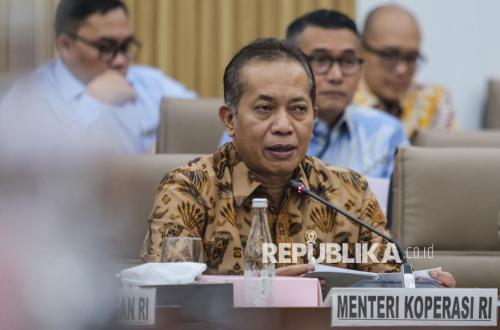
JAKARTA — The Ministry of Co-operatives is targeting the national co-operative movement to have its own cooking oil refinery by 2027, as part of efforts to strengthen downstream processing in the palm oil industry and increase added value for farmers.
Speaking at the National Meeting of Indonesian Oil Palm Farmers, organised by the Indonesian Oil Palm Farmers Association (Apkasindo) in Jakarta on Wednesday, Co-operatives Minister Ferry Juliantono said oil palm farmers’ co-operatives should expand their business from plantation management to processing crops into higher-value products, including cooking oil.
“Through a strategy to strengthen the people’s economy, the Ministry of Co-operatives is encouraging co-operatives not to stop at managing upstream plantations, but to independently build crude palm oil (CPO) mills and their own cooking oil refineries,” Ferry said in a ministry press release on Wednesday (28 October 2026).
Ferry said co-operative-based downstream development was needed to ensure farmers received greater economic benefits from the palm oil industry’s value chain, which has so far been dominated by large corporations.
He cited a co-operative in Musi Banyuasin, South Sumatra, which operates a CPO mill with a capacity of 60 tonnes per hour, as one model for co-operative-based palm oil industry development.
Ferry said the cooking oil produced by co-operatives would be marketed through the network of Merah Putih Village/Sub-district Co-operatives (KDKMP).
“The market is already there, and the outlets are already there. We can imagine tens of thousands of Merah Putih Village/Sub-district Co-operative outlets selling cooking oil produced by co-operatives themselves,” he said.
The Ministry of Co-operatives is also urging Apkasindo to form a partnership with PT Agrinas Palma Nusantara through a smallholder-plasma partnership scheme.
The co-operation is intended to involve co-operatives in managing land recovered through enforcement action by the Forest Area Enforcement Task Force (PKH), so that oil palm farmers can benefit from the resulting economic value.
At the same event, National Development Planning Minister and Bappenas head Rachmat Pambudy stressed the importance of farmer solidarity and stronger downstream processing to improve the welfare of smallholder oil palm farmers.
Rachmat urged plasma smallholders to maintain solidarity, including by helping stabilise fresh fruit bunch (FFB) prices at the farm gate and not being tempted to sell cheaply to outside parties.
Meanwhile, the chair of Apkasindo’s Board of Trustees, retired General Moeldoko, reaffirmed the association’s commitment to carrying out its two strategic functions: working with the government to safeguard regulations that support farmers, and acting as a bridge between the interests of farmers, businesses and the state.
Source: jawawa.id (https://jawawa.id/newsitem/co-operatives-target-cooking-oil-refinery-as-ministry-pushes-palm-oil-downstreaming-1793249539)
Originally published by Republika (https://ekonomi.republika.co.id/berita/tnni60490/kementerian-koperasi-dorong-hilirisasi-sawit-koperasi-bidik-kilang-minyak-goreng), translated from Indonesian