
Co-operatives Ministry Urges Coastal Co-operatives to Strengthen Fishers’ Bargaining Power
The Ministry of Co-operatives is urging co-operatives in coastal areas to provide a comprehensive range of business services needed by fishers. These include supplying subsidised fuel such as diesel, financing fishing trips, purchasing catches, and providing ice and cold storage.
The aim of strengthening this role is to give small-scale fishers better business options and a fairer share of the proceeds from fisheries.
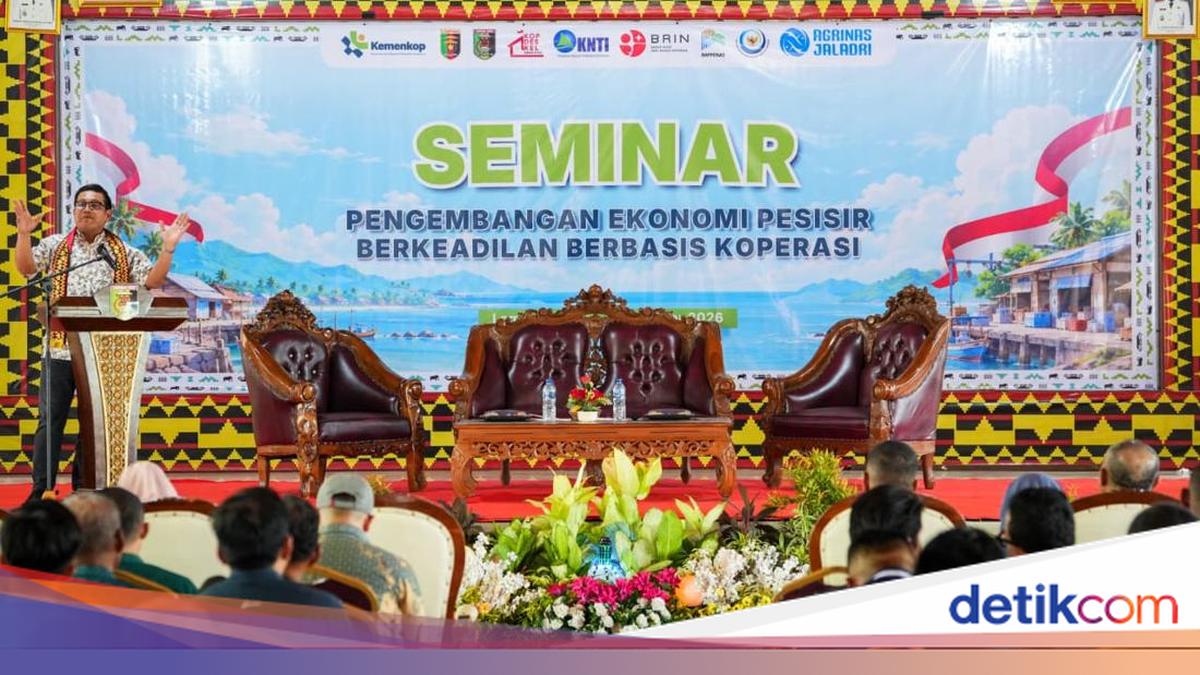
The ministry’s Deputy for Business Development, Panel Barus, made the remarks in his opening address at a seminar on the role of fish traders in coastal areas, themed “Developing an Equitable Coastal Economy Based on Co-operatives”, held on Thursday.
“Our biggest challenge is no longer simply increasing production, but ensuring fairness in the value chain and improving the welfare of small-scale fishers, who remain vulnerable,” Panel said in a written statement on Thursday (22 October 2026).
According to Panel, many rural people are trapped in poverty because of systemic factors.
“First, consumer goods and production supplies are expensive because logistics are inefficient and there are too many distribution rents. Second, when they need working capital, affordable credit and accessible lending mechanisms are not widely available. As a result, they become trapped in advance-purchase arrangements, moneylenders and middlemen,” he said.
Panel also identified a third problem: when people sell the fruits of their labour, prices fall, trapping them in a cycle of debt and keeping them in poverty.
He said fishers in coastal areas have a substantial need for subsidised diesel, ice and significant amounts of capital to go to sea.
A field study by the Ministry of Co-operatives, the National Research and Innovation Agency (BRIN) and the Indonesian Traditional Fisherfolk Union (KNTI) in Sukabumi and Indramayu regencies, as well as East Lampung, found that small-scale fishers’ access to wider markets still depends on a limited number of fish traders.
This relationship gives intermediary traders a strong position in the fisheries business chain.
However, the role of fish traders cannot be understood solely as a matter of market control. They provide a range of services that formal economic institutions have not adequately supplied, but which fishers need every day.
These services include operating capital for fishing trips, access to cash, guaranteed purchases of catches and emergency assistance during lean seasons. Traders also supply ice, cold-storage facilities and delivery networks. Their business relationships with fishers are reinforced by social ties and established trust.
Coastal co-operatives, meanwhile, generally perform only one or two functions, such as managing fish auction sites or distributing subsidised fuel, including diesel and Pertalite. They have not consistently provided financing for fishing trips, guaranteed purchases of catches or helped fishers manage business risks.
For that reason, the development of a co-operative-based coastal economy is intended to make business relationships fairer, more transparent and more competitive. The transformation is not designed to push fish traders out, but to strengthen fishers’ choices and bargaining power through co-operative institutions that can deliver practical services.
The Ministry of Co-operatives hopes the seminar will strengthen collaboration among ministries and agencies, local governments, academics, fisher organisations and businesses. The forum is also expected to produce agreement on a roadmap for developing a co-operative-based coastal economy, from improving governance to integrating business services.
The discussions will inform the operation of the Kampung Nelayan Merah Putih (KNMP), particularly by strengthening existing co-operatives and the Merah Putih Village Co-operatives (KDMP) that manage KNMP sites.
Government policy support and facilitation are expected to help co-operatives aggregate fishers’ catches, provide financing for fishing trips, and supply and manage logistics and cold-chain facilities.
Panel said co-operative networks and KNMP should ideally also be tasked with distributing subsidised diesel, which fishers urgently need.
He urged all stakeholders to use the forum to develop concrete joint measures.
The success of coastal co-operatives, he said, should be measured by whether they provide services fishers can rely on: access to capital to go to sea, preservation of catch quality and reliable markets that deliver greater benefits to fishers.
Source: jawawa.id (https://jawawa.id/newsitem/co-operatives-ministry-urges-coastal-co-operatives-to-strengthen-fishers-bargaining-power-1792659121)
Originally published by detikcom (https://news.detik.com/berita/d-8719136/kemenkop-dorong-koperasi-pesisir-perkuat-posisi-tawar-nelayan), translated from Indonesian