
Co-operatives Can Foster Community Self-Reliance and a People’s Economy, Minister Says
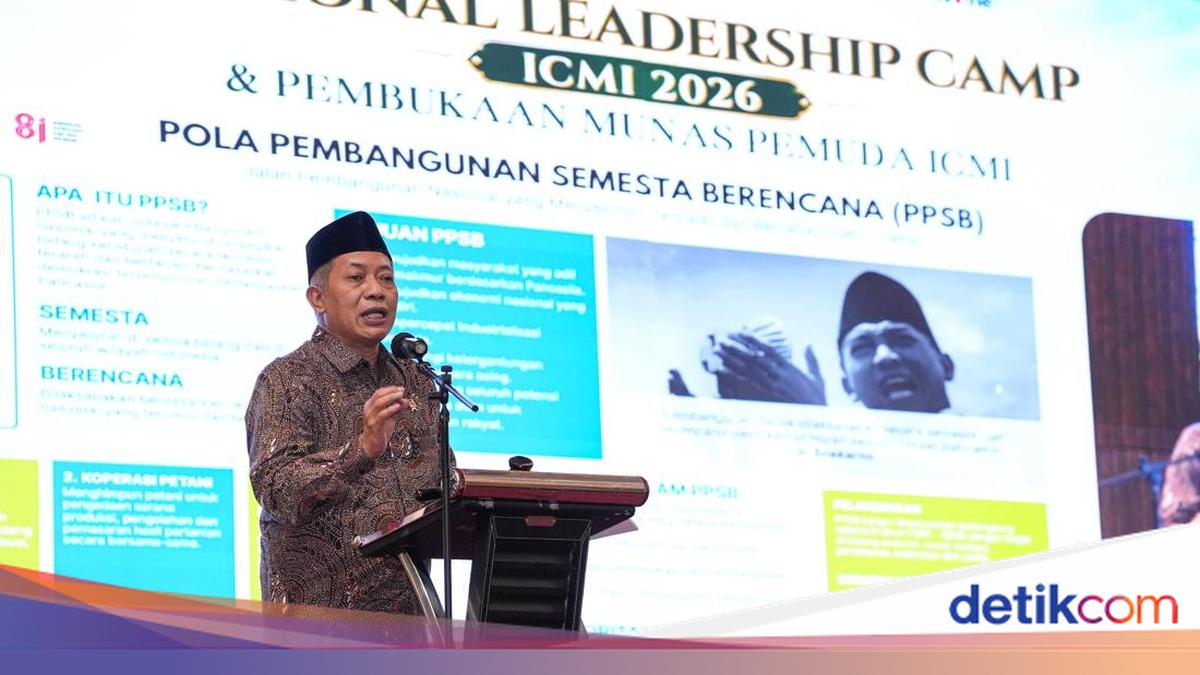
Co-operatives Minister Ferry Juliantono has called on the Indonesian Muslim Intellectuals Association (ICMI) and young people to help guide and support co-operatives, connect knowledge with business needs, open up market access and improve governance.
He said co-operatives were not merely business organisations, but an expression of the spirit of ta’awun, or mutual assistance, rooted in Article 33 of the 1945 Constitution. They were also a key foundation for building economic self-reliance among the people and achieving food sovereignty.
“I invite ICMI to make a practical contribution. The spirit of ta’awun is not just a theory; it means taking concrete action to build shared prosperity. Co-operatives are the way to do that,” he said in a written statement on Saturday (31 October 2026).
He made the remarks at ICMI’s 2026 National Leadership Camp in Jakarta, held under the theme “The Spirit of Ta’awun and the People’s Economy” and titled “Co-operatives as a Path to Community Self-Reliance and National Economic Equality”.
He said the national economy was founded on the principle of kinship, through joint enterprises managed by, from and for the people.
“Co-operatives give practical form to that spirit. Members pool capital, elect managers, oversee operations and share the returns fairly,” he said.
On the Islamic economy, Ferry said growth in Muslim fashion, halal food, tourism and Islamic finance should involve co-operatives to improve product quality, expand marketing and raise members’ incomes.
“Islamic co-operatives, micro, small and medium-sized enterprises, Islamic boarding schools and traditional markets are the roots of the people’s economy. Islamic banking, capital markets and social funds provide complementary support. They must all reinforce one another,” he said.
Ferry said the Merah Putih Village/Urban-Ward Co-operative (KDKMP) was now the main platform for realising this vision. Its primary task was to shorten lengthy supply chains and reduce distribution costs that put upward pressure on consumer prices.
“Intellectuals can connect knowledge with business needs through research and mentoring. Market networks also need to help co-operatives compete,” he said.
Meanwhile, Bakom chief Syahganda Nainggolan underscored the strategic role of young people, intellectuals and communities such as ICMI in supporting co-operatives and empowering the people’s economy. Knowledge, networks and communication skills should be used to build communities’ capacity, rather than serve only personal interests.
“Tell people what is right, help the weak to be heard, and ensure policies are understood and their benefits felt on the ground,” he said.
He added that co-operatives should address people’s practical needs, from supplying essential goods and collecting production to providing fair access to capital.
“If co-operatives truly grow and are well managed, Indonesia will not only stand firm economically, but also realise the justice that has been a national aspiration since independence,” he said.