
CNG to Become LPG Alternative, Here Are PGN's Preparations
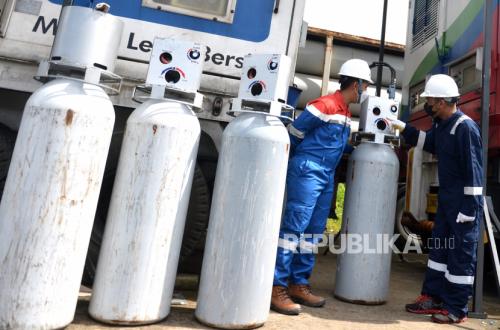
PT Perusahaan Gas Negara (Persero) Tbk (PGN) is ready to support the government’s efforts to promote national energy diversification and optimise domestic energy utilisation, including expanding the use of compressed natural gas (CNG). PGN Corporate Secretary Fajriyah Usman stated that PGN has extensive experience in natural gas management, both through pipeline networks and non-pipeline modes such as CNG and LNG. “In terms of readiness, PGN currently has CNG infrastructure consisting of 14 CNG filling stations/mother stations and four mobile refuelling units (MRU),” Fajriyah said in Jakarta on Friday (26/6/2026). Fajriyah conveyed that Pertamina’s gas subholding also possesses technical and operational capabilities in non-pipeline gas distribution. Furthermore, PGN’s CNG infrastructure and facilities are capable of reaching customers in the transportation, commercial, and industrial sectors across various regions. “PGN is ready to support the government’s study in formulating a targeted, economical, and sustainable CNG implementation model, including synchronisation with pricing, infrastructure, and trading policies,” Fajriyah said. Previously, Minister of Energy and Mineral Resources (ESDM) Bahlil Lahadalia targeted the trial of 3-kilogram capacity compressed natural gas (CNG) cylinders to be completed around July–August 2026. “It is currently undergoing the third phase of testing. God willing, please pray, we can finish it this July or August,” Bahlil said after inaugurating the Mini LNG Plant of PT Sumber Aneka Gas in Tuban, East Java, on Thursday (25/6/2026). CNG is not a new technology, as it has been used in the hospitality, restaurant, and café (horeka) sectors, as well as for the Free Nutritious Meals (MBG) programme. However, its utilisation has so far been limited to large-capacity cylinders, specifically those above 10 to 20 kilograms. Currently, Indonesia is conducting trials of 3-kilogram capacity CNG cylinders in China and Indonesia. The trials are being carried out to develop small-sized CNG cylinders equivalent to 3-kilogram LPG cylinders. According to Bahlil, the main challenge in the trial is the technical aspect, because CNG gas pressure reaches around 200–250 bar, much higher than LPG which is in the range of 5–10 bar. “If the cylinder trial is completed, then we can push for mass adoption in several feasible locations,” Bahlil said. He stated that the government continues to study the use of CNG as an alternative to replace 3-kilogram LPG cylinders in order to reduce dependence on energy imports. Therefore, trials are ongoing. Bahlil said Indonesia’s average LPG consumption reaches more than 8.5 million metric tons (MT) per year. However, national LPG production is only around 1.91 million MT, meaning approximately 7.47 million MT must still be met through imports. CNG has the advantage that all its raw materials are available domestically, including abundant natural gas sources. The government has also discovered new gas reserves in East Kalimantan that could potentially be allocated for domestic needs. Therefore, Bahlil is striving to accelerate the adoption of CNG as an LPG alternative to achieve energy self-sufficiency and sovereignty.