
Cloud Security as a Future Career: Opportunities and Job Requirements
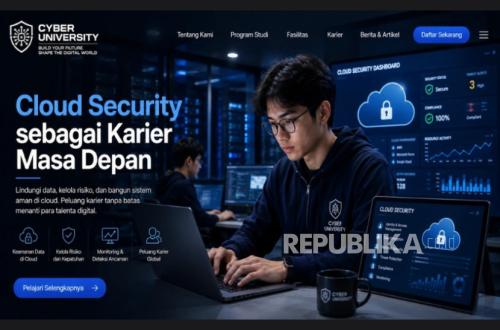
In the current era of digital transformation, nearly all business operations and crucial company data have migrated to cloud storage. However, along with the massive movement of data, the threat of cyber attacks and privacy breaches is increasingly looming. This crisis condition is prompting companies from various sectors to compete in seeking the best IT talent to protect their valuable assets. It is no wonder that cloud security as a future career is now one of the most promising and prestigious professional opportunities for the younger generation.
More than just offering high salary prospects, entering the field of cloud security means taking on a crucial role as the front line in protecting the digital ecosystem. For students and fresh graduates who wish to delve into the world of technology, this career path promises a highly dynamic trajectory. So, how large are the job opportunities in this digital security sector, and what technical competencies must be prepared to compete in the industry? See the following review.
What Is Cloud Security and Why Is It Very Important?
Cloud security is a layered protection system that maintains the integrity of data, applications, and digital infrastructure. Experts design this technology specifically to ward off various cyber threats that could potentially attack cloud computing environments. Simply put, this practice acts as a sturdy shield ensuring that only authorised parties have access to an organisation’s confidential information.
The need for this digital security has surged sharply as the majority of companies move their operational centres into virtual spaces. This massive migration has provoked cyber criminals to continue launching increasingly sophisticated and complex attacks. They are always targeting system weaknesses to steal identities, break into accounts, and damage the reputation of global-scale businesses.
Therefore, today’s industry relies heavily on the presence of professional personnel capable of securing their technology infrastructure. Cloud security experts are tasked with analysing risks, closing vulnerability points, and responding to incidents in real time. Companies realise that investment in human resources who master this field is as important as maintaining the continuity of the business itself.
Career Opportunities and Cloud Security Competency Requirements Sought by Industry
The technology industry is currently opening wide doors for young talent who wish to build a career in the data protection sector. Almost all companies, from the banking sector, e-commerce startups, to government agencies, are actively recruiting digital security experts. The following are several prestigious positions that can serve as a career foundation:
Cloud Security Engineer
They are the main architects who design, build, and maintain the overall security posture of a company’s cloud systems. This profession demands the ability to formulate security policies from scratch, test infrastructure resilience against potential attacks, and recommend the latest technology solutions to close every vulnerability gap before hackers become aware of it.
Security Operations Center (SOC) Analyst
SOC analysts act as the eyes and ears of the company in cyberspace, monitoring network traffic in real time around the clock. Their main tasks include detecting anomalies, investigating suspicious movements, and sounding warning alarms when they find indications of hacking so that the team can immediately mitigate the impact of an attack.
DevSecOps Engineer
This innovative profession bridges the gap between application development teams and security teams. They are responsible for integrating protection protocols directly into the software development cycle from the writing of the first code. This approach ensures that every application released to the public has been automatically security-tested without slowing down the production process.
Identity and Access Management (IAM) Specialist
This specialist holds the key to the main gate of a company’s internal data protection. They are tasked with designing and managing user access rights systems strictly, implementing multi-layered authentication, and ensuring that only staff with legitimate permission are allowed to penetrate sensitive database systems.