
Closing the Option for Layoffs, Minister of Home Affairs Outlines Strategy for PPPK and Contract Workers
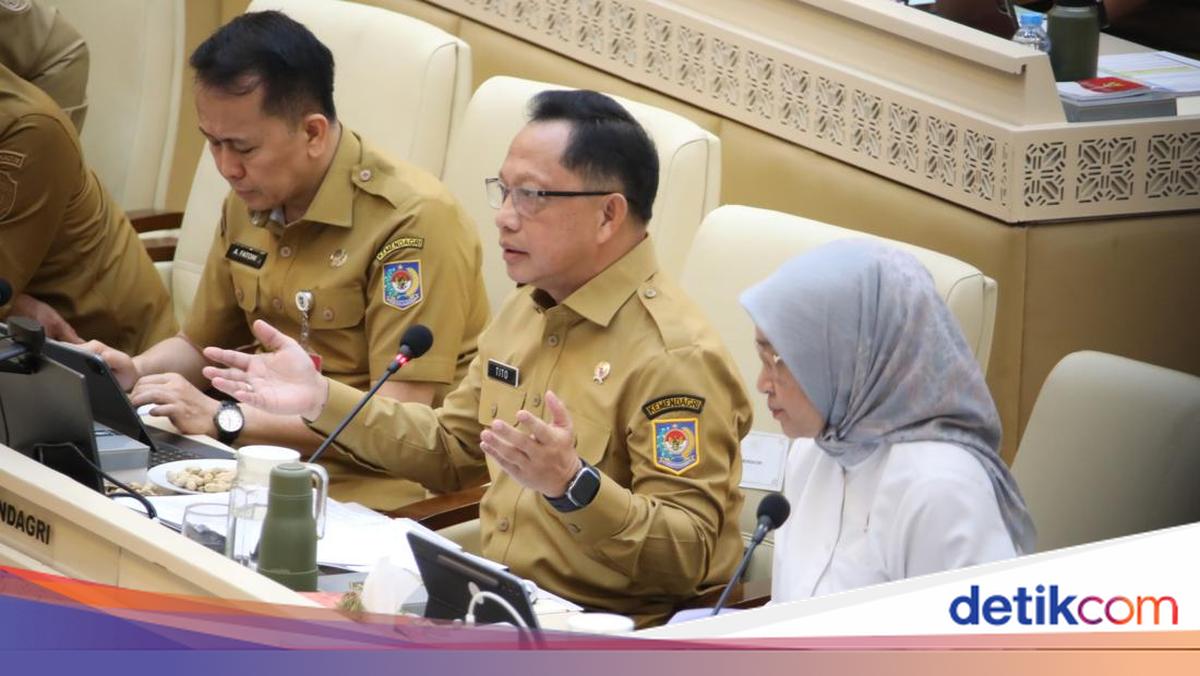
The Minister of Home Affairs, Muhammad Tito Karnavian, has ensured that there is no expectation for employee dismissal options. He conveyed this during a Hearing Session (RDP) with Commission II of the Indonesian House of Representatives (DPR RI) regarding issues involving Government Employees with Work Agreements (PPPK) and honorary staff.
“We do not expect any option for employee dismissal,” the Minister stated in a written statement on Monday (8/6/2026).
During the meeting, Tito also outlined several strategies to adjust the employee expenditure posture to a maximum of 30 per cent, as mandated by the Law on Central and Regional Financial Relations (UU HKPD) starting from 2027. From the expenditure side, he urged local governments (Pemda) to refrain from both new recruitment and the dismissal of existing employees. “[Regional heads] must be firm: there shall be no new recruitment of honorary staff,” he emphasised.
From the revenue side, Tito encouraged creativity among local governments to increase Regional Original Income (PAD). He also urged the optimisation of Regional-Owned Enterprises (BUMD) to serve as instruments for boosting PAD. In this regard, Tito cited the success of Pekanbaru City, which managed to increase its PAD from Rp800 billion to over Rp1 trillion through streamlined licensing processes. He also noted Banyuwangi Regency, which successfully linked restaurant and hotel taxes directly to the local government, thereby impacting PAD.
Previously, Tito held meetings with the Minister of Administrative and Bureaucratic Reform, Rini Widyantini, and the Minister of Finance, Purbaya Yudhi Sadewa, in early May. The results of those meetings have led to a proposal to extend the transition period for the implementation of the UU HKPD by one year. “Not through a revision of the UU HKPD, but by including it in the 2027 State Budget (APBN) law, extending it for one year. In accordance with the legal principle of Lex Posterior Derogat Legi Priori, the later rule overrides the previous one,” he concluded.