
Closing the Gaps in Regional Budget Corruption
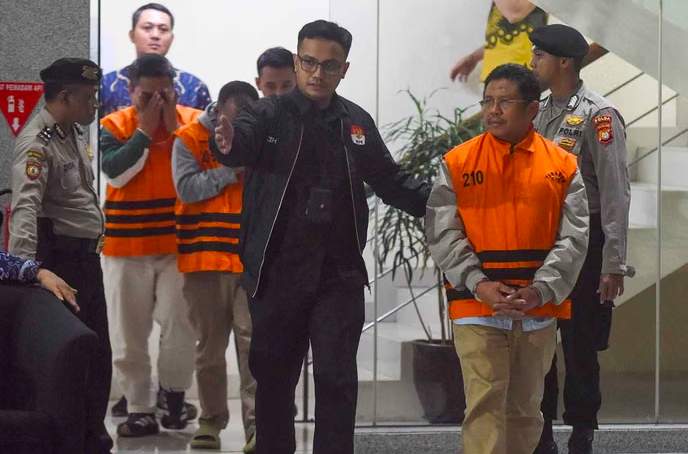
Corruption in the regions does not always begin when a government project is executed or when regional budget (APBD) funds have been disbursed. The Corruption Eradication Commission (KPK) has found that the potential for irregularities is already present from the planning and budgeting stages. The KPK identified potential leakage in the Regional Revenue and Expenditure Budget (APBD) amounting to Rp2.37 trillion throughout the first half of 2026. This figure does not represent seized money or state losses that have already occurred. The Rp2.37 trillion value represents potential irregularities that were successfully discovered and corrected before causing regional losses. However, these findings illustrate the vast scope that still requires oversight in regional financial management. From mapping results using the monitoring controlling surveillance for prevention (MCSP) instrument, the KPK found three stages of APBD management most vulnerable to becoming entry points for corruption: planning, budgeting, and the procurement of goods and services. The greatest potential for irregularities lies in the budgeting stage, with a value of Rp1.58 trillion. This is followed by the planning stage at Rp715 billion and the procurement of goods and services at Rp71 billion. Deputy for Coordination and Supervision at the KPK, Ely Kusumastuti, stated that the entry point for regional financial leakage occurs when implementation does not comply with regulations and there is an abuse of power in policy-making. This means corruption can begin long before the budget is realised. Decisions regarding programmes, budget recipients, and projects to be undertaken can become the starting point for irregularities. ‘The entry point for regional financial leakage is when what is implemented does not comply with regulations. This means there is already an intention to commit corruption, there is an abuse of power in policy-making,’ Ely stressed in an official statement cited on Wednesday (12/8). At the planning stage, according to Ely, the KPK discovered several patterns that need to be watched. One of them is the proposal of main ideas (pokir) from the Regional House of Representatives (DPRD) that are not recorded in the Regional Government Information System (SIPD). In addition, there are cross-electoral district proposals and work that does not match the initial proposals. The problems then continue into the budgeting stage. The KPK found potential irregularities in the form of fictitious official travel, unreasonable honorariums, duplication of recess budgets, and irregularities in social assistance and regional financial assistance. ‘At the procurement of goods and services stage, the KPK found risks in the form of providers repeatedly winning work packages, unusual system activity, and suspected conditioning of transactions through e-purchasing,’ Ely explained. These findings show that digitalisation has not automatically closed the gaps for corruption. Procurement through electronic systems is indeed designed to be more effective, efficient, transparent, and competitive. However, according to the KPK, the use of e-purchasing does not mean the procurement process is free from the possibility of conditioning. This vulnerability is also evident from a number of corruption cases that have occurred in the regions. In East Java, the bribery case concerning the Malang City DPRD’s Amended APBD discussion in 2015 serves as an example of vulnerability at the planning stage. Meanwhile, the community group grant fund case from 2019–2022 demonstrates the risks at the budgeting stage. The sting operations (OTTs) in Tulungagung Regency in 2018 and Sidoarjo Regency in 2020 are examples of vulnerability in the procurement of goods and services. This series of cases and findings shows that the problem of APBD corruption lies not only in individual behaviour but also in the design and implementation of the budget management system. According to Ely, when planning is not transparent, budgeting can be directed for specific interests. When oversight is weak, the budget that has been prepared can be manipulated. When procurement is not competitive, government projects can be conditioned for certain parties. Therefore, prevention must be carried out before the budget becomes expenditure. ‘The KPK recommends strengthening the function of the Government Internal Supervisory Apparatus (APIP), reviewing grant budgets, social assistance, DPRD pokir and financial assistance, field verification of grant spending for 2027, consolidation of goods and services procurement, and periodic monitoring with regional governments,’ she concluded. Secretary General of the Ministry of Home Affairs (Kemendagri), Tomsi Tohir, emphasised the importance of building integrity as the foundation of government accountability. ‘The strengthening framework starts from instilling values and exemplary conduct as a culture, digitalisation and system-based performance, and APIP as a supervisory partner,’ he stated. The KPK and Kemendagri have begun briefings in 10 regions to map corruption-prone areas and formulate steps to improve regional governance. This effort began in Surabaya and was attended by 47 regional governments from East Java and Bali. These preventive measures are important because potential irregularities can be closed before they become regional losses. However, supervision must not stop at audits after the budget has been used.