
Climate Risk Becomes a Factor in Infrastructure Financing as IIF Adopts International Standards
JAKARTA — Climate risk management is becoming a factor in infrastructure project financing as investors increasingly demand transparency and sustainability. Infrastructure finance companies need to consider both physical climate risks and transition risks to support projects’ long-term resilience.
PT Indonesia Infrastructure Finance (IIF) has integrated Climate Risk Management into its Enterprise Risk Management framework. Since 2025, the company has applied climate risk management procedures to projects under way as well as those being prepared for financing.
The procedures are implemented through the Policy Implementation Procedure (PIP) for Climate Risk Management. The policy is intended to help identify and manage climate risks that could affect the viability of infrastructure projects.
In addition to risk management, IIF has adopted the International Financial Reporting Standards (IFRS) S1 and IFRS S2 sustainability reporting standards. Their adoption is intended to align the company’s reporting with the information needs of investors and international stakeholders.
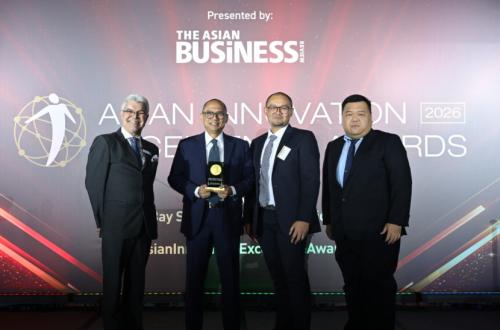
IIF’s operational innovation and ESG services received three international awards on 20 October 2026. They included Operational Innovation of the Year – Financial Services at the Asian Innovation Excellence Awards 2026, as well as Best ESG Advisory and Best ESG Service Provider at the CorporateTreasurer Awards 2026.
IIF President Director and Chief Executive Rizki Pribadi Hasan said the awards reflected the company’s development of services to meet infrastructure financing needs. He said climate risk management and access to sustainable financing were among the challenges facing clients.
“These awards reflect how IIF’s innovation, advisory services and strengthened ESG capabilities help clients address increasingly complex challenges, from the need for faster decision-making and climate risk management to improved access to sustainable financing,” Rizki said in a statement.
The Asian Innovation Excellence Awards 2026 recognised the transformation of IIF’s Financial Planning & Analysis (FP&A) function. The company developed its reporting function into a more integrated, data-driven system to support faster decision-making.
The transformation was intended to improve the effectiveness of project evaluation and services to clients. Developing its analytical system is also part of the company’s efforts to support infrastructure financing activities.
The two CorporateTreasurer Awards 2026, meanwhile, recognised IIF’s environmental, social and governance (ESG) advisory services. Through these services, the company supports clients in applying sustainability principles and managing ESG risks in their business and investment activities.
Alongside financing and advisory services, IIF provides clients with training in measuring greenhouse gas (GHG) emissions. The programme aims to improve understanding of emissions calculation methodologies and readiness to meet sustainability reporting requirements.
During 2025–2026, IIF also took part in several international forums discussing the development of sustainable infrastructure financing. Its participation provided an opportunity to exchange experience on applying sustainability principles to project finance.
By combining financing, ESG advisory and data-driven analysis, IIF aims to help project developers, state-owned enterprises and businesses manage sustainability risks. The approach is intended to support financing viability and the resilience of infrastructure projects.