
Climate 'Doomsday' Signs Become Clearer as Scientists Reveal Indicators in the North Atlantic
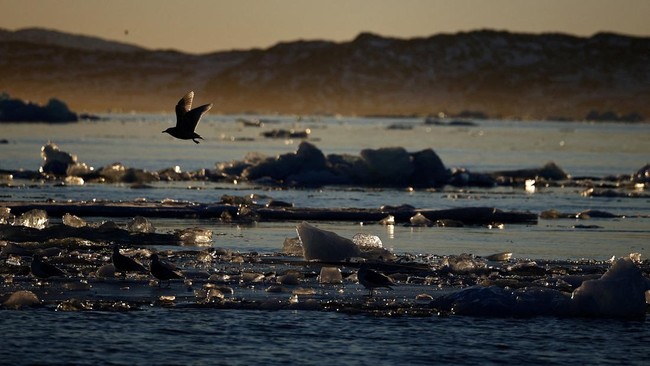
The climate crisis is becoming increasingly evident across the globe, with worrying signs emerging in the North Atlantic waters just south of Greenland and Iceland. While average sea surface temperatures are rising worldwide, the air over this specific marine region is actually cooling. Experts have now identified the cause of this anomaly, pointing to a deeply concerning signal of a potential severe climate crisis. This cooling patch, dubbed the ‘cold blob’ or ‘warming hole’, has chilled by nearly 1 degree Celsius since 1900. Scientists have long debated whether this anomaly was caused by heat loss from the sea surface due to shifting wind and cloud patterns, or whether it signalled a weakening of a crucial ocean current system that transports heat. New research concludes the latter, presenting a worrying future outlook. The Atlantic Meridional Overturning Circulation (AMOC) functions like a vast ocean conveyor belt, drawing warm water from the tropics to the Northern Hemisphere, where it cools, sinks, and flows back south. Studies indicate this system is weakening because human-caused global warming is melting ice and causing a surge of freshwater into the sea, disrupting the delicate heat and salinity balance of the AMOC. Some scientists warn that the AMOC is heading towards a tipping point, potentially as early as this century, meaning a future collapse is inevitable. A shutdown of the AMOC would be a global catastrophe, causing accelerated sea-level rise on the US East Coast, plunging Europe into freezing winters, and shifting African monsoons to cause prolonged drought. The cold blob is interpreted as a footprint of AMOC change because it is the region where the current carries much of its heat. To better understand developments in this part of the Atlantic, scientists combined real-world ocean heat data from instruments and satellites with climate models. They found the cooling in the blob occurs not just at the surface but deep in the ocean, where atmospheric conditions such as wind and clouds have a much weaker influence. All signs point to the AMOC’s influence, according to the study’s findings. ‘This alters ocean heat transport,’ driving the cooling of the cold blob, said Stefan Rahmstorf, study author and professor of physics and oceanography at the University of Potsdam in Germany.