
Climate Disasters Increasingly Deadly, World Suffers Rp81,000 Trillion in Losses
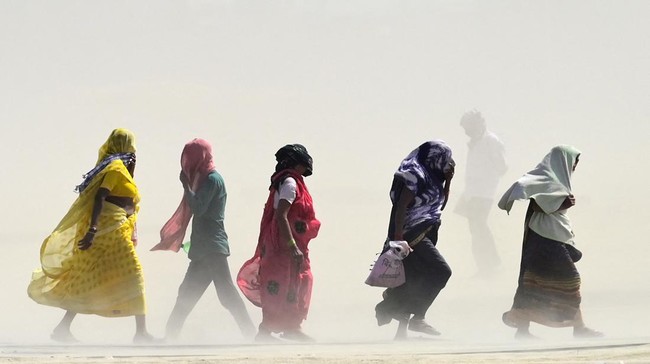
Extreme weather is no longer just a threat but has become a global disaster claiming lives and causing massive economic losses. Throughout 1995-2024 alone, various extreme weather disasters killed more than 832,000 people worldwide, with total losses reaching US$4.5 trillion, nearly equivalent to the economic value of the United Kingdom. The Climate Risk Index 2026 report from Germanwatch reveals an interesting phenomenon: the disasters that kill the most people are not necessarily the ones causing the greatest economic losses. Heatwaves were recorded as the deadliest killer, with 278,395 fatalities over the last three decades, but only caused economic losses of around US$32.9 billion due to minimal physical damage to infrastructure. Conversely, storms were the disasters with the largest economic impact, destroying assets worth US$2.6 trillion while also claiming 274,750 lives. Heatwaves topped the list as the world’s deadliest weather hazard, responsible for 278,395 deaths globally over the last three decades. Extreme heat can drastically worsen individuals’ health conditions, while heatstroke can be instantly fatal. Despite having the highest fatality rate, heatwaves recorded the lowest economic losses, underscoring their status as a ‘silent predator’ that claims lives without destroying infrastructure. In 2022, more than 60,000 people in Europe died due to extreme heat, following a tragedy in Russia in 2010 that killed 56,000 people. Storms ranked second, resulting in 274,750 fatalities. Unlike heatwaves, storms leave a trail of significant material destruction. Economic losses from storms reached US$2.6 trillion, making them the greatest financial burden compared to all other weather hazards. For instance, Cyclone Nargis in Myanmar in 2008 killed more than 138,000 people, while Hurricane Mitch in Honduras caused US$7 billion in material losses and claimed 14,000 lives. Other disasters such as floods, droughts, and wildfires followed, with their cascading impacts also impossible to ignore. Extreme heatwaves are no longer a rare phenomenon. From South Asia to North America, temperatures continue to shatter records as climate change accelerates. Indonesia has not been spared from this trend. In April 2024, temperatures reached 44°C in Jaipur, India, and 50°C in Shaheed Benazirabad, Pakistan, during a heatwave across South Asia. Experts now warn that such conditions are rapidly becoming the norm in many parts of the world. At the national level, countries across the globe have broken heat records in just the last six years. Cambodia and Myanmar recorded new highs in April 2024, reaching 42.8°C and 48.2°C respectively. In 2022, Australia and Uruguay matched their national records at 50.7°C and 44.0°C, while the United Kingdom breached the 40°C mark for the first time. In 2021, one of the world’s hottest years, Canada recorded a staggering 49.6°C, marking the third-highest national temperature globally during this period. That same summer, Italy reported 48.8°C in Syracuse, a European record later confirmed by the World Meteorological Organization.