
Climate Crisis Threatens Clean Water, Regulations Need Strengthening
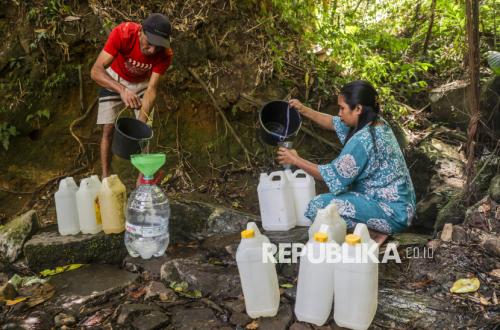
The impact of climate change makes strengthening the governance of drinking water and sanitation increasingly urgent, while access to infrastructure does not always guarantee that the public receives safe services. This situation necessitates regulatory updates so that drinking water and sanitation policies not only pursue access coverage but also pay attention to service quality and resilience to climate change.
Chairwoman of the Bandung Institute of Technology Environmental Engineering Alumni Association (IATL ITB) Annie Wahyuni stated that access to safe drinking water and proper sanitation must be a focus in building community resilience.
Annie conveyed this during the conference ‘From Vulnerability to Resilience: Water and Sanitation Regulatory Reform in the Midst of the Climate Crisis’, part of the Indo Water 2026 Expo & Forum in Jakarta. She welcomed the House of Representatives’ (DPR) ongoing deliberation of a bill concerning drinking water and sanitation security.
‘This bill is expected to become a strong foundation for guaranteeing the public’s right to safe drinking water and proper sanitation services, while strengthening the sustainable governance of the drinking water and sanitation sector,’ Annie said.
According to Annie, the discussion of this regulation is increasingly relevant amidst the growing threat of the climate crisis. She assessed that input from various parties is needed so that the resulting regulation can address the issues of water and sanitation services as well as changing environmental conditions.
‘This momentum is very important. Therefore, today’s forum is not only a space for discussion but also a space for contribution,’ Annie added.
Annie stated that input from academics, local governments, service providers, civil society, and all stakeholders is required so that the resulting regulation truly answers the needs of the community and the challenges of climate change.
‘Input from academics, local governments, service providers, civil society, and all stakeholders is greatly needed so that the regulation born truly answers the people’s needs and the ever-evolving challenges of climate change,’ Annie continued.
Annie emphasised that the provision of drinking water and sanitation is not solely the government’s responsibility. The public also has a role in maintaining the sustainability of water resources and the environment.
‘We can contribute by using water wisely, protecting catchment areas, keeping rivers free from pollution, reducing plastic waste, supporting safe sanitation, and educating the younger generation to love the environment,’ Annie added.
She invited all elements of society to strengthen a drinking water and sanitation system that is robust, fair, inclusive, and capable of adapting to climate change. According to Annie, a nation’s progress is also reflected in its ability to ensure the basic needs of its people are met.
‘The measure of a nation’s progress is not only its towering buildings, but also its ability to guarantee every citizen access to safe drinking water and proper sanitation,’ Annie said.
Annie hopes that strengthening regulations and community involvement can become the foundation for building a drinking water and sanitation system that is better prepared to face climate change while guaranteeing service quality for future generations.
‘Let us bequeath a healthier, more resilient, and more sustainable Indonesia to the generations to come,’ Annie said.
Meanwhile, Republika’s Editor-in-Chief Andi Muhyiddin, who moderated the forum, highlighted the gap between access to water and sanitation infrastructure and the quality of services received by the public. According to him, the existence of a pipe network and a water tap in a house does not automatically indicate that the community’s drinking water needs have been met.
Dio explained that the fundamental issue needing to be addressed is not only whether the public has access to water, but whether the available water is safe to use and consume. A similar issue applies to wastewater and sanitation management.
‘If a house already has a water tap, does that mean the drinking water problem in that house is solved? Not yet,’ Dio stated.
Based on data from the Center for Disease Control and Prevention (CDC), Dio said that out of 195 countries, only about 50 have tap water that is directly drinkable. Indonesia, he noted, is not yet included in that group of countries.
He also touched upon data from Yale University’s Environmental Performance Index (EPI) regarding water quality. In that data, Indonesia reportedly scored 24.9, lower than Timor Leste, which scored 26.2. ‘So it is indeed ironic,’ Dio said.
Dio mentioned that the issue of directly drinkable tap water remains a challenge for Indonesia. Therefore, the discussion on drinking water and sanitation must start from the certainty that the available infrastructure produces safe services.
So far, the success of development in the water and sanitation sector is often measured by the number of people who have gained access. In reality, access to infrastructure does not always mean the public receives services that meet safety aspects.
‘There is water access, there are pipes, there are taps, water flows. But then we ask again, is that water safe to drink?’ Dio questioned.
Beyond water quality, the next issue is the management of wastewater after use. Dio questioned where the waste is channelled and whether the discharged wastewater can return to the environment, including rivers, in a safe condition.
Dio assessed that this shift in perspective is important amidst the water and sanitation issues still faced by the public. In several regions, problems of contaminated water, sanitation-related diseases, declining river carrying capacity, and service vulnerability to the impacts of climate change remain challenges.
According to Dio, the gap between access indicators and service quality needs attention.