
Climate Crisis: From Awareness to Real Action
Indonesia’s future will be determined not by how much we speak about climate change, but by how quickly and seriously we act to confront it. The world is warming faster than anticipated, with various global climate records broken between 2023 and 2025.
In an article published in Weather in 2025, Dr Caroline Sandford reported that Earth’s average temperature in 2024 reached 1.55 degrees Celsius above pre-industrial levels, making it the hottest year in modern observational history. Furthermore, global temperatures increased by approximately 0.25 degrees compared to 2023, a massive surge within a single year. The United Nations has described the period since 2023 as the beginning of the ‘global boiling era,’ despite international efforts to limit global temperature rises to the 1.5 degrees Celsius target set by the Paris Agreement. Exceeding this threshold signals that the climate crisis is evolving faster than predicted.
This accelerated warming is closely linked to ocean conditions. According to Dr Joseph Giguine in Environmental Research: Climate (2024), 2023 recorded the highest sea surface temperatures and global ocean heat content. As oceans absorb more than 90 per cent of the excess heat caused by global warming, changes in ocean temperature serve as a critical indicator of climate change direction.
Conditions in polar regions are also increasingly alarming. Dr Minghu Ding, in Advances in Climate Change Research (2025), reported that sea ice extent in Antarctica and the Arctic has reached its lowest point in modern observational history. The Arctic, in particular, is warming nearly three times faster than the global average.
Scientifically, the acceleration of global warming since 2023 is triggered by a combination of increased greenhouse gases from human activities, Earth’s energy imbalance, the rapid transition from La Niña to a strong El Niño in 2023, and ocean warming reaching historic highs. Scientists are also finding indications that global warming does not always occur gradually and linearly, but can occur through surges triggered by massive heat releases from the oceans to the atmosphere.
Indonesia stands at the forefront of the climate crisis. In marking World Environment Day 2026, Indonesia adopted the theme ‘Time to Work for Climate’ with the hashtag #NowForClimate. This theme is highly relevant as the world is no longer in a warning stage but has entered the phase of being impacted by climate change.
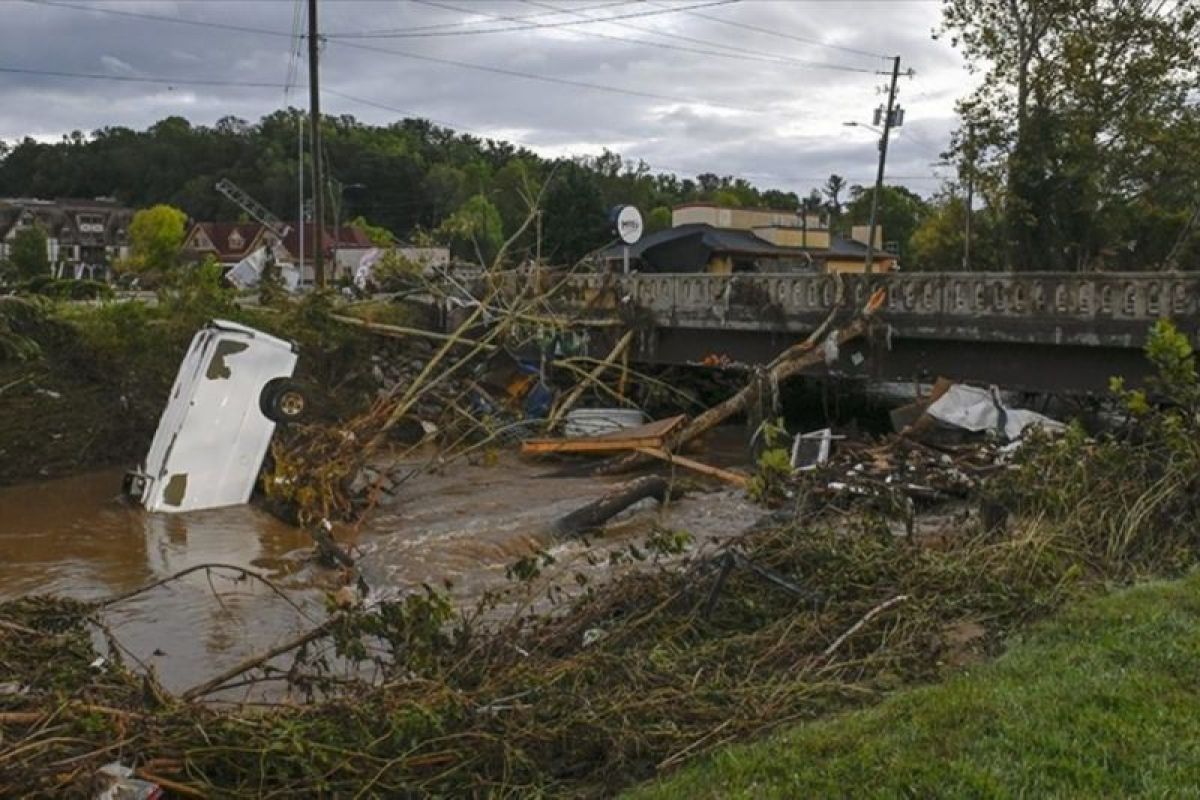
As the world’s largest archipelagic nation, Indonesia is among the most vulnerable to the impacts of climate change. Rising sea levels threaten coastal areas, settlements, infrastructure, and various economic activities that sustain the livelihoods of millions. Global warming also increases the atmosphere’s capacity to hold water vapour, thereby increasing the likelihood of extreme rainfall. Consequently, the risk of hydrometeorological disasters, such as floods, landslides, and extreme weather, is rising. Various studies show that the frequency of flooding continues to increase in many Indonesian cities, including Jakarta.
Another threat is the emergence of tropical cyclones around Indonesian waters. Tropical Cyclone Senyar in late 2025 demonstrated that the risk of extreme weather in Indonesia’s maritime region is becoming more complex. Although there is no strong evidence yet that the formation region for tropical cyclones has shifted closer to the equator, the threat of tropical cyclones to Indonesia cannot be ignored.
Climate change also places immense pressure on the agricultural sector. Changes in rainfall patterns, rising temperatures, and more frequent droughts disrupt planting calendars and reduce agricultural productivity. In the long term, these conditions could threaten national food security. Additionally, changes in temperature and rainfall patterns increase the risk of the spread of climate-sensitive diseases, thereby increasing the burden on public health and the government.