
Climate Change Triggers Vaname Shrimp Disease, Mineral Fertilisation Seen as Solution
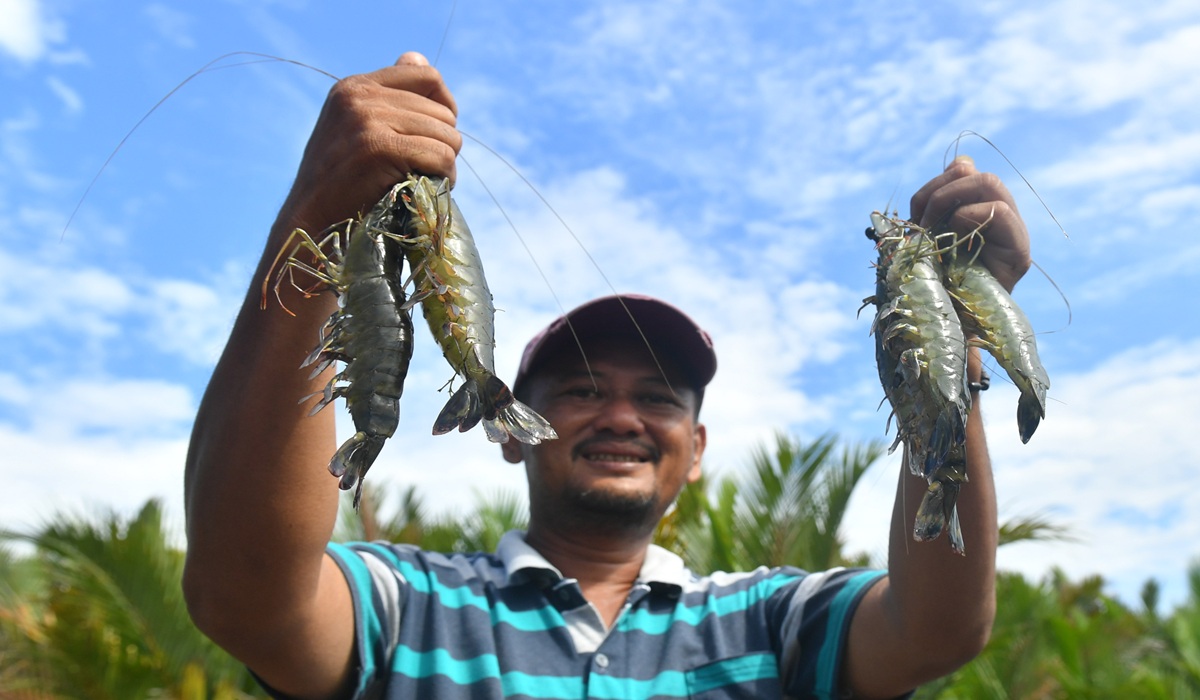
Climate change, marked by extreme weather and prolonged high temperatures, is becoming a serious threat to Indonesia’s aquaculture sector. In vaname shrimp farming, unstable environmental conditions are considered a key trigger for rising disease outbreaks and harvest failures across various pond regions. Professor Kukuh Nirmala, a senior academic at the Faculty of Fisheries and Marine Science at IPB University, said climate change makes the dynamics of aquaculture water quality more difficult to control. When water quality fluctuates, the pond ecosystem is easily disrupted, and such conditions can favour pathogenic microorganisms harmful to shrimp. “Shrimp require stable and good water quality so that energy is focused on growth, not on coping with environmental stress. When the environment is disturbed, the shrimp’s immune system weakens and disease becomes easier to attack,” Professor Kukuh explained. According to him, disease outbreaks remain one of the biggest challenges in national shrimp farming. The disease attack rate is said to reach 40.31 per cent, with potential shrimp mortality ranging from 20 to 100 per cent. This situation causes pond production to fluctuate and pressures the sustainability of farmers’ businesses. Professor Kukuh cited a case in Kendal, Central Java, where an infectious myonecrosis virus outbreak in a 46.7-hectare pond area led to a production decline of up to 257 tonnes. The resulting economic losses reached IDR 21.3 billion. Beyond climate change, another issue requiring attention is mineral deficiency in modern ponds. Professor Kukuh explained that the use of high-density polyethylene plastic liners can indeed reduce toxic H2S gas from the pond bottom. However, at the same time, the liner also cuts off the natural mineral supply from the soil to the pond water. As a result, the pond ecosystem balance becomes more easily disrupted, making shrimp increasingly vulnerable to environmental stress and disease. To address this problem, Professor Kukuh advocates the application of complete macro and micro mineral fertilisation in shrimp ponds. Based on field trials along the northern coast of Java, this method was able to increase shrimp survival rates by up to 42 per cent compared to ponds without complete mineral fertilisation. Pond productivity also improved, with production rising from an initial 14.45 tonnes per hectare to 20.976 tonnes per hectare after implementation. “In addition to increasing productivity, good aquaculture environmental management is also important to guarantee food safety. Farmed products must be ensured free from harmful residues such as heavy metals Hg, Pb, and Cd, as well as free from contamination by pathogenic bacteria like E. coli and Salmonella through optimal water quality management,” Professor Kukuh stated. He believes sustainable aquaculture also has great potential as a new economic resource for Indonesia’s younger generation, a potential that is becoming increasingly important amid the demographic bonus and the need for job creation. “A single hectare of shrimp pond can require around four workers, not including supporting sectors such as feed mills, hatcheries, equipment, medicines, and post-harvest processing,” he said. Furthermore, Professor Kukuh stressed the importance of implementing zero waste and circular economy concepts in national shrimp farming. One step that can be taken is utilising aquaculture waste as agricultural fertiliser so it does not pollute the environment. “The main case that can damage the environment is aquaculture discharge. Therefore, there needs to be cooperation between the aquaculture and agriculture sectors so that aquaculture waste can be utilised as useful fertiliser,” he said. Professor Kukuh hopes the government will begin adopting mineral fertilisation standardisation in national shrimp farming. This step is considered to be part of a strategy to increase sustainable aquaculture productivity, be environmentally friendly, and simultaneously support national food self-sufficiency.