
Climate Change Threatens Extinction of Most Plants by End of Century
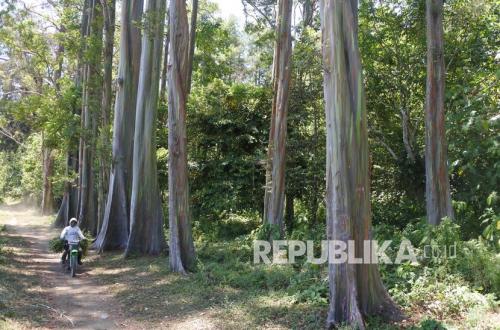
CALIFORNIA — Researchers warn climate change will trigger the extinction of most plants by the end of this century. In a study published in the journal Science, scientists say climate change is altering and often shrinking the habitats required by most plants for survival.
Researchers modelled future distribution ranges of various vascular plant species (those with specialised tissues for transporting water and nutrients), which account for nearly all plants globally.
The study examined over 67,000 species—around 18% of all known vascular plants—and found 7-16% face a high extinction risk due to losing over 90% of their current range.
These include California’s rare endemic Catalina ironwood, blue moss from a plant lineage over 400 million years old, and about a third of eucalyptus species, one of Australia’s most iconic plant groups.
Scientists analysed millions of plant location records and modelled greenhouse gas emission scenarios up to 2100. Plants require numerous conditions to thrive, including temperature, rainfall, soil moisture, land use, and landscape shade.
“One way to visualise this is imagining plants trying to track shifting climate envelopes. As temperatures rise, many species move northwards or to higher elevations for cooler conditions. But temperature alone isn’t the only factor for survival,” said researchers Junna Wang and Xiao Dong, citing Reuters on 24 May 2026.
Wang, a postdoctoral researcher at Yale University, and Dong, an environmental policy and science lecturer at the University of California, explained that climate change is narrowing plant climate envelopes in many regions.
Plants must “follow” these shifts by dispersing seeds or spores to new areas with suitable temperatures, such as moving further poleward or to higher elevations for cooler air.
“If the main issue was slow plant movement, unlimited dispersal should reduce extinction risk—but that’s not what we found,” Wang and Dong said.
The study also found extinction risks aren’t just due to limited dispersal space, which could be mitigated by helping plants relocate. The core problem is climate change continuously shrinking viable habitats.
“If climate change reduces suitable habitats, helping species move isn’t enough,” they said.
Researchers found this will occur across regions. Cold-adapted Arctic plants will lose habitat, as will dry-climate species in the US and Mediterranean.
Climate change increases drought risk, lowers soil moisture, and worsens wildfires. Meanwhile, 28% of land surfaces will experience local plant diversification as species migrate to new areas with better conditions, such as tropical and subtropical regions with increased rainfall.
Researchers call this global reshuffling, where some plant species disappear from historical habitats while others emerge in new areas. However, increased plant numbers in new regions don’t mean overall global plant conditions are improving.
This shift will create novel plant communities—combinations of species never before coexisting—which researchers are unsure how they will interact.
Plants are the foundation of terrestrial ecosystems, storing carbon, stabilising soil, supporting wildlife, and providing food, timber, medicine, and raw materials. Changes in plant diversity will have cascading effects on nature and society.
If climate change damages or reduces vegetation cover, ecosystems will absorb less atmospheric CO2, creating a feedback loop: less plant life means less carbon absorption, worsening global warming and further damaging plants.
“Ultimately, protecting biodiversity isn’t just about preserving nature for its own sake, but safeguarding the ecological systems that support human society,” Wang and Dong said.