
Climate Change Increasingly Evident, Decarbonisation and Energy Efficiency Become Future Priorities
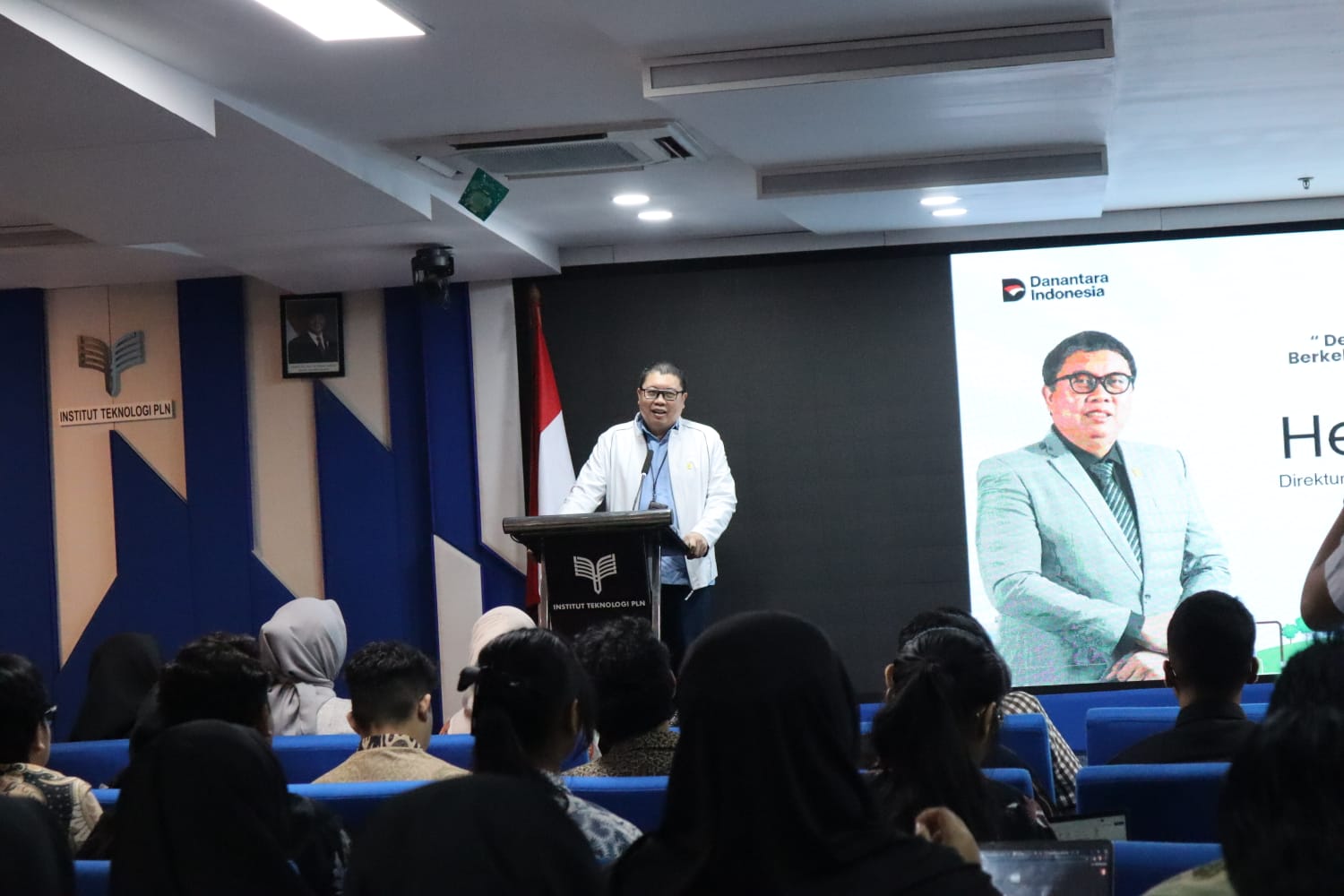
The world is currently facing significant challenges due to climate change, prompting various countries to accelerate the transformation of the energy sector towards a more environmentally friendly system. PT Energy Management Indonesia (PLN EMI) President Director Henri Firdaus stated that Indonesia has a dual challenge. On one hand, energy demand continues to rise in line with economic and population growth, while on the other, the country is required to reduce carbon emissions to support sustainable development targets.
Speaking at the EMI Sustainability Campus Talk held at the PLN Institute of Technology (IT PLN) in Jakarta, Henri said the younger generation has an important role in determining the future direction of the national energy sector. The event, attended by hundreds of students from various study programmes, served as an educational platform on energy transition, sustainable energy management, and carbon emission reduction strategies.
Henri explained that decarbonisation is a strategic step towards realising a cleaner, more efficient, and sustainable energy system. However, the success of this agenda requires support from various aspects, ranging from policy, technology, and investment to the availability of a workforce with competencies suited to future industry needs. He stressed that decarbonisation efforts require collaboration from all stakeholders and cannot rely solely on technology, but must also be supported by human resources capable of adapting to the evolving energy industry.
Beyond decarbonisation, Henri highlighted the importance of implementing sustainable energy management as a concrete measure to reduce energy consumption and greenhouse gas emissions. Effective energy management can help organisations increase productivity and reduce operational costs, while also supporting long-term national energy security and sustainable economic development.
PLN EMI believes that literacy regarding sustainable energy needs to be introduced at the university level so that students have a strong understanding of strategic issues that will affect the future job market. As a company engaged in energy management and decarbonisation, PLN EMI continues to encourage capacity building for the younger generation through various educational programmes and collaborations with educational institutions.
The event also provided a dialogue space between academics and industry practitioners to discuss the implementation of sustainable energy in Indonesia, including the development of new renewable energy, industrial sector decarbonisation, and career opportunities in the growing green economy sector. Henri noted that the high level of student questions demonstrated a strong interest among the younger generation in energy and environmental issues, giving them a real picture of the competencies needed in the workplace. He concluded that the best investment for the future is not only in technology but also in developing the quality of human resources, and that PLN EMI is ready to support the realisation of a greener, more resilient, and sustainable energy future for Indonesia.