
Climate Change Fueling Dengue Surge, Children Increasingly Vulnerable, Doctor Says
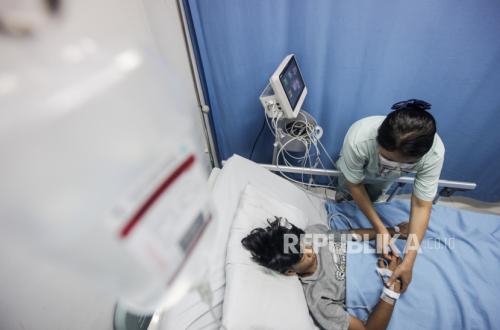
The Indonesian Paediatric Society (IDAI) has stated that climate change can trigger a surge in dengue haemorrhagic fever (DHF), making children, whose immune systems are not yet fully formed, increasingly vulnerable to the disease. Paediatrician and member of the IDAI Environmental Health and Climate Change Task Force, Dr Riyadi, said the Aedes aegypti mosquito, which carries the dengue virus, thrives in warm to hot environments. Consequently, climate change and rising temperatures are causing the mosquito to breed more massively and spread to highland areas previously unaffected.
“The increase in global temperatures will cause tropical zones to expand. Areas that were once cold are now experiencing higher temperatures, which is why the coverage of dengue cases is now widening,” Dr Riyadi said during an IDAI media discussion monitored in Jakarta on Tuesday.
Based on data released by the Directorate General of Disease Prevention and Control at the Ministry of Health, dengue cases in Indonesia up to the end of October 2025 are quite alarming. From January to 28 October 2025, a total of 131,393 cases were reported across Indonesia. There were 544 deaths, with a Case Fatality Rate of 0.41 per cent. The disease has spread across 471 regencies/cities in 36 provinces, with deaths recorded in 196 regencies/cities.
Dr Riyadi said Indonesia is a country that faces dengue fever all year round because it is located in a tropical region. Given this situation, coupled with global warming, dengue cases have the potential to continue soaring. “Indonesia, with its tropical climate, is vulnerable to vector-borne diseases such as malaria, transmitted by the Anopheles mosquito, and dengue haemorrhagic fever, caused by the Aedes mosquito. So, as global temperatures continue to rise, cases can surge,” he said.
As a long-term solution, Dr Riyadi considers efforts to control climate change to be critically important. According to him, the earth’s temperature needs to be returned as close as possible to its natural state so that tropical zones do not continue to expand. “If the earth’s temperature can return to what it was before, the currently expanding tropical zones could shrink again. That way, tropical diseases can also be reduced,” he said.
In addition, IDAI also advises parents to implement the ‘3M Plus’ method as part of the Mosquito Nest Eradication movement. The 3M method consists of draining, covering, and burying or recycling items that could potentially become mosquito breeding sites.