
Climate change disrupts local fishermen's activities in Mataram
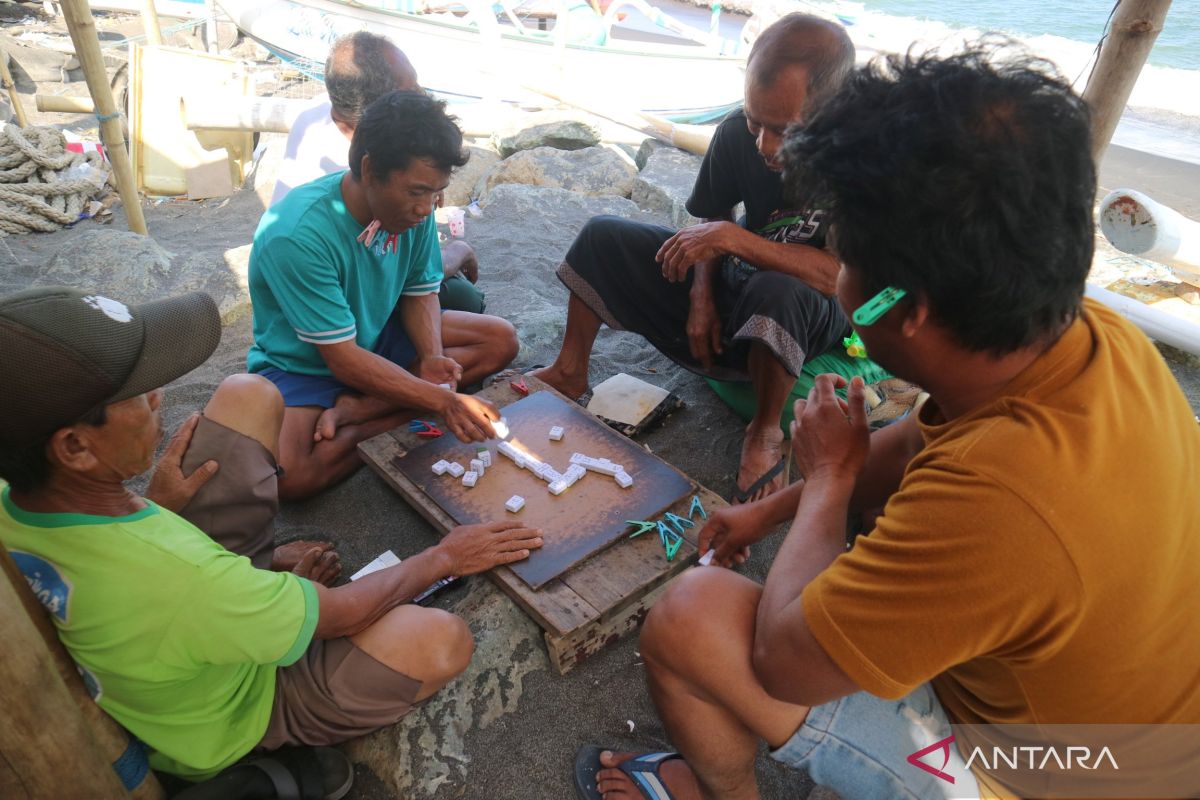
The phenomenon of climate change caused by greenhouse gas emissions is making the weather increasingly difficult to predict and is affecting the activities of local fishermen in Mataram City, West Nusa Tenggara (NTB).
“We are starting to struggle to read the rapidly changing weather. Even the Balinese, who are renowned for their skill in reading the weather, are finding it difficult,” said Baharudin, encountered whilst repairing nets on the coast of Ampenan, Mataram, on Tuesday.
The 54-year-old fisherman recounted that changing weather patterns have rendered the traditional knowledge that fishermen have long used to read sea conditions no longer accurate.
Baharudin shared childhood memories of the Ampenan Old Town coast. According to him, three decades ago, the shoreline was about 50 metres further out than its current position.
Abrasion and rising sea levels are accelerating land erosion, bringing the sea ever closer to the land and threatening the homes of local fishermen.
This condition increases safety risks when going to sea. Many fishermen choose to reduce their activities at sea, especially during the transitional season, which often brings extreme weather from January to March.
Fishermen are not only facing erratic weather but are also experiencing a decline in fish populations in near-shore waters. They now have to travel much further to reach productive fishing grounds, leading to increased fuel costs.
Another fisherman, Bahri, said this situation has drastically reduced fishing activity compared to several years ago due to the increased travel distance.
“In the old days, during fish season, everyone went to sea. Now, only one or two neighbours go out,” said the 60-year-old.
The government recognises that climate change is a serious threat to archipelagic regions like West Nusa Tenggara, which consists of two large islands and 401 small islands.
West Nusa Tenggara faces a sea level rise rate of approximately 3.5 millimetres per year in northern Lombok and 6.5 millimetres per year in southern Lombok.
Data from the Central Statistics Agency (BPS) states that out of a total of 1,166 villages/urban wards in West Nusa Tenggara, 25.04 percent, or the equivalent of 292 villages/urban wards, directly border the sea.
NTB Provincial Secretary Abul Chair emphasised strengthening data-based policies and scientific evidence as a strategic step in dealing with the impacts of climate change.
The NTB 2025-2029 Regional Medium-Term Development Plan (RPJMD) document includes the flagship programme ‘NTB Lestari Berkelanjutan’ (Sustainable NTB).
This programme prioritises sustainable and environmentally sound development by strengthening the forestry sector, preserving coastal environments, increasing the resilience of coastal communities in facing natural disasters, and mainstreaming the use of green energy.