
Climate Adaptation Funding Falls Far Short, Threatening Developing Countries
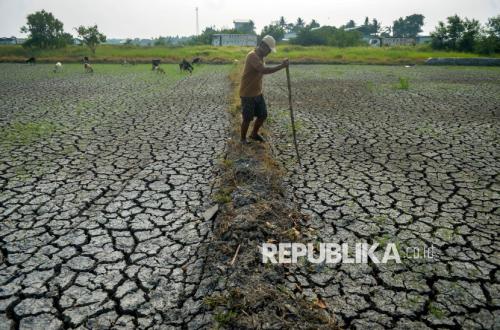
NAIROBI — Funding for climate change adaptation in developing countries remains far below what is needed, even as the effects of the climate crisis intensify. With global warming projected to potentially exceed the 1.5°C threshold, developing countries are expected to need hundreds of billions of US dollars each year to protect their people and economies from climate impacts.
The United Nations Environment Programme’s (UNEP) Adaptation Gap Report 2026: Ready? Not, released in Nairobi on Wednesday (4 November 2026), estimates that developing countries will need US$305 billion (around Rp 5,000 trillion) a year for adaptation by 2035. However, international public finance flows from developed countries reached only US$28.2 billion to US$31.7 billion in 2024, an increase of about US$1 billion on the previous year.
UNEP says the gap shows that the world is unprepared for the increasingly severe effects of climate change. Adaptation needs are also expected to rise as global warming potentially exceeds the 1.5°C limit.
“The world is not ready to adapt to today’s climate, let alone to the impacts when global warming exceeds 1.5°C,” UNEP Executive Director Inger Andersen said in a statement on Thursday (5 November 2026).
Andersen said countries needed to step up efforts to fulfil the Global Mutirão ambition agreed at COP30: to triple climate adaptation finance by 2035. Even so, that increase may not be enough to meet developing countries’ needs.
Ahead of COP31 in Türkiye and subsequent climate forums, Andersen urged countries to strengthen their adaptation finance commitments. Greater funding, she said, is needed to save lives, prevent loss and damage, and protect economies from climate impacts.
The UNEP report says its central estimate of US$305 billion a year by 2035 is based on assessments of nationally determined contributions (NDCs), national adaptation plans (NAPs) and modelling. The figure largely excludes the needs of the private sector. If those needs are included, total adaptation finance requirements are estimated to be more than twice as high.
The COP30 commitment to increase adaptation finance at least threefold by 2035 is expected to generate annual flows of around US$85 billion to US$120 billion. The amount depends on the benchmark used: current finance flows or the target set out in the Glasgow Climate Pact.
After accounting for inflation, this increase would meet only about 20 to 29 per cent of developing countries’ total adaptation finance needs by 2035. The share would be higher for least developed countries and small island developing states, covering 49 to 83 per cent of their adaptation needs if funding for both groups were tripled.
UNEP also noted some positive developments, although progress remains far short of what is needed. The Glasgow Climate Pact target of doubling adaptation finance from its 2019 level to US$40 billion by 2025 may still be within reach.
Multilateral development banks (MDBs) are estimated to have significantly increased adaptation finance in 2025. However, meeting the target also depends on funding from bilateral development partners, particularly amid a decline in official development assistance (ODA).
Finance among developing countries has also increased. Contributions channelled through MDBs and direct South-South cooperation rose from US$3.8 billion in 2019 to US$9.6 billion in 2024.
Private finance flows have grown as well. However, most of this funding meets the private sector’s own adaptation needs or is ultimately paid for by developing countries. UNEP estimates that private finance can narrow the funding gap for adaptation activities serving the public interest by only around 15 to 20 per cent.
UNEP stressed that increased funding alone will not be enough to accelerate climate adaptation. Institutional capacity is also needed to turn governments’ stated adaptation priorities into practical action.
Some countries have strengthened this capacity by adopting framework climate change laws, establishing policy learning platforms, improving coordination across sectors and levels of government, and creating dedicated mechanisms to mobilise and manage climate finance.
Meanwhile, inadequate mitigation and adaptation are causing climate-related loss and damage to grow. Such impacts can occur even when adaptation measures have been taken.
The UNEP report finds that funding to address loss and damage remains far below what is needed. Complex procedures and limited capacity also make it difficult for affected countries and communities to access assistance.
This was evident in the first funding round of the Fund for Responding to Loss and Damage. Funding requests totalled US$2.8 billion, far exceeding the fund’s initial allocation of just US$342 million.
The scale of the requests points to unmet funding needs. However, UNEP says the global financing gap for addressing climate-related loss and damage cannot yet be precisely determined.
To address the problem, UNEP says countries need stronger impact-assessment capacity, adequate and predictable financial and technical support, simpler procedures for accessing funding, and the involvement of affected communities in deciding how to respond.
The report underscores the growing urgency of accelerating adaptation as the world moves towards global warming above 1.5°C. Without increased funding, institutional capacity and effective policy implementation, developing countries will find it increasingly difficult to protect their people and economies from the effects of the climate crisis.