
CLGS FH UI: Price Ceiling Setting Will Prevent Market Failure
The Director of the Centre for Law and Good Governance Studies at the Faculty of Law, University of Indonesia (CLGS FH UI), Hari Prasetiyo, stated that the government has the authority to intervene in the market within the state administrative system. One concrete example is through the setting of prices or tariffs aimed at protecting consumers.
“If we look at the facts, the market is never perfect because market failure is an inevitability that demands government intervention, both to protect the public and consumers and to maintain the sustainability or stability of the market itself,” Hari said during a Focus Group Discussion (FGD) entitled “Cartels and Government Intervention in Addressing Market Failure: A Study on the Setting of Tariffs and Quotas by the Government and Industry” in Jakarta recently.
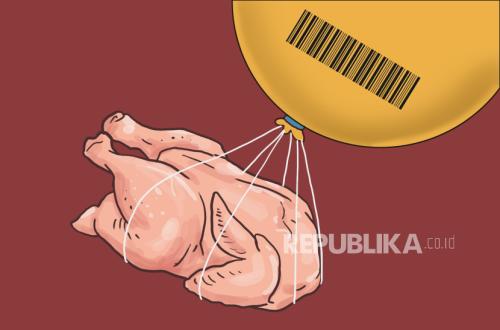
Furthermore, Hari explained that a government directive to set prices or tariffs cannot automatically be considered a cartel. He cited the example of the chicken price agreement between the Directorate General of Livestock and Animal Health (PKH) of the Ministry of Agriculture and chicken producers in 2016.
The price setting was carried out because of complaints received by the Ministry of Agriculture regarding the price of chicken meat, which had fallen below the cost of goods sold. Although the KPPU found the parties guilty, the case was overturned by the West Jakarta District Court because the panel of judges found no evidence of a price-fixing agreement that violated business competition.
In addition to the cattle trade case, the setting of tariffs or prices also occurred in the case of the maximum interest rate limit for online lending (pindar) by the Indonesian Joint Funding Fintech Association (AFPI), which was subsequently deemed a cartel practice by the Business Competition Supervisory Commission (KPPU).
Hari emphasised that there are indeed conditions under which the KPPU can evaluate government policies in intervening in the market.
“The most recent case we have seen is AFPI setting a tariff limit for the online lending industry. Then that tariff limit was raised by the OJK as a norm. But then the KPPU assessed what AFPI did as something categorised as a cartel. That is what we are trying to examine—there seems to be a gap. In fact, what AFPI did was actually approved by the government. The agreement they made was never sanctioned, never reprimanded,” he explained.
On the same occasion, an academic from Hasanuddin University, Dian Utami Mas Bakar, elaborated on this issue from the perspective of government authority to intervene in the market.
“The point of this government intervention is actually that it must be based on authority and carried out for the sake of the law, and it must use adequate legal instruments,” said the author of the book Public Contracts.
In the case of online lending, Dian noted that the OJK’s directive to AFPI is a factor that needs separate consideration. “Even if, for example, there is a directive that is not yet regulatory in nature and is implemented by the government, it needs to be examined from the perspective of state administrative law. Whether the intervention action is authorised or not, the principle of legality, the purpose of granting authority, the public interest, proportionality, and stability,” Dian said.
CLGS FH UI submitted a recommendation to the KPPU to provide advice and remind other government institutions if there are regulations that have the potential to violate business competition rules.
The OJK itself, in a press release dated 20 May 2025, affirmed that the regulation of the maximum interest rate for online lending is intended to protect consumers from high interest rates and illegal online lenders. The case is currently in the appeal process at the Central Jakarta District Court, with witness and expert examinations planned in the near future.