
Clear Signs of Declining Purchasing Power Observed Last Month
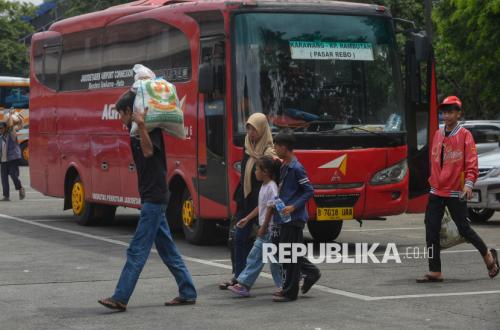
Amid the bustle of the 2026 Eid al-Fitr homecoming, a concerning hidden fact emerges: the number of travellers has consistently declined over the past three years. This year’s figure stands at 147.6 million people, down by 7.0 million from 154.6 million in 2025. The 2025 number itself fell by 7.6 million from 162.2 million in 2024. Thus, between 2024 and 2026, the number of homecomers has decreased by 14.6 million people. The decline in homecomers is an anomaly. In Indonesia, mudik is the largest social phenomenon, a spiritual ritual. Every year, during the Eid al-Fitr celebration, hundreds of millions return from distant lands to their hometowns. Through mudik, migrants maintain family values, solidarity, and social harmony with relatives in their villages. The migrants’ social longing meets the sanctity of Eid al-Fitr, making mudik not only preserve sibling bonds but also seen as proof of devotion, especially to parents in the hometown. Mudik also plays a crucial role in maintaining the cultural values of migrants with their origins. Therefore, for Indonesian society, mudik is not just a social ritual but also a spiritual one that must be undertaken in any condition. Only extraordinary circumstances would prevent people from mudik, such as a pandemic or economic collapse. During the pandemic, the adoption of large-scale social restrictions banned mudik, with only 1.5 million people in 2021. As the pandemic ended and mobility restrictions eased, the number of homecomers surged to 85.5 million in 2022. With post-pandemic economic recovery, it jumped to 123 million in 2023 and peaked at 162.2 million in 2024. Therefore, when the number of homecomers between 2024 and 2026 instead drops by tens of millions, this indicates a significant collapse in income and purchasing power experienced by many segments of society, especially the middle and lower classes. Besides the pandemic, only an extraordinary drop in purchasing power would cause tens of millions to decide not to mudik. This is because mudik requires substantial economic resources, particularly for transportation and accommodation, as well as remittances brought by homecomers to their hometowns.