
Clean Cities Are Not Built on Fines Alone
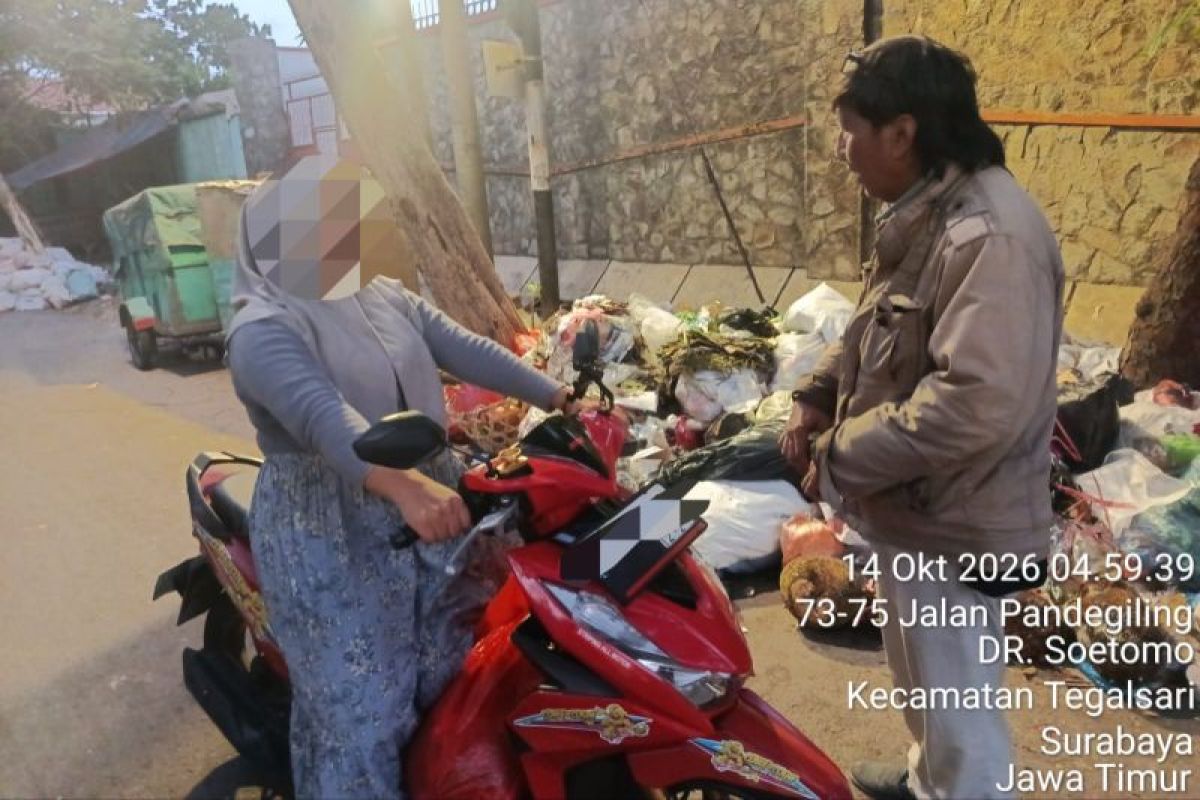
Supervision should foster public-mindedness, not trigger conflict between neighbours.
Surabaya (ANTARA) – A clean city is built not only with waste-collection fleets, temporary disposal sites and cleaning staff. Its cleanliness also depends on the behaviour of the people who live, work and spend time there.
Streets that have been swept repeatedly will soon be littered again if pavements, drains, vacant plots and corners of residential areas are still treated as dumping grounds.
This is the problem Surabaya, East Java, continues to face. Illegal rubbish piles reflect issues of discipline, social responsibility and environmental governance.
For that reason, the increase in fines under Mayor Regulation No. 45 of 2026 should be seen as an effort to strengthen public discipline.
But its success should be measured by a reduction in illegal dumping and the growth of habits that protect the environment, not simply by the number of offenders or the amount of fines collected.
Public discipline
Mayor Regulation No. 45 of 2026, established and promulgated on 14 September 2026, amends Mayor Regulation No. 10 of 2017 on procedures for imposing administrative sanctions for violations of Surabaya Regional Regulation No. 5 of 2014 on Waste Management and Cleanliness.
The new regulation sets fines of Rp1 million for dumping up to one cubic metre of waste and Rp3 million for volumes exceeding one cubic metre.
The sanctions also cover the dumping of construction debris, leaving rubbish outside designated areas, bringing waste into Surabaya from outside the city without a permit, and open burning that does not meet technical requirements.
The increase signals a change in the government’s approach. The previous fine of Rp75,000 was considered insufficient to stop repeat offences. The hope is that the greater financial penalty will make people think before dumping rubbish carelessly.
Firm enforcement is needed because public spaces must not become places where people shift the waste problem from their homes or businesses into the shared environment.
On 14 October 2026, the Surabaya Environmental Agency’s enforcement team took action against four people during an operation in Jalan Tengku Umar, Jalan Sam Ratulangi and Jalan Pandegiling. Each was fined Rp75,000 and given a community-service sanction requiring them to clear illegally dumped rubbish.
The agency is now preparing a joint team to inspect 94 illegal dumping sites across all districts, involving the police, the Indonesian Military (TNI), the Civil Service Police Unit, and district and sub-district administrations.
Co-ordinated operations could make it harder for offenders simply to move elsewhere. But their success will depend on consistency, accurate identification, sufficient evidence and clear procedures.
The public needs to know what constitutes an offence, the penalties, how inspections are conducted and how to appeal, so that fines are imposed fairly.
Addressing the problem at its source
Source: jawawa.id (https://jawawa.id/newsitem/clean-cities-are-not-built-on-fines-alone-1794030668)
Originally published by Antara (Indonesian) (https://www.antaranews.com/berita/5838075/kota-bersih-tak-lahir-dari-denda), translated from Indonesian