
Clashing with Excise and IPR Rules, Formasi Says Standardised Cigarette Packaging Will Spur Illicit Products
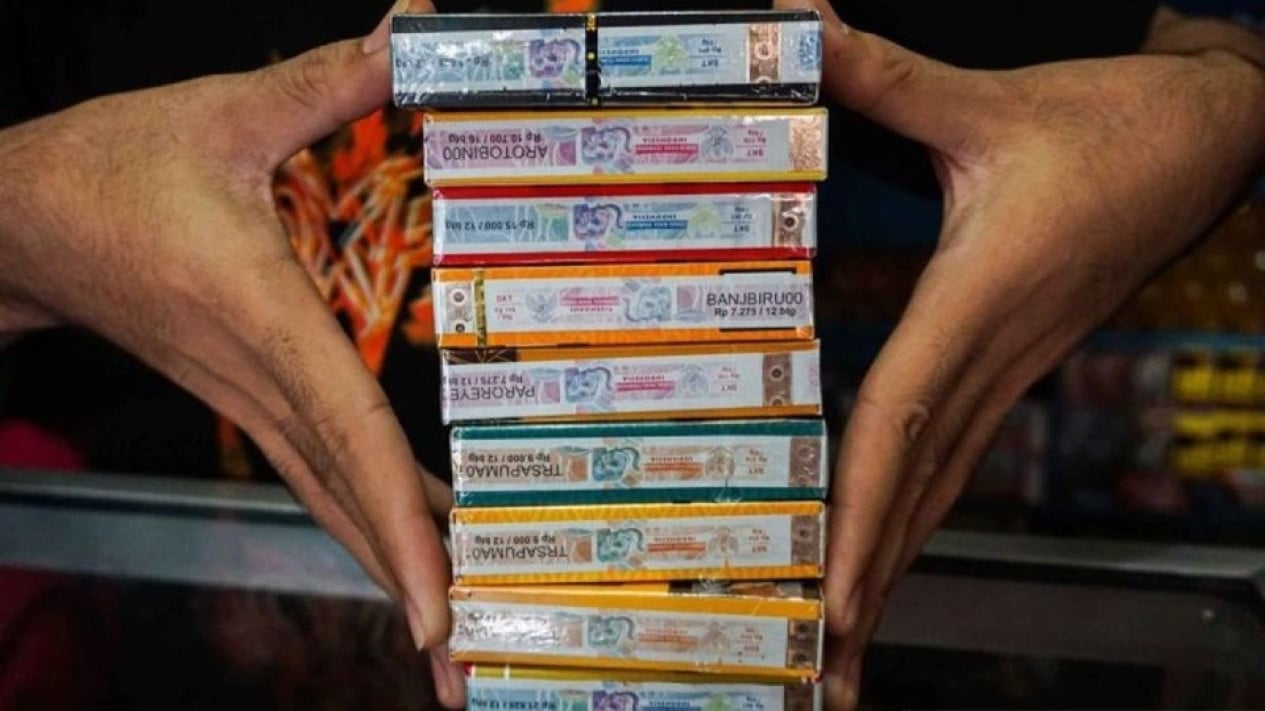
The Ministry of Health’s plan to implement standardised cigarette packaging has drawn sharp criticism. The policy, outlined in the Draft Minister of Health Regulation, is deemed potentially detrimental to the state by tens of trillions of rupiah, likely to trigger an explosion of illegal cigarettes, and in conflict with existing rules.
The Indonesian Cigarette Industry Community Forum (Formasi) assesses that this derivative regulation of Government Regulation No. 28 of 2024 overlaps with excise and Intellectual Property Rights (IPR) regulations. This is evident from the Ministry of Health’s push during a public hearing, where the standardised packaging colour (Pantone 448C) is required not to be covered by excise tape.
Formasi Chairman Heri Susianto, speaking at a panel discussion at Brawijaya University, expressed his disappointment with the Ministry of Health’s stance, which he said seemed to force the regulation through. “The Ministry of Health does not care about other rules, whether they overlap or not. It does not care about IPR, it does not care about excise. It also does not want to care about what the implementation in the field will be like later,” said Heri Susianto.
Heri highlighted that this plain packaging policy is ironic amidst the government’s strenuous efforts to eradicate the circulation of illegal cigarettes. He fears that excessive regulation will instead kill the legal industry and provide space for illicit products. “We appreciate the steps taken by the Directorate General of Customs and Excise, which is currently continuing to eradicate illegal cigarettes. Do not let this packaging standardisation actually fertilise the growth of illegal cigarettes. The main key to a regulation is law enforcement. No matter how complicated a regulation is, if there is impunity, it is useless. Based on the mandate of PP No. 28/2024, the focus should be on health warnings. Now it has expanded to packaging standardisation,” Heri asserted.
Furthermore, Formasi also criticised the Ministry of Health for frequently using non-tobacco producing countries as benchmarks for making regulations. “Indonesia is a tobacco producer, do not equate us with Singapore and Thailand, which are considered to have implemented strict packaging standardisation. The Ministry of Health should also not forget that there are intellectual property rights being violated in this Draft Ministerial Regulation,” said Heri.
Similar concerns were voiced by the Institute for Development of Economics and Finance (INDEF). Calculatively, INDEF projects that this packaging standardisation policy will hit state revenue by up to Rp27.7 trillion year-on-year.