
Clashes Erupt in Argentina as Students Protest Drastic Austerity
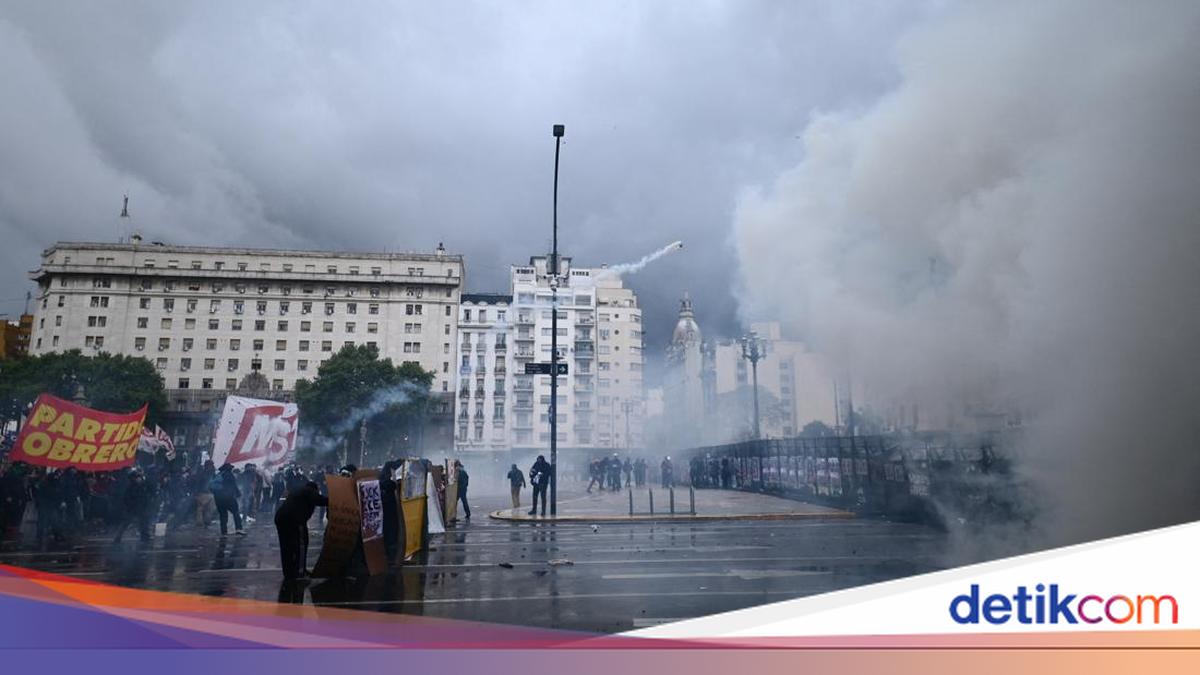
Student protesters clashed with police in Buenos Aires, Argentina. The clashes erupted as students and lecturers voiced their anger at the government’s refusal to approve legislation to increase education funding.
Al Jazeera reported on Friday (16 October 2026) that President Javier Milei said implementing the law would threaten his plan to balance the national budget. The demonstration followed a judge’s decision to fine the government for failing to fund universities.
Alongside the clashes, students at the University of Buenos Aires’ prestigious Faculty of Exact and Natural Sciences occupied the campus in protest against President Milei’s budget cuts.
They said they would occupy the building for one day. Many students and professors are worried about the impact of Milei’s austerity measures on public universities, warning that the future of free higher education is now at risk.
“Our best professors are leaving en masse. Their salaries are not enough to cover basic needs, so they are moving to private universities,” said Emiliano Gato, a physics student involved in the group.
“I dream of conducting research and teaching at the prestigious public University of Buenos Aires. But now, with these austerity plans, I don’t know what will happen,” he added.
Argentina’s public universities have become a major battleground over Milei’s austerity plans. Students and professors are protesting insufficient funding and falling wages, which they say pose a serious threat to public education in the country.
Milei has implemented one of the strictest austerity programmes in Argentina’s history. Since taking office in 2023, he has dismissed thousands of public-sector workers, closed several ministries, reduced subsidies and cut various government-funded programmes.
The measures are intended to tackle high inflation, a major problem in Argentina. Nearly three years later, inflation has fallen to around 2% a month, from 211% when Milei took office. Milei says his plan is working well.
“Argentina is growing at an extraordinary pace. We have recorded 27 consecutive months of sustained growth, and the country is now expanding at four times its historical rate. This growth is being felt in almost every sector of the economy,” Milei said during a recent visit to Washington.
Not everyone agrees. Milei’s plans have also had a profound impact on public education and welfare programmes for people with disabilities, pensioners and others who rely on state support. The opposition has tried to block many of the reforms he has proposed.
Last year, Argentina’s Congress overturned the president’s veto and passed two laws: one to increase funding for public universities and another declaring a state of emergency for people with disabilities. However, Milei’s government refused to implement them, arguing that Congress had not specified how the measures would be funded.
A federal judge has now fined the government 100,000 pesos (about Rp1 million) a day for failing to comply with the university funding law. The law requires Milei’s government to restore university salaries and student scholarships, which have been eroded by inflation; update budgets regularly; and provide funding for research, hospitals and infrastructure.
The ruling prompted thousands of people to take to the streets on Thursday local time, demanding that the government implement the law. Crowds blocked the city centre at several points in Buenos Aires and called for a general strike.
Although the demonstration was initially planned as peaceful, it turned violent. Police fired tear gas and rubber bullets, while protesters threw stones.
The square in front of the Congress building resembled a battlefield. At least 25 people were detained, and several others were injured, including members of the security forces.
Maria Teresa de Jesus, a professor in the University of Buenos Aires’ chemistry department, said her monthly income of around US$700 (Rp12.5 million) no longer felt sufficient to meet living costs.
“I have come to this protest as a last resort. I am a professor. I love teaching and research. I should not have to be here,” she said.
She said education should be accessible to everyone, adding that Milei’s government had ignored this principle.
“Public education is crucial for this country, so that it is accessible to everyone. But the government is ignoring it,” she said.
Many people in Argentina still support Milei’s economic plans. They hope the government’s efforts to harness the country’s abundant natural resources will pay off, creating more jobs, higher wages and a better standard of living.
But many others have lost faith and are ready to take more decisive action. They accuse Milei’s government of protecting the interests of a privileged few while leaving the wider public to bear the costs of its economic plans.