
Clarification: Being in DTSEN Deciles 1-2 Does Not Automatically Guarantee Social Assistance
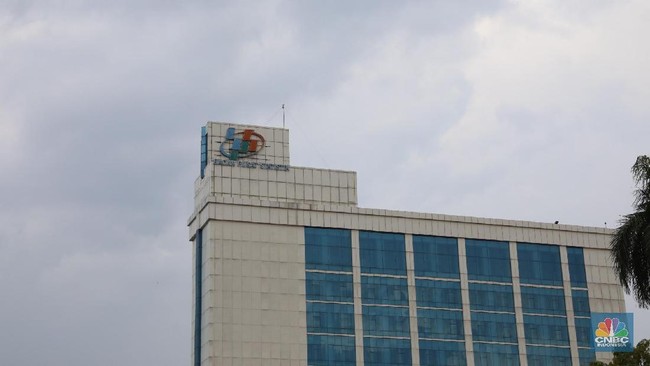
The government has clarified public perception regarding the National Single Social and Economic Data (DTSEN). According to the Central Statistics Agency (BPS), individuals included in the DTSEN are not automatically recipients of social assistance (bansos) or other government programmes.
The Head of the Central Statistics Agency (BPS), Amalia Adininggar Widyasanti, explained that the DTSEN serves as a social registry or a socio-economic database of the population, rather than a beneficiary registry or a list of aid recipients.
“The DTSEN contains a registration or database that is a collection of all Indonesian residents with NIK (National Identification Number) and KK (Family Card) integrated into a single data set,” Amalia explained during a press conference in Jakarta on Tuesday (8/9/2026).
She noted that the DTSEN gathers all Indonesian residents possessing a NIK and KK into one database. This data can then be utilised by ministries and agencies as a foundation for determining the targets of government programmes.
However, the decision regarding who is entitled to receive assistance remains determined by the relevant ministries based on the specific criteria of each programme.
“The list of assistance, or the beneficiary registry, is determined by each respective minister according to their own policies,” Amalia stated.
Inclusion in Deciles 1-2 Does Not Guarantee Aid
Amalia provided an example using the ‘Sekolah Rakyat’ programme. The target group for this programme falls within deciles 1 and 2 of the DTSEN.
Nevertheless, those within these two deciles do not immediately become beneficiaries. Additional criteria are established by the relevant ministries to determine programme recipients.
Thus, the role of the DTSEN is to provide an integrated social and economic database, while the determination of beneficiaries is conducted based on the policies and requirements of each individual programme.
The DTSEN is Indonesia’s first social registry, built to consolidate social and economic data that was previously scattered across various agencies.
BPS has been entrusted to manage the DTSEN under Presidential Instruction (Inpres) Number 4 of 2025 regarding the DTSEN. Ministries, agencies, and local governments also assist in the processes of updating, verifying, and validating the data.
Amalia explained that the DTSEN is not a static dataset. The socio-economic conditions of the population can change, meaning the data must be updated periodically.
Consequently, the public is provided with the opportunity to make corrections if they find that the data regarding their socio-economic condition is inaccurate.
“Every citizen has a voice, and we provide a channel to perform corrections easily, clearly, and transparently. Therefore, the DTSEN does not belong solely to the government; it belongs to all of us, to Indonesia, and we must protect it together,” Amalia explained.
According to Amalia, updating the data is vital so that the government can become increasingly precise in identifying citizens in need and distributing programmes to the correct targets.
“Behind every piece of data, there is a name, a family, and someone continuing to struggle to be reached by the DTSEN,” she remarked.
Members of the public who find that information regarding themselves or their families does not reflect their actual situation can perform updates through the ‘usul dan sanggah’ (proposal and rebuttal) mechanism. Available channels include Cek Bansos (cekbansos.kemensos.go.id) or its application, SIKS-NG via village/sub-district operators, and Cek DTSEN (dtsen-form.bps.go.id).