
CKG as a National Health Map
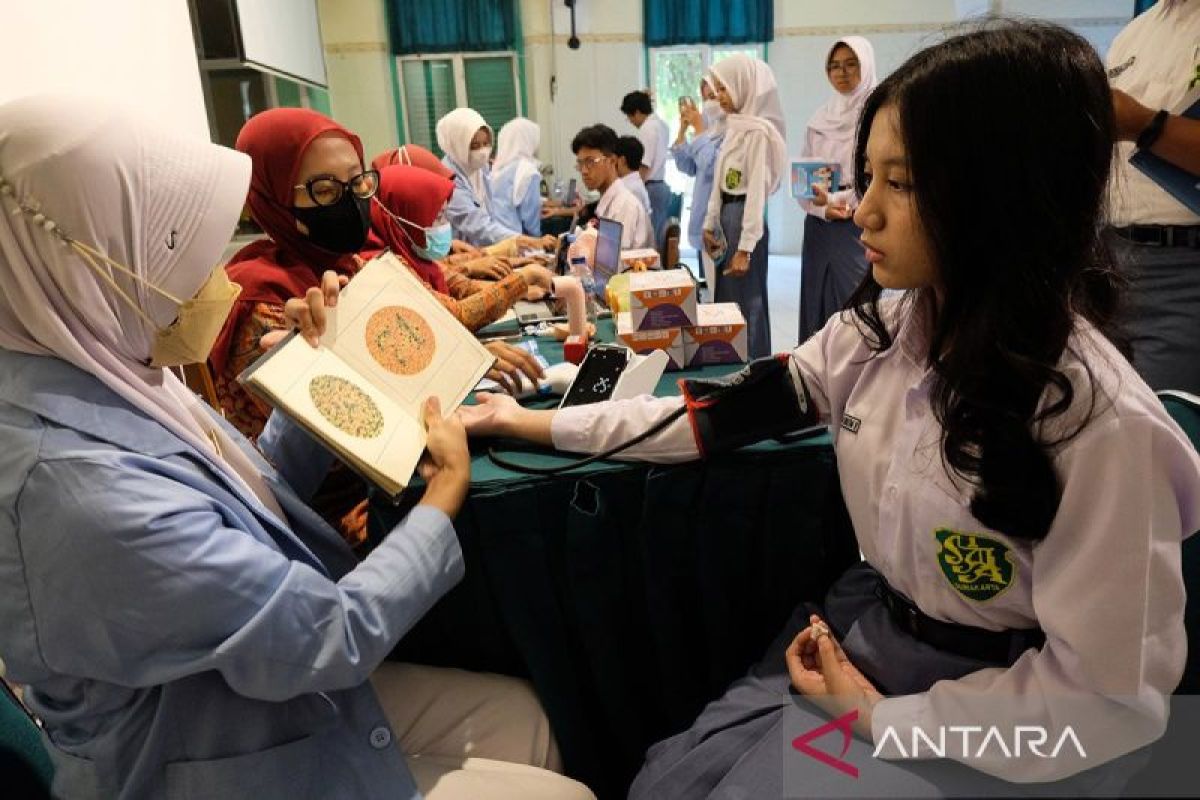
Regular check-ups have not been a common practice, and non-communicable diseases that develop slowly have often gone unnoticed until their condition worsens.
Jakarta (ANTARA) - As of early May 2026, the total number of participants in the Free Health Check Program (CKG) has reached 100 million people, a cumulative figure since the program was launched on February 10, 2025, and has been implemented in more than 10,000 community health centres in 514 districts and cities throughout Indonesia.
But what makes the data relevant from a policy perspective is not the volume of participants, but the hidden findings behind it.
CKG is starting to produce something that Indonesia has not had on a large scale and in a comprehensive manner, namely a systematic picture of the health conditions of the population across all age groups, from newborns to the elderly. The data collected from tens of millions of participants forms a kind of national health map, and that map does not present pleasant news.
From the 2025 CKG evaluation, the Ministry of Health noted a fairly consistent pattern in each age group. Approximately six percent of babies are born with low birth weight. One in three toddlers suffers from dental caries. One in five teenagers has blood pressure above normal. One in three adults suffers from central obesity. And more than half of the elderly who were examined suffer from hypertension.
The findings in the school-age group deserve special attention. Of the 4.8 million children examined between January and early May 2026, more than 22 percent were recorded as having increased blood pressure, equivalent to about 663,000 children. This is a rather eye-opening finding because hypertension has long been associated with productive and older age groups.
The fact that this condition has been detected in elementary and junior high school children changes that assumption quite fundamentally, and raises the question of what is driving children’s blood pressure to rise so early?
The answer, at least in part, lies in lifestyle patterns. CKG data for the adult group shows that almost all participants fall into the category of low physical activity, reaching 96 percent. Central obesity was found in about one-third of participants, and overweight reached almost a quarter of them.
The consumption of ultra-processed foods high in salt and fat, combined with a lack of physical activity, has long been identified as a major risk factor. CKG now confirms that these factors are no longer just a matter of lifestyle for some people, but a condition of the majority of Indonesians.
Hidden cases