
Civilians, Military, and Hopes for Justice
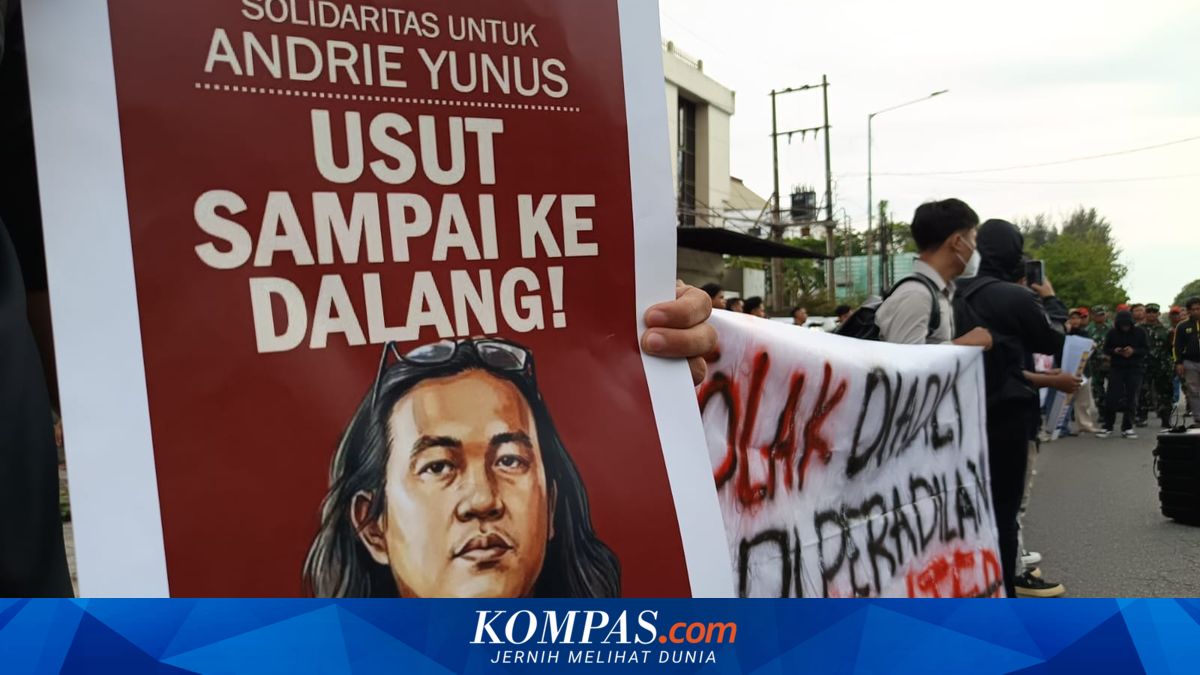
After a month has passed, the case of acid-throwing against a civilian involving a TNI member has once again sparked an interesting discourse on the integrity of Indonesia’s judicial system.
This tragic incident is not merely ordinary criminality, but a manifestation of systemic injustice that separates civil and military legal standards.
To date, the narrative of “military judicial reform” has always been positioned as a clash of interests between civilians and the military.
However, maintaining general criminal jurisdiction actually harms internal professionalism and the future of the TNI institution itself.
This reform discourse has actually been circulating for a long time in academic spaces up to constitutional testing steps at the Constitutional Court (MK).
Nevertheless, to this day, the debate remains relevant due to the urgency of its practice in the field, especially in ensuring transparency in proof.
In line with that, another expert, Al-A’raf (Military Expert from Brawijaya University), warns that an exclusive judicial structure actually risks perpetuating impunity practices behind the uniform (Kompas TV, 14 April 2026).
From the perspective of legal theory, this jurisdictional exclusivity creates what Benjamin Bratton calls the theory of dark legal space or legal opacity (Benjamin Bratton, 2016).
In this theory, the principles of public accountability and judicial transparency seem to stop at the barracks gate, alias closed off from the public.
When general criminal cases are brought into military courts, civilian victims lose their constitutional rights to fully oversee the course of justice due to the clash between military secrecy culture and the principle of open trials for the public.
Constitutional Law Expert Bivitri Susanti also reminds that allowing jurisdictional exceptions for civilian crimes will only perpetuate a “caste law” system that is not in line with the principle of equality before the law (Bivitri Susanti, 2026).
Efforts to reposition this jurisdiction can also be seen in comparative law practices in various countries.
The United States, for example, through the Uniform Code of Military Justice (UCMJ) and various decisions from their Supreme Court, firmly hands over criminal cases involving civilian victims to the general court jurisdiction with the aim of ensuring equal justice.
Similarly, the Netherlands, since 1991, through the Wet Militaire Strafrechtspraak, has officially abolished independent military courts and integrated the Military Chamber into the general courts in Arnhem.