
Civil Society Coalition Says Light Sentences for Acid Attackers Perpetuate Impunity
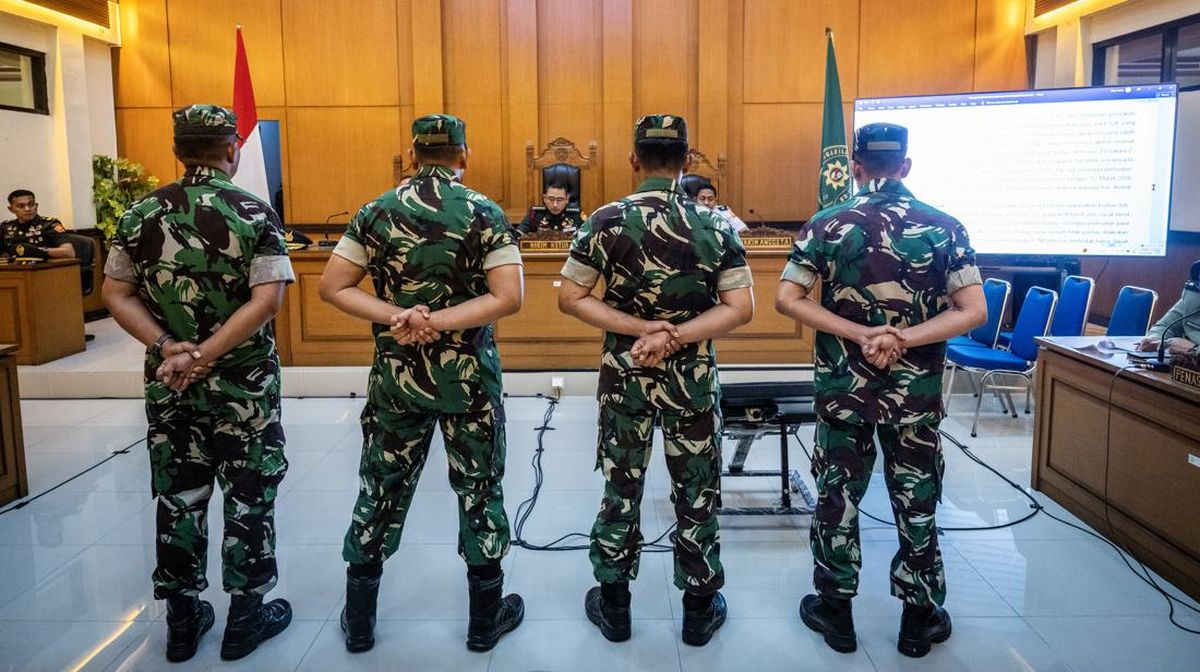
The Civil Society Coalition has criticised the light sentences handed down by the Jakarta Military Court II-08 to four members of the Indonesian Armed Forces Strategic Intelligence Agency (BAIS TNI) for the acid attack against Andrie Yunus, Deputy Coordinator of the Commission for the Disappeared and Victims of Violence (KontraS). The defendants, Second Sergeant Edi Sudarko, First Lieutenant Budhi Hariyanto Widhi, Captain Nandala Dwi Prasetya, and First Lieutenant Sami Lakka, received prison terms ranging from one and a half to three years, with Sudarko and Widhi also receiving dishonourable discharges. The court also ordered the destruction of evidence from the criminal act of acid throwing against Yunus.
Al Araf, Chair of Centra Initiative, stated on Friday that the military court’s ruling represents a fact of impunity and reinforces the process of remilitarisation in Indonesia. He argued the sentences were disproportionate to the suffering endured by the victim and described the trial as a mock trial that ignored the principles of a fair, independent, and impartial hearing. Araf highlighted the absurdity of the panel’s consideration of mitigating factors, which included the defendants’ admission of guilt, their regret, and their apologies to the TNI Commander, the Minister of Defence, the public, and the victim during the trial.
Araf also criticised the court’s order to destroy evidence as a deliberate act of obstruction of justice. However, he noted that the military court’s verdict does not preclude the civilian justice system from prosecuting the case, citing a South Jakarta District Court ruling that ordered police investigators to continue their probe, which was never officially halted. He maintained that the destruction order should not prevent the police from uncovering the truth and enforcing the law in Andrie Yunus’s case.
The legal advocacy group Tim Advokasi Untuk Demokrasi (TAUD), representing the victim, said the verdict reflects the grim state of Indonesia’s military justice system. TAUD member M. Nabil Hafizhurrahman stated that the sentence is not commensurate with the severity of the crime or the victim’s suffering, representing a face of impunity and poor accountability of armed forces before the law. He argued the case demonstrates that military courts are no longer a suitable forum for resolving criminal cases involving TNI members and that the court had no right to order the destruction of evidence initially gathered by TAUD’s independent investigation team. Nabil also rejected the argument that the defendants merely intended to give a deterrent effect, stating that in a state of law, no one has the right to punish a citizen for their opinions, criticism, or advocacy activities.