
Civil Society Coalition: Military Involvement in Jakarta Robbery Crackdown Deemed Overreaction
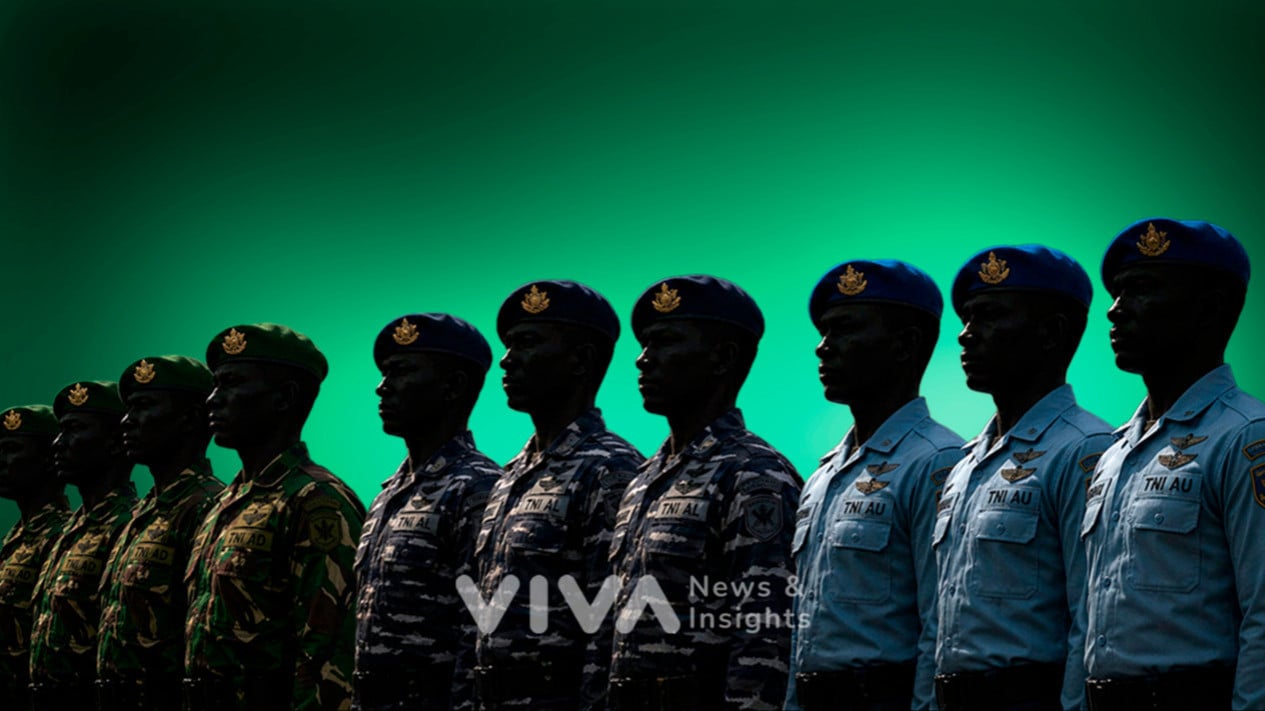
The deployment of a combat battalion by Kodam Jaya to tackle street robberies in Jakarta is considered a misguided, excessive policy that blurs the lines between defence and security functions in Indonesia.
This was stated by the Civil Society Coalition for Security Sector Reform, comprising IMPARSIAL, Centra Initiative, Amnesty International Indonesia, YLBHI, KontraS, WALHI, AJI Indonesia, Raksha Initiative, DeJure, Indonesia Risk Center (IRC), HRWG, ICJR, ELSAM, LBH Jakarta, LBH Pers, LBH Masyarakat, AJI Jakarta, PBHI, and Setara Institute, in a press release on Monday, 25 May 2026.
Amnesty International Indonesia’s director, Usman Hamid, said that involving the military in civilian criminal matters such as street robberies not only contradicts security sector reform principles but also risks repressive and excessive violence in civilian spaces.
‘In recent times, the trend of expanding military roles in civilian areas has worsened in handling Military Operations Other Than War (OMSP), being excessive and disproportionate,’ Hamid stated.
Alongside the plan to deploy Kodam Jaya’s combat battalion against Jakarta street robberies, the government has also proposed a Government Regulation (RPP) on TNI Duties and a Presidential Regulation Draft (Ranperpres) on Military Involvement in Counter-Terrorism.
Hamid said these regulatory drafts demonstrate a systematic effort to expand military involvement in civilian security matters, which should fall under law enforcement and civilian institutions.
He added that the RPP on TNI Duties and Ranperpres on Counter-Terrorism are substantively problematic due to overly broad military involvement, lack of strict parameters, and potential overreach beyond OMSP mandates as stipulated in the TNI Law.
‘OMSP should not be interpreted as a blank check for the state to deploy the military in every civilian issue. An overly broad interpretation of OMSP is dangerous as it normalises militarism in democratic life, blurs the line between defence and domestic security functions, and law enforcement,’ he said.
Furthermore, Hamid noted that these policies indicate a tendency for the state to adopt militaristic approaches to address civilian issues and crime.