
Civil Society and Academics Urge a Just and Participatory Energy Transition
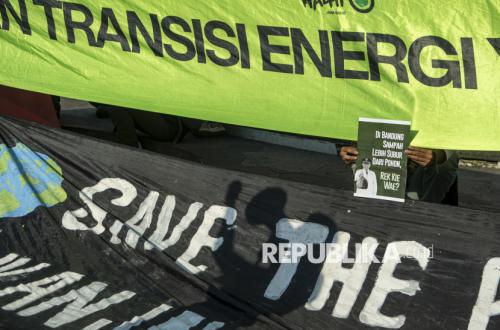
Academics and civil society groups have asserted that law, democracy, and climate action cannot be separated from one another. This was conveyed at the Conference on Democracy, the Rule of Law, and Climate Action at Gadjah Mada University (UGM) on Monday (11/8/2026).
In their declaration, conference participants stressed that climate policy is only legitimate if it is formulated openly, participatively, and on the basis of knowledge. Policy must also be able to be tested and held accountable before the public, and must be subject to the limitation of power.
The academics and civil society groups said the transition to clean energy will not be achievable without democracy and the rule of law. They asserted that climate mitigation and adaptation must reduce inequality, protect human rights, restore damage, and share benefits and burdens fairly.
UGM Faculty of Law lecturer Totok Dwi Diantoro noted that the climate crisis had exceeded seven of the nine planetary boundaries in 2025, and that Asia is experiencing a biocapacity deficit due to the overshoot of its carrying capacity. This situation demands development that does not exploit and sacrifice people and nature.
Totok said that, at the international legal level, the International Court of Justice (ICJ) has issued an advisory opinion obliging states to respond to the climate crisis. This opinion also closes the space for the principle of Common But Differentiated Responsibilities and Respective Capabilities (CBDR-RC), which countries have used to delay climate action.
“However, at the domestic level, law has been used as an instrument of autocratic legalism to maintain power, legitimise the seizure of living space, and perpetuate extractive economic interests,” Totok said in the reading of the declaration, as quoted from a press release by conference participants on Tuesday (12/8/2026).
Executive Director of the Indonesian Center for Environmental Law (ICEL) Lasma Natalia H Panjaitan revealed that the urgency of this declaration arose from shared concerns and findings throughout the conference. One point of concern is the reality that law in Indonesia is used as an instrument to legitimise and facilitate capital accumulation, placing economic growth above ecological and social justice.
“In a number of cases, executive, legislative, and even judicial power has been drawn into practices of regulatory capture and state capture. At the same time, we also see an unjust burden of crisis, the narrowing of civic space, and weak enforcement of environmental law,” Lasma said.
She noted that human rights and environmental defenders continue to face criminalisation and violence. Courts, which should be the last bastion of environmental justice when the government is negligent, are often not independent.