
Civil Servants Required to Wait 10 Years for Transfer, Rule Revision Urged
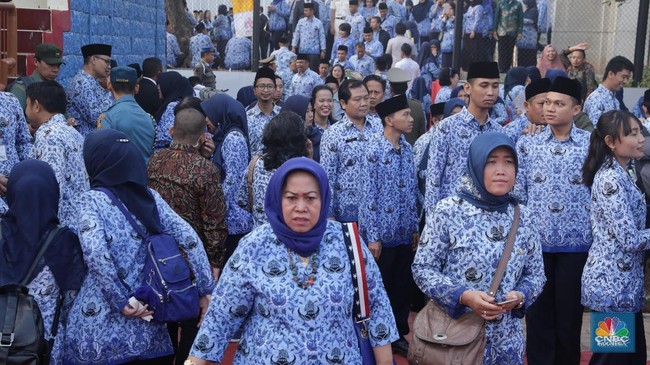
A regulation requiring civil servants (ASN) to wait up to 10 years before they can apply for a transfer has come under scrutiny. Commission II of the Indonesian House of Representatives (DPR RI) has asked the government to review the provision, arguing it is too burdensome and could potentially disrupt the welfare of state employees in the regions.
Commission II member Jazuli Juwaini urged the National Institute of Public Administration (LAN) and the Ministry of State Apparatus Empowerment and Bureaucratic Reform (KemenPAN-RB) to revisit the regulation on the ASN transfer waiting period, which is currently set at one decade. According to Jazuli, he has received many complaints from civil servants about the policy through social media, private messages, and direct communication.
“Many have conveyed to me, both directly, via WhatsApp, and via social media, that the rule requiring a 10-year wait for transfer is considered too heavy,” Jazuli said during a Hearing Meeting (RDP) of Commission II with the Head of LAN, Muhammad Taufiq, as quoted on Thursday (26/8/2026).
Jazuli acknowledged that transfer restrictions are necessary to maintain the distribution of civil servants, particularly in underdeveloped, frontier, and outermost (3T) regions. Without restrictions, remote areas risk losing civil servants because many employees choose to move to big cities. However, he argued that a 10-year waiting period is too long and does not reflect a sense of justice.
“We understand that if people move arbitrarily at any time, remote areas could be emptied of civil servants. A time requirement for transfer is indeed very much needed. But if it has to be 10 years, that is too long,” he said.
He noted various problems arising from the rule. One is that many civil servants serving in remote areas must live apart from their families for long periods. He cited the case of a civil servant who is the only child in the family and must care for a sick parent, but cannot apply for a transfer because of the waiting period rule.
“There are cases where a civil servant is in a remote area, alone, separated from family, separated from parents. There are many cases like that,” he said.
According to Jazuli, the state must still protect the rights of civil servants as citizens, including the right to fair treatment in employment policy. As a solution, he proposed that the time limit for applying for a transfer be shortened to five years. He believes five years of service in an assigned area is sufficient to ensure civil servants contribute and provide services to the community before applying for a move.
“Five years, I think, is an adequate amount of time. A person in a remote area for five years, after that they may be transferred or apply to move,” he asserted.
He also argued that revising the rule is relatively easy because its legal basis is only a Ministerial Regulation (Permen), not a law or constitutional rule requiring a lengthy process. “The basis is a Ministerial Regulation, not the constitution. It just needs to be reviewed,” he said.
Jazuli warned that overly rigid rules could potentially have a negative impact on the motivation and productivity of civil servants in the field. If employees feel burdened by policies deemed unfair, the effectiveness of public services could also be disrupted. He therefore asked LAN to utilise its policy review and formulation function to prepare official recommendations to KemenPAN-RB regarding the evaluation of the ASN transfer rule.
“I will continue to speak about this until the policy is changed. Because in my view, 10 years is unfair, too heavy,” he said.
Source: jawawa.id (https://jawawa.id/newsitem/civil-servants-required-to-wait-10-years-for-transfer-rule-revision-urged-1787709059)
Originally published by CNBC Indonesia (https://www.cnbcindonesia.com/news/20260826080155-4-762204/asn-wajib-tunggu-10-tahun-untuk-mutasi-revisi-aturan-didesak), translated from Indonesian