
Civil Coalition Urges TNI to Follow Gibran's Directive on Andrie Yunus Case
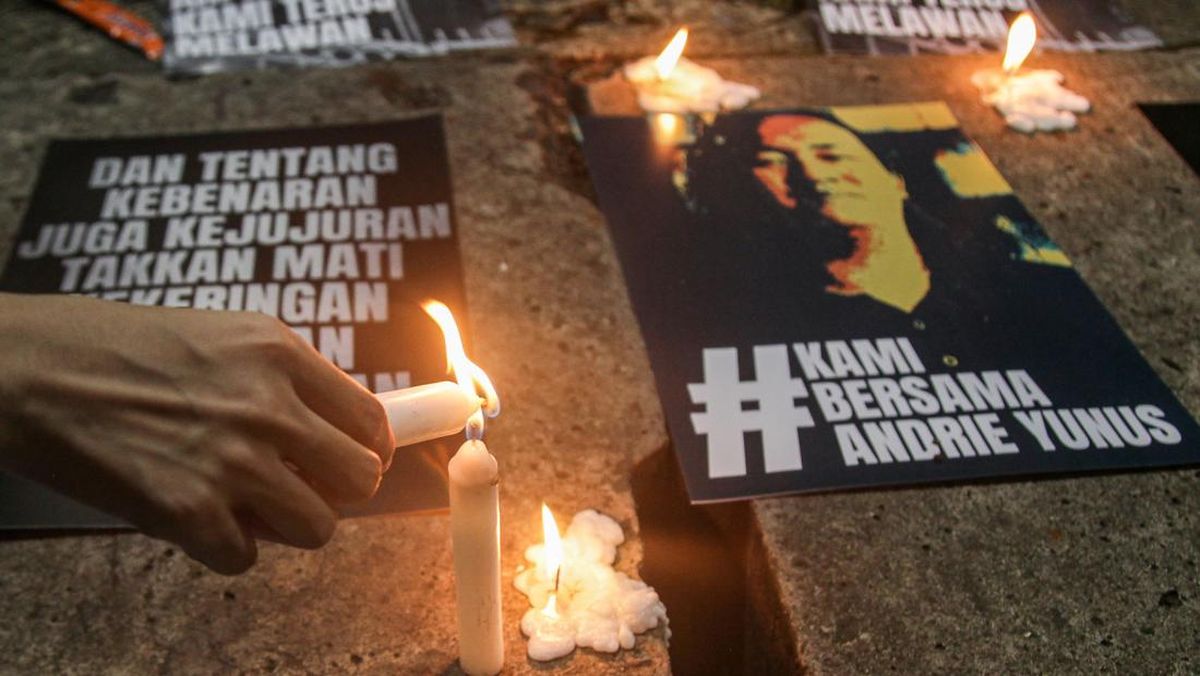
The Civil Society Coalition for Security Sector Reform has stated that Vice President Gibran Rakabuming Raka’s remarks on the acid attack case against KontraS activist Andrie Yunus should be interpreted as requiring resolution in the general court, not the military court. In a written statement on Thursday (9/4), Gibran said, “The direct involvement of professionals with strong track records and integrity as ad-hoc judges in the acid attack court against Andrie Yunus is very important to maintain public trust and the dignity of the law.” This statement was made one day after the TNI’s Pusat Pemantauan (Puspom) announced that the investigation into the Andrie Yunus case had been handed over to the Military Prosecutor. The coalition views the Vice President’s statement as meaning that the Andrie Yunus case must be resolved through the general court. Given this context, only the general court allows for the involvement of ad-hoc judges, not the military court,” said Chairman of the Indonesian Legal Aid Foundation (YLBHI) Muhamad Isnur in a written statement on Friday (10/4). Isnur said that Gibran’s public statement is a strong signal from the state that there are serious issues related to the professionalism, track record, and integrity of parties within the military court. Therefore, actors in the form of ad-hoc judges are needed to ensure public trust and the dignity of the law. The coalition, explained Isnur, believes that the TNI should stop the legal process in the military court and hand it over to the civilian court in line with the government’s policy direction as stated in Gibran’s written statement. In addition to contradicting the direction of policy conveyed by the Vice President, the military court is also not in line with the principle of equality before the law. Various national legal instruments, including the spirit of the TNI Law and the military court reform agenda, clearly point towards limiting military jurisdiction only to disciplinary violations and military crimes, not general criminal acts. “If the TNI insists on continuing the process in the military court, this action can be seen as a form of defiance against the legitimate government policy direction, while also undermining the principle of civilian supremacy in a democratic state,” he said. Forcing the resolution of the acid case in the military court, according to the coalition, risks creating conflicts of interest because both the perpetrator, lawyers, prosecutors, and judges are all military personnel. This also makes it difficult to create transparency, accountability, independence of the legal process, and justice for the victim. “Thus, allowing the Andrie Yunus case to remain tried in the military court is actually contrary to the principle of a free and impartial court as guaranteed in the constitution and international human rights law standards, including the principle of independent and impartial justice,” Isnur stated. The Civil Society Coalition for Security Sector Reform consists of YLBHI, IMPARSIAL, Centra Initiative, KontraS, Amnesty International Indonesia, WALHI, DeJure, Raksha Initiatives, ICJR, LBH Jakarta, HRWG, KPI, ICW, LBH Apik Jakarta, AJI Indonesia, LBH Pers, PBHI, Indonesia RISK Center, LBH Masyarakat, and SETARA Institute.