
Civil Coalition Urges Government to Finalise Implementing Rules for Domestic Workers Law
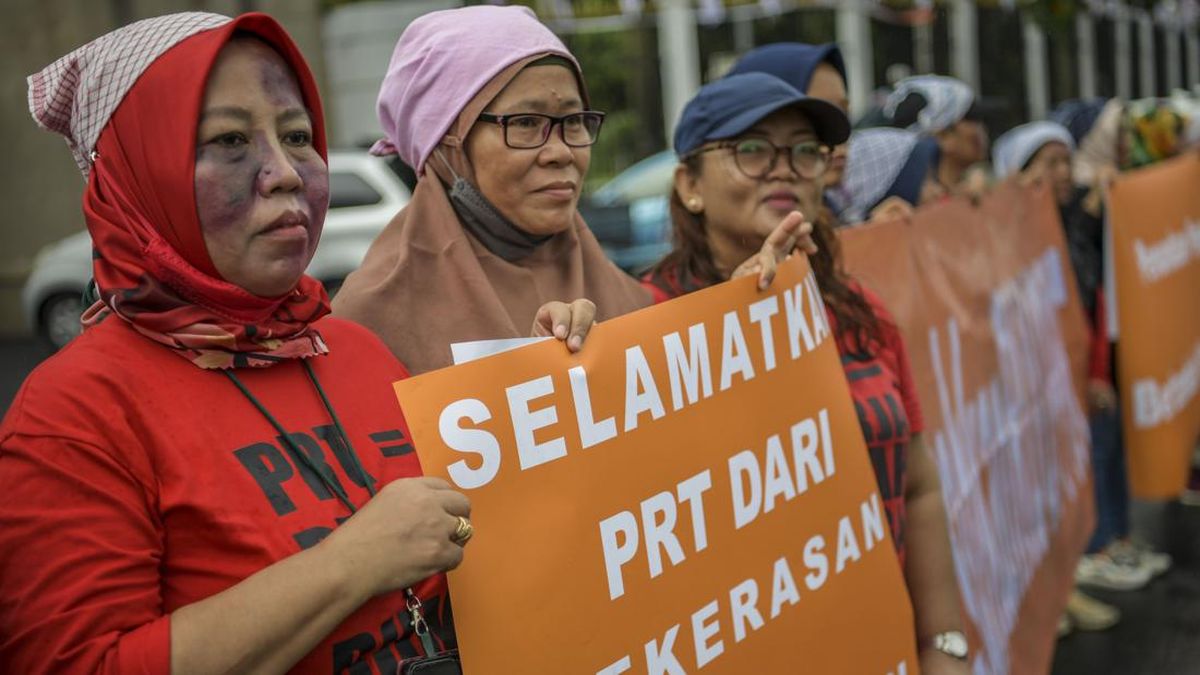
The Civil Coalition for the Domestic Workers Protection Law (PPRT) is urging the government to complete the law’s implementing regulations promptly so that recognition of domestic workers can translate into meaningful protection while also providing certainty for employers.
IWAPI Deputy Chair Rinawati Prihatiningsih, a member of the coalition, said protection for domestic workers should include fair and timely pay, rest periods and a safe working environment.
At the same time, employers’ interests—including privacy, family security and fair dispute resolution—should also be addressed to ensure that employment relationships in the home function well.
“The home serves a dual purpose: it is both a workplace for domestic workers and a family’s private space. Their close access to children, older people and personal information requires trust and boundaries that are understood by everyone,” Rinawati said in a written statement on Thursday (29 October).
Rinawati proposed that the government draw up privacy guidelines applying to both parties. These should cover the taking, use and distribution of photographs or recordings, social media use and the use of security cameras.
She said the rules should respect domestic workers’ private space while not preventing them from documenting alleged violations and seeking help.
Beyond privacy, she said the implementing regulations should provide for transparent recruitment. Jobs such as caring for babies, assisting older people and cleaning homes require different skills.
Employers, she said, need reliable information about prospective workers’ identities, skills and references, while their personal data must be protected. Employers should, in turn, be open about the duties involved, household conditions, working hours and family needs.
Rinawati also stressed the importance of communication in bridging differences in culture, religion, ethnicity, language and customs between domestic workers and employers.
Agreements should be reached from the outset on matters including religious observance, food, use of shared spaces, personal time, and how to raise requests or concerns.
She cautioned that a person’s religion, ethnicity or place of origin should not be used to judge their character or competence. Adjustment should be a two-way process that respects each person’s beliefs and dignity.
Rinawati also called for transparent and practical pay guidelines. Wage-setting should take into account the region where the work is performed, the cost of living, duties, working hours, skills and responsibilities.
A domestic worker’s place of origin should not be grounds for paying less for equivalent work, she said. If a family’s budget is limited, adjustments should instead be made to the scope of duties and working hours so that the agreement remains fair.
Clear procedures are also needed when an employment relationship ends. These should cover notice, payment of outstanding wages and entitlements, the return of personal belongings, and the handover of keys and access to the home.
However, anyone facing violence or a threat to their safety must be able to seek protection immediately.
To handle disputes, Rinawati proposed consultation services for domestic workers and employers, neutral mediation, and access to the authorities where necessary.
She said each case should be assessed on the facts, while taking account of unequal power relations and protecting vulnerable parties. Both sides should have the opportunity to explain their position through a process that safeguards confidentiality.
Domestic worker placement agencies should also provide service agreements setting out fees, the scope of candidate checks, post-placement support, replacement and refund terms, and procedures for handling complaints.
The agencies’ responsibilities, Rinawati said, should not end when a worker begins a job. Their work must nonetheless respect domestic workers’ consent and rights.
She hopes the implementing regulations will include sample employment agreements and straightforward guidance that is easy to use. This is important because households generally do not have human resources departments like companies do.
Rinawati called on the government to clarify how these needs will be incorporated into the implementing regulations, including opportunities for public input and accessible assistance services for both workers and employers.
“Clear rules are expected to support the fulfilment of workers’ rights while giving employers the certainty they need to build safe, fair and mutually respectful working relationships,” she said.
The government was previously said to have up to one year to complete the technical implementing regulations for the Domestic Workers Protection Law (PPRT), which was formally passed on Tuesday (21 April).
“Implementing regulations are due within a year at the latest,” House of Representatives Legislative Body (Baleg) Chair Bob Hasan said when contacted on Wednesday (22 April).
The law was passed at the 17th plenary session, which closed the fourth session of 2025–2026 and coincided with Kartini Day. The meeting was attended by 314 of the House’s 578 members.
The PPRT Law sets out rights and obligations for domestic workers, a sector that had not previously been covered by specific legislation. Its provisions are set out in 12 chapters and 37 articles.
“After 22 years of struggle, the PPRT Law has finally been passed today. This is a historic milestone for those working in the domestic sector,” House Speaker Puan Maharani said as she chaired the plenary session that passed the law.
Source: jawawa.id (https://jawawa.id/newsitem/civil-coalition-urges-government-to-finalise-implementing-rules-for-domestic-workers-law-1793303442)
Originally published by CNN Indonesia (https://www.cnnindonesia.com/nasional/20261029223720-20-1421225/koalisi-sipil-minta-pemerintah-segera-tuntaskan-aturan-turunan-uu-pprt), translated from Indonesian